
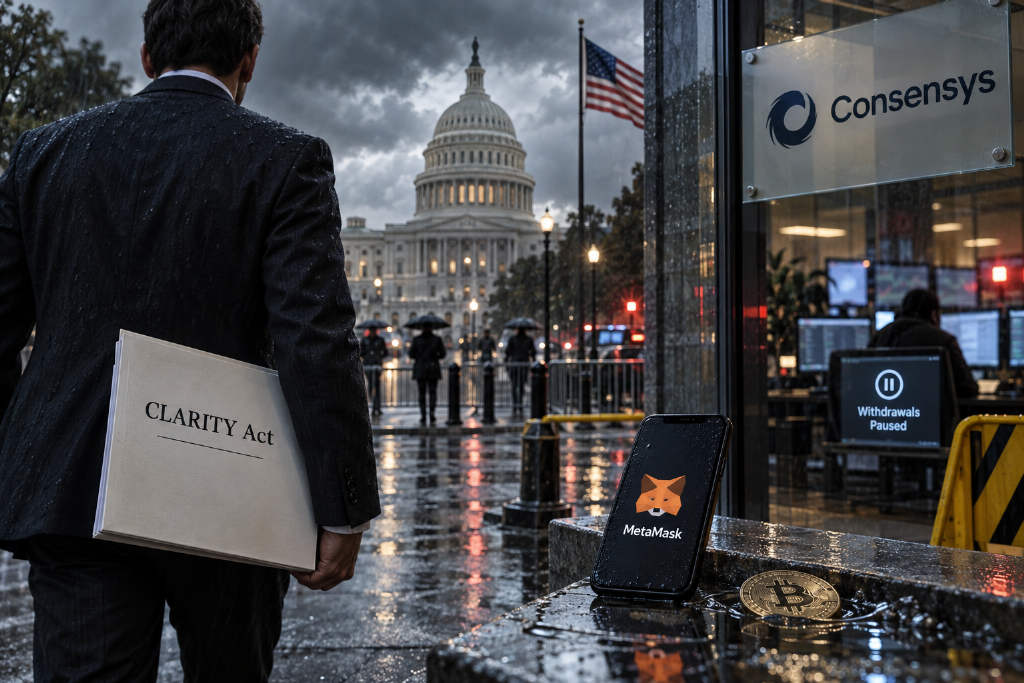
Foresight News’ weekly Web3 digest this week centered on three themes: the latest meme coin mania, changes in regulation and crypto infrastructure, and a string of security and platform-risk incidents.

Meme coin trades stayed at the center of market attention
The most visible cluster of stories came from meme coin speculation, where celebrity-linked tokens, trading tools and launchpad competition all drew heavy interest.
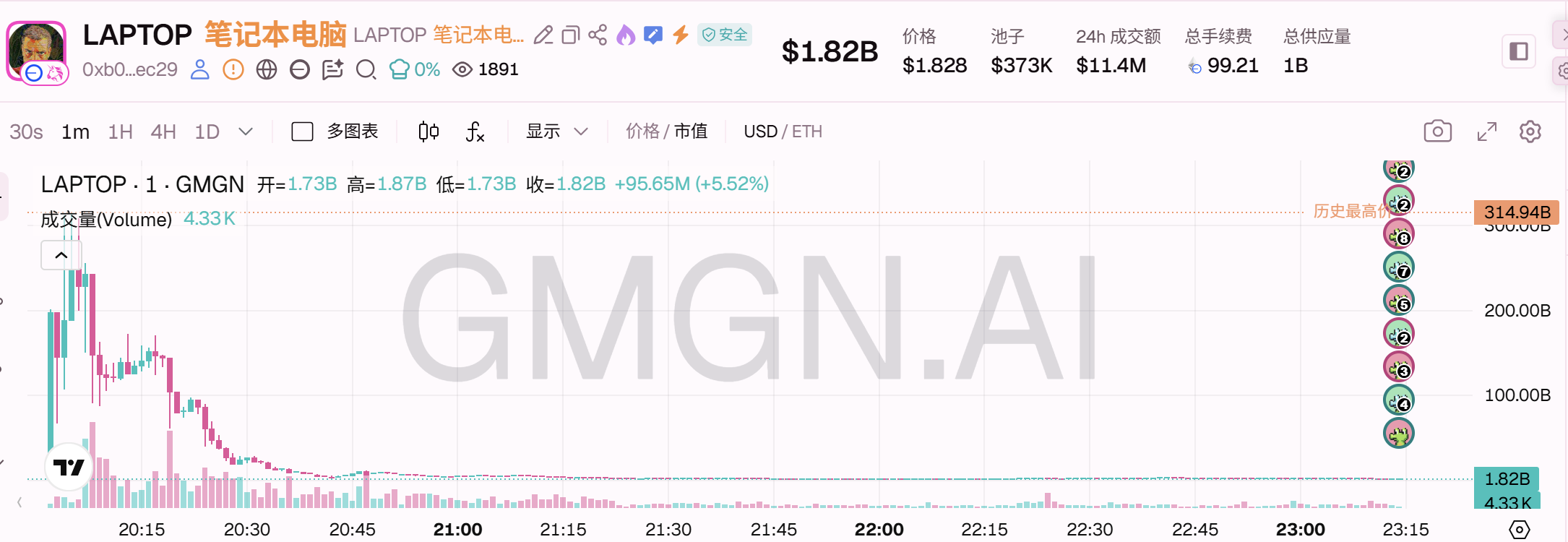
One of the most discussed cases was LAPTOP, a meme coin tied to Hunter Biden, son of former U.S. President Joe Biden. Foresight said Hunter Biden remains under pressure from the fallout of the laptop controversy and is carrying about $17 million in legal-fee debt. Court testimony cited in the report said he has little cash or tangible assets. His criminal charges were pardoned, but his civil liabilities were not erased. Against that backdrop, the token launch brought fresh concern over crypto investment risk despite what the report described as ritualized compliance packaging.
The Wall Street Journal first reported on Sept. 7 that LAPTOP, a meme token backed by Hunter Biden’s involvement, would go live on Base on Sept. 9. Four minutes later, Hunter Biden posted a teaser video on X. Public records show the official contract, 0xB095274743941e953c746F9C228DA9c18Bb6ec29, had already been deployed on Base in late April, while the entity set to receive project profits was registered on April 9. According to BaseScan, the contract had only 10 holder addresses and no token transfers at that point, but had logged 69 transactions, with the latest 25 all marked as approvals. Foresight also noted signs of one-sided liquidity additions on the GMGN token page.
When trading opened on the evening of Sept. 9, LAPTOP saw extreme price action. Citing GMGN market data, Foresight said a very thin liquidity pool produced a sharp wick at launch. Fully diluted valuation briefly shot to more than $300 billion before sliding quickly to about $1.82 billion. The token was quoted at $1.828, down more than 99%. The report pointed to large-scale selling by market makers, batch selling from suspected sybil addresses and weak liquidity as factors that amplified the move, leaving thousands of investors with losses.
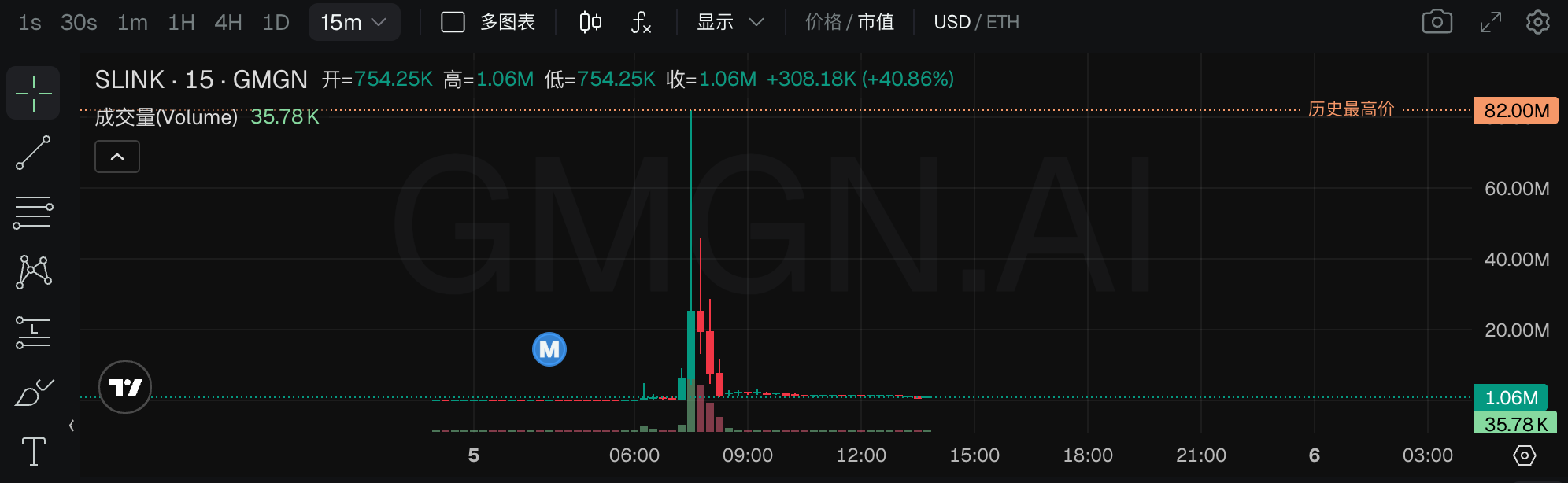
Another widely discussed story was SLINK. Foresight called it a textbook crypto scam. According to the report, hackers compromised a social media account linked to people around Elon Musk, built a narrative around a brain-computer interface experiment, and unexpectedly received added momentum after Musk liked the content. That sequence helped push the token from around $500,000 in market value to $82 million within an hour before it collapsed.
Foresight said the token, SLINK, short for Shivolink, traded on Robinhood Chain and went from a $500,000 market cap to $82 million in about 30 minutes on the morning of Sept. 5, then gave the move back 45 minutes later. The outlet framed the episode as a highly engineered scam hidden behind a price pattern that can look routine in meme coin markets. Retail traders who bought near the top were left exposed.
Foresight also reviewed a group of tools built around FOMO trading. Its report said on-chain tools are becoming critical add-ons for traders trying to track smart money, read market consensus and test a project’s narrative. Social feeds and execution alone are no longer enough. Traders increasingly want to combine live trade data, wallet identity, historical performance, holder structure and off-chain information before making decisions.
That need is especially visible on Robinhood Chain, where Foresight said a token can go from ignored to a market focus point in a matter of minutes. Traders are trying to answer a familiar set of questions: who is buying, whether those buyers have a real track record, why they entered, who controls supply, and whether the liquidity pool can support an exit. That pressure has helped these supporting tools grow quickly.
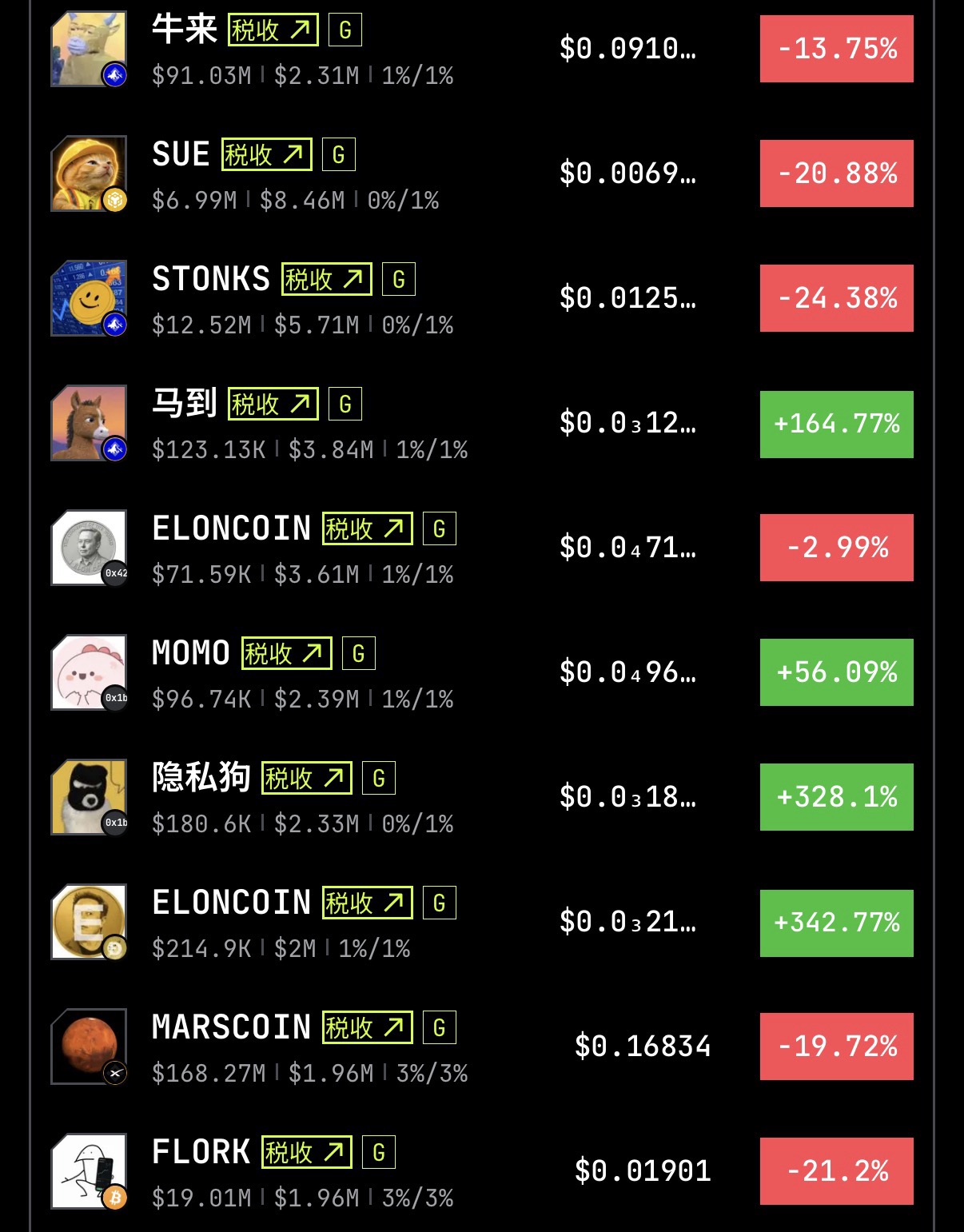
Launchpad competition on BNB Chain was another major topic. Foresight said the arrival of tokenized U.S. equities through bStocks is giving rise to a new “stock-meme” narrative. Flap was described as the first project to connect stock-based liquidity pools with a dividend model. Brew and Sock Market followed with new variations, while older platform Four.Meme has started to fall behind.
The report said meme token liquidity on BNB Chain had previously been priced almost entirely in BNB or USDT. With a new base-asset option now available, a meme coin can trade directly against on-chain shares tied to names like NVIDIA and SpaceX. That effectively links meme trading with real-world assets, two sectors that had little overlap before. Foresight said Flap was the first project to seize the opportunity. It began as an ETHGlobal hackathon effort led by founder Cedric, with a team of fewer than 10 people.
Regulation and infrastructure shifts shaped the second major narrative
The week also brought a string of developments in U.S. policy, crypto product strategy and market infrastructure.
In Washington, Senate Republicans released a 630-page revised version of the Digital Asset Market Clarity Act on Sept. 10. The proposal would replace the House-passed H.R. 3633 through a substitute amendment. Cynthia Lummis, chair of the Senate Banking Committee’s digital assets panel and a key backer of the bill, said the new version incorporates more than 100 changes proposed by Democratic lawmakers.
Foresight said the revised bill redraws oversight boundaries between the Securities and Exchange Commission and the Commodity Futures Trading Commission. It would also place “fake DeFi” projects that still retain control under CFTC registration and set out standards for determining whether a system is not genuinely decentralized. But debate remains over stablecoin yield arrangements and ethics rules for officials. With a critical procedural vote set for Sept. 15, the bill’s path is still uncertain and more congressional hurdles remain.
On the corporate side, MetaMask has formally split from Consensys. After the restructuring, the former Consensys Software Inc. continues under the MetaMask name and will run the MetaMask platform and other consumer-facing products. Ethereum co-founder Joe Lubin, previously founder and chief executive of Consensys, becomes chairman and CEO of MetaMask.
The new Consensys takes over protocol and institutional infrastructure businesses. Consensys Mesh CEO Mike Kriak will serve as CEO of the new company, while former Consensys global institutional lead David Cunningham becomes president. Joe Lubin also serves as executive chairman. Foresight said the split now clearly separates the two companies’ roles. MetaMask is focused on retail users and lowering the barrier to on-chain finance through products including Money Account, MetaMask Card, stablecoin mUSD, and trading and investment functions. The new Consensys is aimed at banks, asset managers, payment firms and other enterprises, with Linea, Besu and Teku staying inside that institutional stack to support tokenized assets, stablecoins, programmable settlement and enterprise blockchain networks.
Stablecoin promotion rules came into focus after Chelsea announced Circle as its front-of-shirt sponsor for the 2026/27 season in late August 2026. Foresight said it marks the first time USDC branding has appeared as the main sponsor on a Premier League shirt. But the arrangement has created questions in Hong Kong because Circle is not a licensed stablecoin issuer there. The report asked whether selling the jersey, wearing it in public or showing it in cross-border TV broadcasts could run into restrictions under Hong Kong’s Stablecoin Ordinance on actively promoting unauthorized stablecoins to the public. Regulators have not given a clear answer.
Prediction markets also drew fresh attention. Solana-based platform world launched its standalone site, world.xyz, on Sept. 9 and opened access to more than 1 million users on its waitlist. Markets include every NFL regular-season game, seven major soccer leagues, Formula 1, the 2026 midterm elections and the Federal Reserve’s next rate decision. Foresight said World had already been operating inside the Phantom wallet since July and had listed more than 150,000 markets. But traffic on launch day came in far above expectations, and the site had to go offline temporarily after being overloaded.
Ethereum’s long-term quantum-resistance roadmap was another area of discussion. Foresight said the Ethereum Foundation has marked December 2029 as the key deadline for completing a quantum-resistant transition for the layer-1 network. The planned Hegotá upgrade will not itself turn Ethereum into a fully quantum-resistant chain, but it is expected to lay groundwork through two core Ethereum Improvement Proposals, FOCIL and Frames, which would support later rounds of hard forks and cryptographic migration.
The report said the date reflects an engineering deadline set by the Ethereum Foundation’s protocol team under a scenario where quantum threats arrive earlier than some expect. Quantum computers have not yet become an active threat to blockchains, but the preparation phase is already underway.
Security incidents and custodial concerns rounded out the week
The third major thread in Foresight’s roundup was risk: hacks, sidechain failures and renewed concern over centralized exchange withdrawals.

On Sept. 8, 22-year-old Singaporean national Malone Lam, known online as “Greavys,” pleaded guilty in federal district court in Washington, D.C. He admitted to one count of racketeering conspiracy. Under a sentencing agreement between prosecutors and the defense, the case carries a recommended minimum sentence of 14 years under federal guidelines, with a statutory maximum of 20 years in prison. The U.S. Attorney’s Office for the District of Columbia announced the development on its official X account.
Foresight said Lam used a fake customer-service social engineering call to steal 4,100 BTC from a wallet that had remained dormant for 12 years. The amount involved exceeded $245 million. The case was presented as a sharp reminder that in crypto, the weakest point is often not code but human behavior.
Liquid, the Bitcoin sidechain, was hit by a separate shock. At 22:05 on Sept. 6, a user sent 4,000 L-BTC to SideSwap’s redemption service. SideSwap burned the tokens and submitted a valid exit authorization. Twenty-three minutes later, Liquid Federation sent 3,996.018 BTC from a Bitcoin mainnet wallet to the user’s address, worth about $320 million.
Foresight said the attacker exploited a flaw in Elements software to create about 4,000 abnormal L-BTC out of thin air, then used the SideSwap redemption route to withdraw nearly 4,000 real BTC from mainnet reserves, almost draining them. Although the actor claimed to be a white hat, the funds had not been returned at the time of the report, and the Liquid network was placed into emergency suspension. The incident exposed deeper risks in sidechain consensus validation under a federated multisignature structure.

WOO X was pulled into the spotlight after users reported prolonged withdrawal delays. On Sept. 6, on-chain investigator ZachXBT issued a community alert saying several verified WOO X users had spent about three days with withdrawals stuck in pending, processing or submitted status. Some cases had stretched for the full three-day period.
At 11 p.m. the same day, WOO X said it had seen the feedback about withdrawal processing times and was reviewing individual cases and overall system status. The platform said some requests could still be in compliance review or in blockchain processing and that the team was working to resolve them as quickly as possible. Affected users were asked to submit their UID, withdrawal order number, request time, asset and network, and screenshots of the order status through official customer service. The company also warned users not to trust unsolicited private messages and not to share passwords, seed phrases, private keys or verification codes.
Foresight added that WOO X has published a reserve ratio of 102.1%, but that figure is self-reported by the platform. Combined with its previous hack, changes in operating entities and market concern tied to BitMart-related shutdown issues, the episode has sharpened attention on liquidity and custody risk at centralized platforms.
Across the week’s coverage, Foresight’s selection showed how fast-moving speculation, policy redesign and trust problems are colliding in the same market. From LAPTOP and SLINK to Liquid and WOO X, the stories that drew the most attention were also the ones that showed how quickly risk can surface.
