
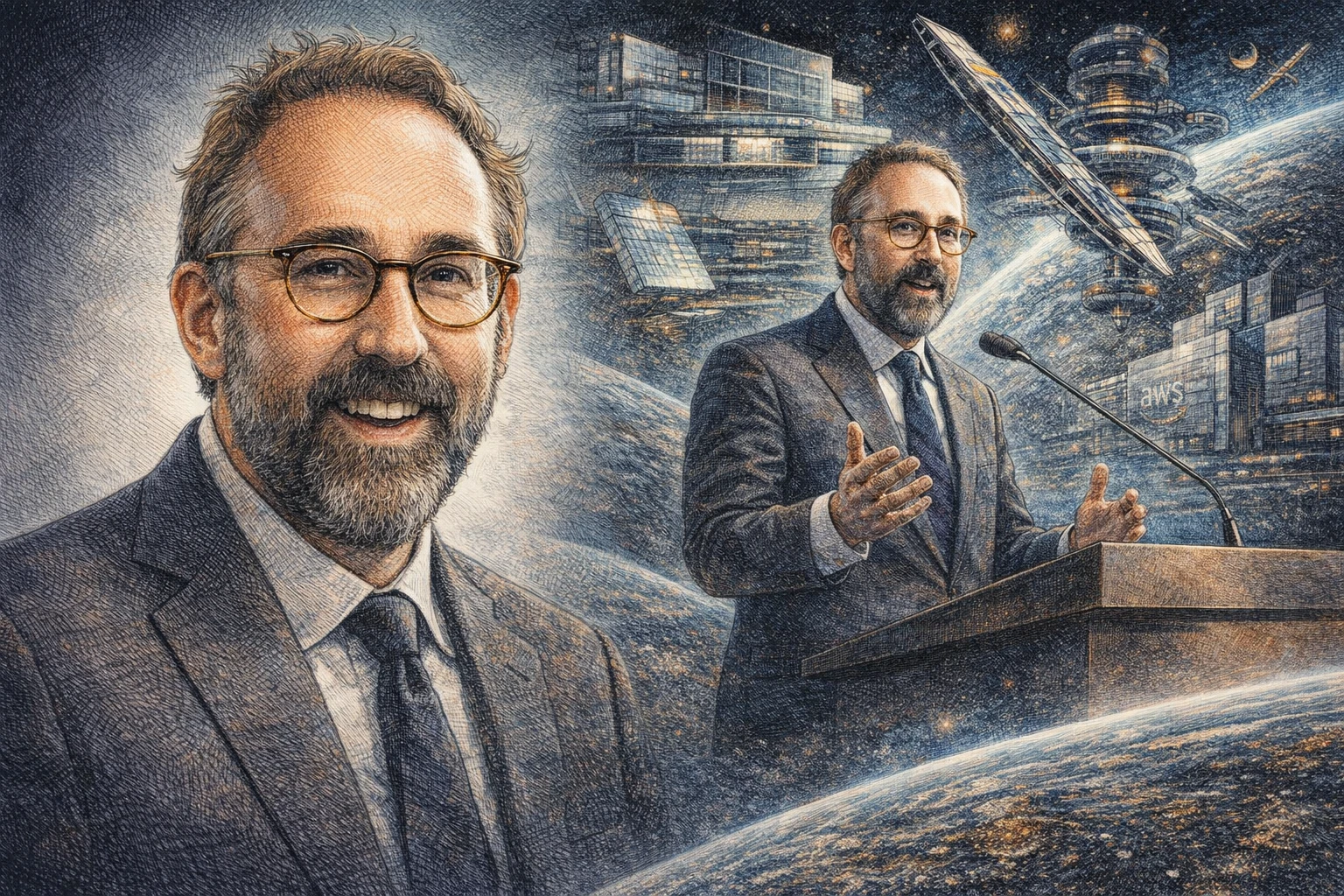
While the market is fixated on NVIDIA GPU and Google TPU, veteran tech investor Gavin Baker highlighted a severely overlooked name at the Sohn Conference: Amazon's Trainium. Baker, who once managed $17 billion in assets at Fidelity, considers Trainium the most undervalued AI chip and expects its volume production of Trainium 3 in the second half of this year to mirror TPU's breakout in 2025.
Trainium: The TPU of 2026
Baker argued that Trainium's significance for 2026 is equivalent to what TPU meant for 2025. He explained that modern frontier AI models use Mixture-of-Experts (MoE) architecture, which requires a switched scale-up network. Only two companies globally have such a network in operation: one powering NVIDIA GPUs, and the other for Amazon Trainium. Google's TPU lacks this capability, and notably, Google does not submit TPU results to its own MLPerf benchmark. Having invested in TPU supply chain companies like Celestica, Baker feels confident labeling Trainium as deeply undervalued.
TSMC's 'Stubborn Old Men' Use Physical Limits to Deflate the Bubble
Addressing fears that AI investment mirrors the internet bubble, Baker offered a surprising answer: TSMC management's conservatism. He described TSMC as run by stubborn men in their 70s who remember the industry's painful bust cycles and understand the devastation of a bubble. Consequently, they resist Jensen Huang's demands for aggressive expansion. 'Jensen goes to TSMC every three months, and they expand about 5%. He wants them to double or triple capacity. If they did, NVIDIA could sell $1.5 trillion in chips next year — but the other side could be very painful for everyone.' Baker believes these physical constraints — power (watts) and wafer shortages — are objectively helping the entire industry avoid a bubble.
Orbital Compute Viability Within Two Years: Ground Suppliers at Risk
Regarding orbital compute, Baker gave a clear timeline: feasibility and economics will be proven within two years, and meaningful market share will be achieved by decade-end. Ground data centers face hard constraints in power and cooling, while space offers solar power and cold shadows for cooling. Baker described a satellite design from a potential orbital compute provider: radiators hundreds of feet long, with the satellite body serving as a rack (8 ft high, 2.5 ft wide, 4 ft deep), multiple racks connected via lasers to form a virtual data center. If this path proves viable, the biggest losers will be ground data center power and cooling equipment suppliers whose massive expansion plans could abruptly stall.
On memory cycles, Baker noted that historical patterns suggest it's time to sell memory stocks, but this cycle may resemble the mid-1990s real capacity cycle, still in early stages. Regarding AI revenue, he predicts OpenAI and Anthropic combined will reach $200 billion in revenue not far off, and AI pricing shifting from subscription to consumption-based billing will drive revenue growth faster than expected. Baker emphasized that his investment edge comes from reading — he rarely meets with company management anymore, as he reads faster than they speak.