
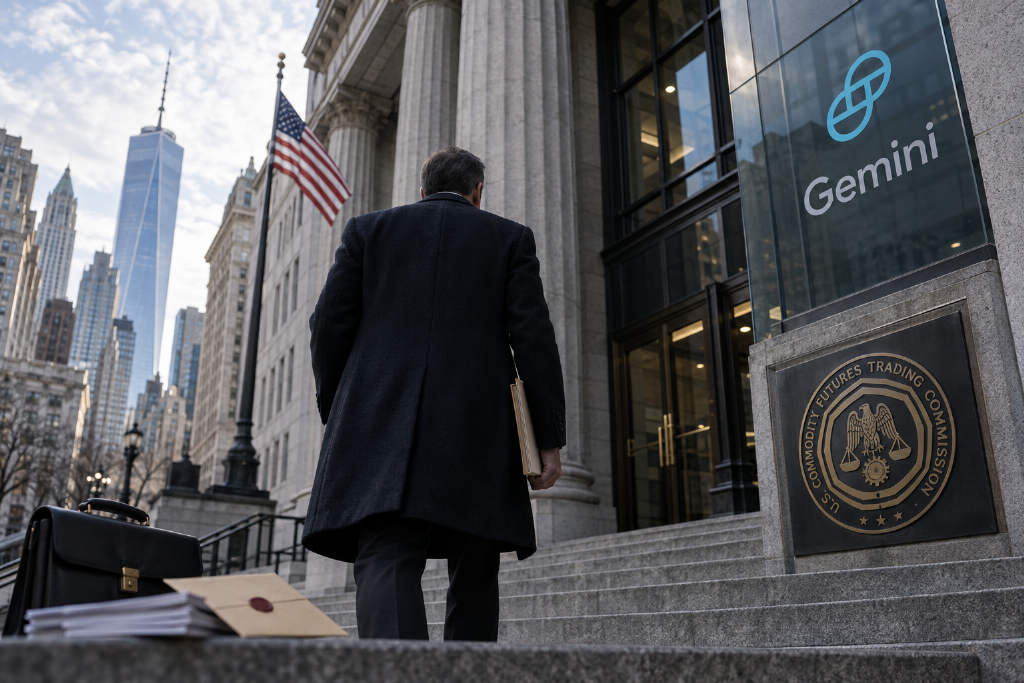
A federal judge in Manhattan on Thursday refused to vacate Gemini’s 2025 settlement with the U.S. Commodity Futures Trading Commission, even though the regulator joined the crypto exchange in asking for that result.
U.S. District Judge Alvin K. Hellerstein denied the joint motion in an eight-page order, keeping in place the consent order’s injunction and Gemini’s promise not to publicly deny the findings. The ruling also noted that Gemini has already paid the $5 million civil penalty.
“The CFTC’s present assessment that this action should not have been brought does not require vacatur or other relief,” Hellerstein wrote.
What Gemini and the CFTC asked the court to do
The CFTC sued Gemini in June 2022, alleging that the exchange gave false or misleading information to agency staff while they reviewed a proposed bitcoin futures contract. That contract would have settled based on an auction price from Gemini’s own platform.
The case was settled in December 2024, less than three weeks before trial, and the court entered the consent order on Jan. 6, 2025.
On May 28, 2026, Gemini and the CFTC jointly asked the court to wipe out the order or, failing that, remove its forward-looking terms. According to the ruling, they pointed to the CFTC’s change in enforcement policy, a shift helped by President Donald Trump’s January 2025 executive order on digital assets, and a review the agency conducted after the settlement.
The CFTC said that review showed it would not bring the case today. It also said staff had acted improperly, in part because they relied on a whistleblower the agency now considers unreliable.
Why the judge said no
Hellerstein found that none of those points amounted to a significant change in the facts or the law.
“Newly acquired knowledge of facts that existed at the time the Consent Order was entered does not constitute a significant change in factual circumstances,” he wrote.
The judge said Gemini knew as early as August 2017 that its own chief operating officer and a subordinate had enabled a fraud scheme against the company.
Gemini fought the case for about three years and then made what the judge described as a calculated decision to settle shortly before trial. Documents received later may have caused the company to regret that decision, he wrote, but that did not make it unfair to keep the order in force.
Hellerstein also said the executive order, a U.S. Justice Department memo titled Ending Regulation by Prosecution, and the agency’s new approach reflected changes in enforcement priorities and policies rather than a change in the law.
He rejected the argument that regulatory pressure made Gemini’s consent involuntary, writing that the company had lawyers and chose to settle.
One opening remains
The ruling still leaves the CFTC with room to act on its own enforcement choices. Hellerstein wrote that the agency retains discretion over its enforcement priorities and may weigh its current policies when deciding whether to enforce the order at all.