
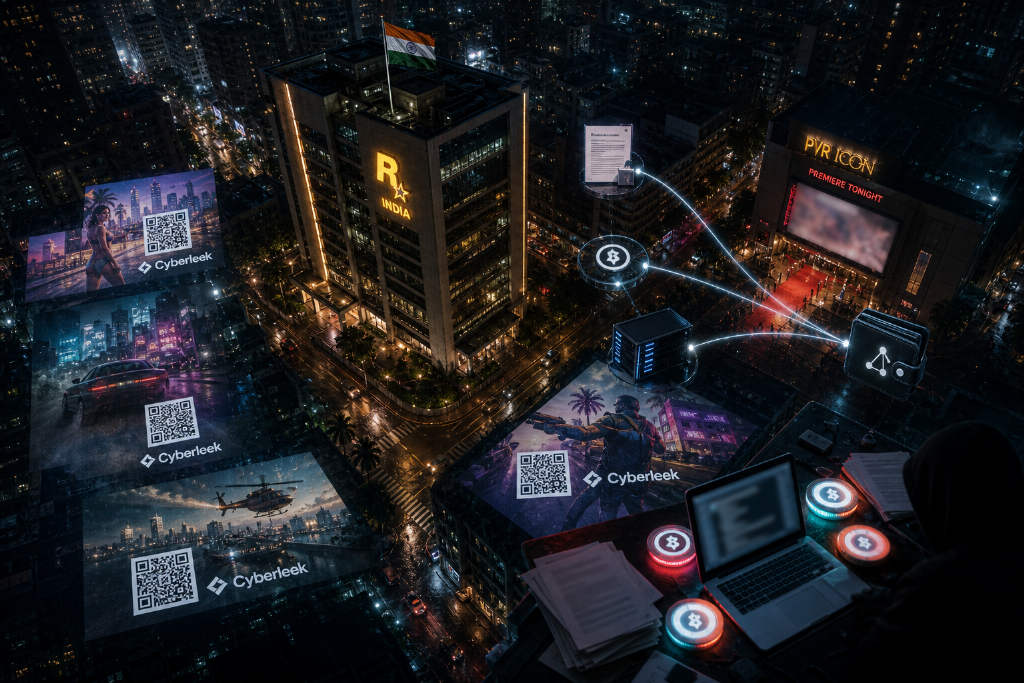
A new round of Grand Theft Auto VI leaks has spilled past the usual gaming rumor cycle and into crypto speculation, with the group known as Cyberleek accused of using stolen footage to drive attention to a meme token.
The article says GTA 6, after years of delays and a 12-year wait, is set for release in November. Its reported production budget stands at $2 billion. Sensor Tower data cited in the piece shows pre-orders have topped 4.38 million copies, with 89% of buyers choosing the Ultimate Edition. On that basis, the report estimates pre-sale revenue at more than $400 million.
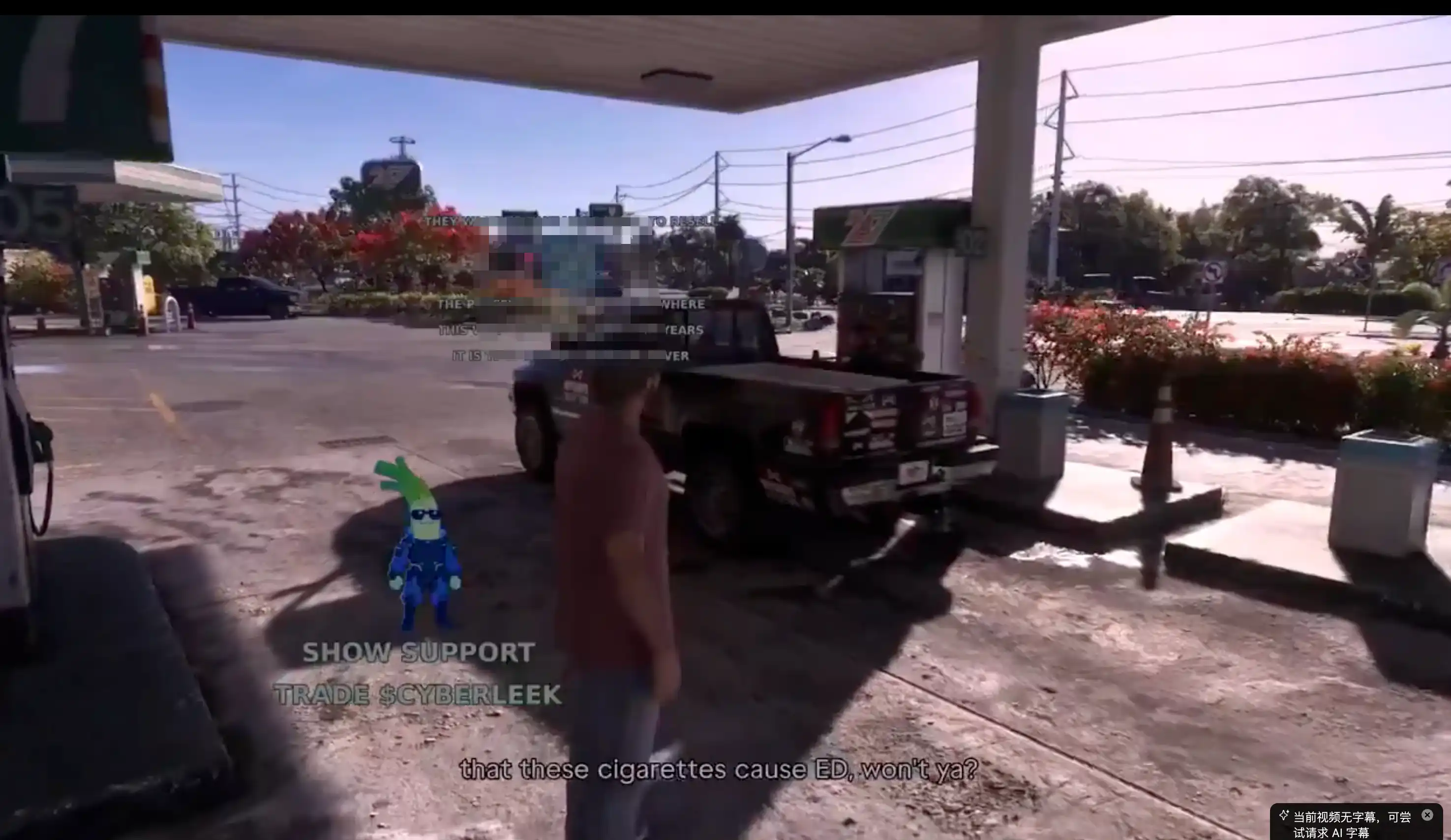
Leak clips drew attention before false download claims spread
The first leaked videos were treated almost casually by parts of the player base. Some viewers focused on technical details in the footage, including brake discs glowing red under hard braking at high speed and then cooling down, reflections on water surfaces, and car doors locking automatically after a window-smash vehicle theft sequence.
That changed when claims began circulating that Cyberleek would release a downloadable PC client for GTA 6, suggesting players could access the title without paying.
The report says that claim was later debunked. Insider Gaming formally withdrew its story and apologized, acknowledging that the material came from a fake account using fabricated screenshots and discussion threads. According to the article, the real Cyberleek has released only short video snippets and map screenshots, not a complete downloadable PC build. Links claiming to offer a full version were described as malware or trojans in most cases.
Report lays out a launch-first, leak-later token timeline
The article argues that Cyberleek did not simply capitalize on an existing trend. Instead, it built the token infrastructure first and used the GTA 6 leak to create demand later.
- Aug. 14: the group spent about 13,878 ARIO on Arweave to permanently secure a Cyberleek-related domain name. At that point, no GTA 6 leak had surfaced.
- Aug. 15: the $CYBERLEEK token was created with a one-time mint of 1 billion tokens. Of that total, 27%, or roughly 270 million tokens, went to a reserve account. A liquidity pool then went live on Raydium, with an initial fully diluted valuation of about $55,000.
- Aug. 16: the launch was quietly announced on X and drew little attention. Trading remained largely inactive for the next two days.
- Aug. 18: the first GTA 6 gameplay footage and map screenshots appeared. Each clip carried uncroppable watermarks and QR codes pointing users to the website and token. Trading picked up that day, with the token rising about 13x in one hour and hourly volume exceeding $5 million.
The article also cites on-chain investigation showing that the same originating wallet network moved roughly 156 SOL through around 20 temporary wallets starting Aug. 13 and paid for the domain registration, token creation, website deployment, and leak distribution. That is presented as evidence that the domain, token, website, and leak materials were prepared in advance by the same operators.
Token burn did not end the monetization story
Based on the figures in the report, the token rose about 20x from a low near $0.0014, with its 24-hour gain at one point reaching 17x and market capitalization briefly climbing to $29 million.
On Aug. 22, Cyberleek publicly burned about 270 million developer-reserved tokens, or around 27% of the total supply, saying the move would show it had no intention of dumping on the market and disappearing. The article adds that the group still held tokens worth more than $500,000 and continued to generate income from trading fees. One estimate cited in the piece put those earnings at $70,000.
The token also came with a voting structure tied directly to future leaks. Holders could send tokens to designated addresses to vote on what should be released next. If a choice such as a daytime aircraft clip won, that material would be published. The report says QR codes linked to the token appeared throughout the leak videos, while the project website used the blunt slogan: "Higher market cap = more leaks."
Breach source said to point to Rockstar’s India division
The report says the source of the leak traces back to Rockstar’s India division. According to the article, Cyberleek gained access there and obtained an Xbox development version of GTA 6.
It places that claim alongside another recent case in India. Two months earlier, in June 2026, Apple supplier Tata Electronics was hit by a cyberattack, and 630 GB of data covering more than 200,000 files was posted on the dark web, including supplier lists for the iPhone 18 Pro, component details, and drop-test images, the article says.
The piece argues that as global technology companies move research, development, and production work to India, they also expose weaknesses in supply-chain security. Headquarters may be heavily protected, but third-party branches and contract manufacturers remain easier targets.
Netflix’s six-hour early window also took a hit
Netflix is presented as another loser in the episode. According to the article, Rockstar had decided to give Netflix the first showing of an extended GTA 6 preview on Aug. 27, six hours before the material would reach YouTube and other platforms. The report describes that as an unprecedented move for a major game trailer.
The article says Netflix pushed hard for the arrangement because it is competing directly with YouTube. It also cites reports that YouTube offered exclusivity deals worth several million dollars to major creators on the condition that they not publish content on Netflix, with creators who declined allegedly facing reduced platform visibility.
Against that backdrop, the spread of leaked GTA 6 content diluted the value of the paid six-hour exclusivity window. The article says Rockstar has not changed its plan, but argues that Cyberleek has already cut deeply into the commercial value of that early-release arrangement by flooding the internet with free footage.