
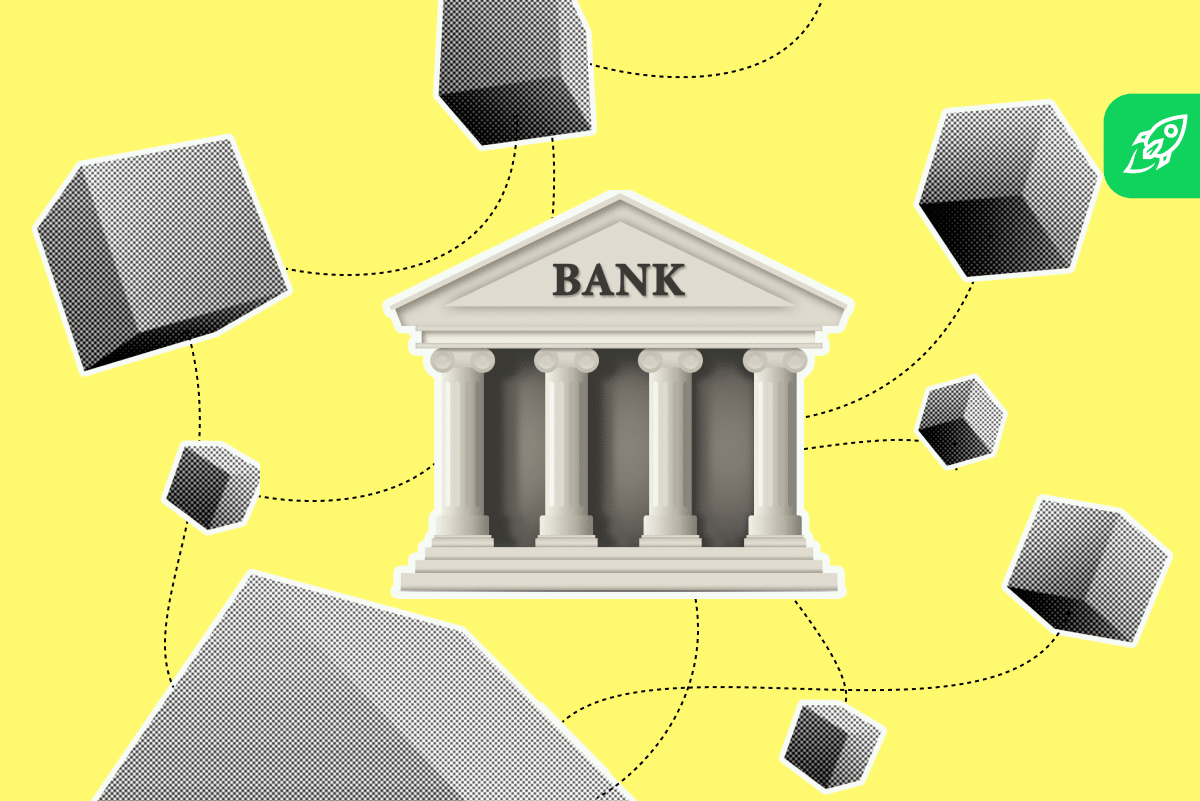
Blockchain’s relevance to banking goes far beyond serving as the base layer for cryptocurrencies. The source describes it as a system for recording information whose defining traits are security, immutability, and decentralized verification. For banks, that points straight to core functions such as payments, transfers, settlement, recordkeeping, and identity management.
Distributed ledgers change how financial records are maintained
The article frames blockchain as a form of distributed ledger technology. Instead of keeping a database in one place, copies are held across multiple participants. Before any data is recorded, participants process, validate, and authenticate it. Once entered, records are time-stamped and assigned unique identifiers. Because every participant can inspect the ledger, falsifying entries becomes far more difficult.
Blockchain adds another layer through hashes. Each block contains transaction data, its own hash, and the hash of the previous block. If the data changes, the hash changes too. The mechanism is simple on paper. Its implications are not. Nodes must verify new blocks, and consensus mechanisms are used to determine whether those blocks are valid before they are added to the chain.
Cost, speed, and security sit at the center of the banking case
According to the source, banks and other financial institutions stand to benefit in three immediate ways: lower transaction costs, less time spent processing transfers, and stronger protection against tampering. The article notes that while modern banking systems already have significant safeguards, fraud, card theft, scams, and identity theft remain persistent problems. Blockchain is presented as a way to strengthen how data and transactions are handled.
Transparency is another part of the case. For institutions such as investment banks and accounting firms, distributed ledgers can offer a more organized and secure way to store and share records. That matters in environments where multiple parties need to verify the same information without relying on repeated reconciliation across separate systems.
Cross-border payments and bank transfers are the clearest use cases
The first major application highlighted in the article is payments. Blockchain-based rails, especially for cross-border transactions, are described as faster and cheaper than conventional channels. The same logic is extended to global trade processing costs and asset exchange fees. In the source’s framing, these gains could help banks compete more effectively on transaction efficiency.
Traditional bank transfers are also identified as a likely area of improvement. By reducing the need for intermediaries and third parties, blockchain could make transfers more efficient, more secure, and easier for customers to use. The focus here is not on removing banks from the process. It is on redesigning the slowest and most fragmented parts of the transfer workflow.
Tokenized assets, lending, and settlement systems widen the scope
The source also discusses asset purchases and sales. Its argument is that blockchain can reduce the role of third parties in asset transfers, cutting fees tied to buying and selling both digital and real-world assets. It extends this point to traditional securities markets, which the article describes as dependent on outdated processes involving custodian banks, brokerages, exchanges, and other participants.
The proposed route is tokenization, replacing claims on real-world and digital assets with tokens on a blockchain. In the article’s view, that would improve processing efficiency and lower fees. Lending is presented in a similar way: loan approval is described as lengthy and cumbersome, while blockchain-based peer-to-peer lending is portrayed as a cheaper, faster, and more secure alternative.
Clearance and settlement systems are another target. The source says blockchain is more efficient at validating and tracking transactions than existing systems and adds that blockchain-based settlement can be both faster and more transparent. A conventional bank transfer may involve many outside parties. A transaction executed directly on-chain reduces that chain of intermediaries and leaves a clearer record trail.
Fundraising, accounting, and identity verification are part of the same picture
Beyond core banking operations, the article brings fundraising and charitable donations into the discussion. It argues that cryptocurrencies can expand the pool of donors, improve the efficiency of cross-border giving, and let donors trace contributions on-chain. As examples, the source names UNICEF, the Salvation Army, and UK’s Breast Cancer Support among organizations that accept crypto donations.
The table of contents also lists trade finance, accounting, and digital identity verification as banking-related blockchain use cases. The excerpt provided does not fully develop every section, but the structure is consistent: blockchain is presented as infrastructure for recording, validating, tracing, and sharing financial data. Rather than treating it as a single-purpose payment tool, the article places it across a broader banking stack, from payments and transfers to settlement and identity checks.