
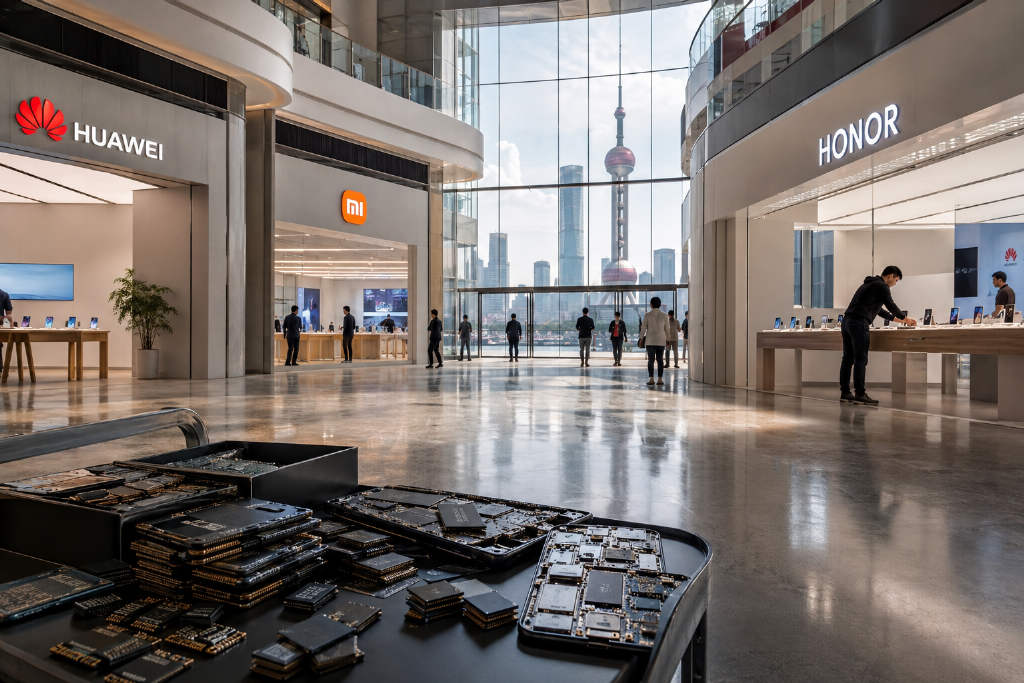
Huawei, Xiaomi and Honor have raised prices on several smartphone models, with some handsets increasing by as much as 1,000 yuan in a single move. The topic quickly climbed to the top of Weibo’s hot-search list.
In-store checks by the Star Market Daily found that the price changes had already been implemented. Some offline retailers had not yet replaced their price tags because the adjustments came so suddenly, and staff could only tell shoppers the new prices verbally. Online price-comparison data also pointed to several rounds of increases, though store traffic did not show an obvious change even as discussion online intensified.
Three major brands moved prices on Sept. 1
On Sept. 1, Huawei, Xiaomi and Honor raised prices across multiple models on sale, covering products from lower-priced devices to flagship phones near the 10,000-yuan mark.
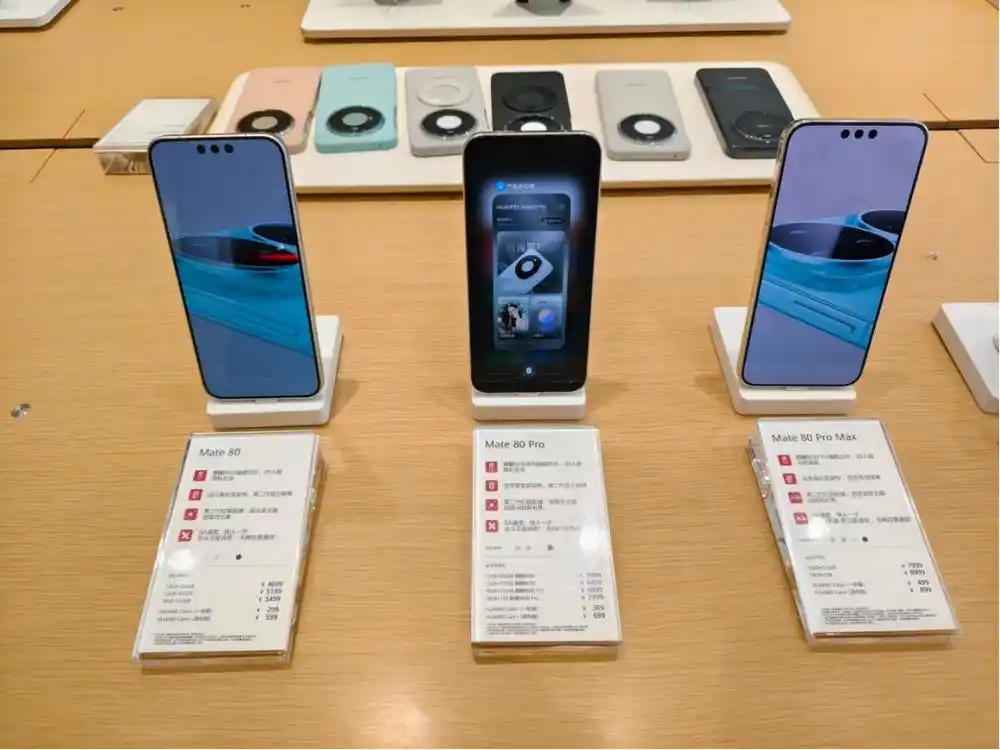
The Star Market Daily visited two Huawei authorized experience stores in Shanghai, at Hopson One in Wujiaochang and Bailian Youyicheng, and found that the latest increase had been pushed through quickly. Store staff said the notice was distributed to experience stores through WeChat groups. Both the Huawei Mate 80 series and the Huawei Enjoy 90 series were affected.
Across the Mate 80 lineup, prices rose by 800 yuan for all configurations. The 12GB+256GB version moved from 4,699 yuan to 5,499 yuan. The Mate 80 Pro and Pro Max saw increases of 1,000 yuan across their variants, and the top-end Pro Max with 16GB+1TB now costs 9,999 yuan, effectively entering the near-10,000-yuan tier.
At some stores, updated tags for the affected models had not yet been printed, and employees told customers that prices had gone up that day. Staff also noted that while Shanghai offers a 15% subsidy on offline purchases of consumer electronics, capped at 500 yuan depending on category, that support no longer puts a 512GB Mate 80 within a 5,000-yuan budget.
When asked why prices were rising, one employee said memory and other chip prices had increased and that most models under the brand were moving higher. As the staffer put it, occasional buyers may not notice, but people in the store every day can feel the changes.
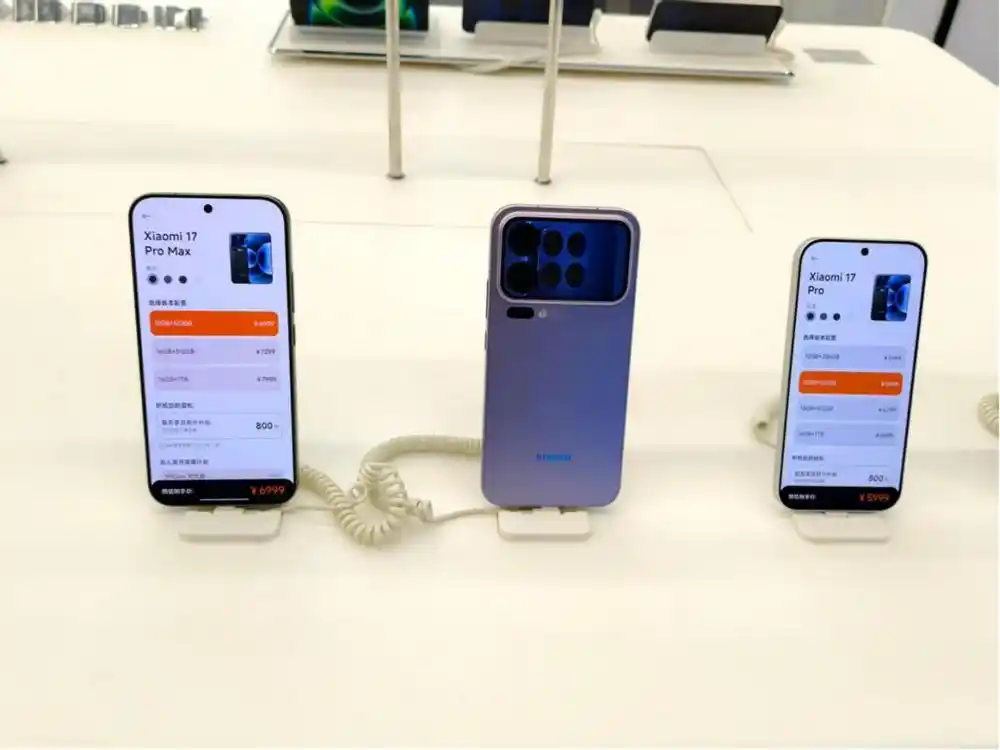
Xiaomi updated its shelf pricing faster than Huawei. At the Xiaomi Home store visited by the newspaper in Wujiaochang, new labels were already in place. Xiaomi 17 rose from 4,799 yuan to 5,099 yuan, up 300 yuan. Xiaomi 17 Pro went from 5,399 yuan to 5,699 yuan, also up 300 yuan. Xiaomi 17 Pro Max increased from 6,499 yuan to 6,999 yuan, a 500-yuan move.
This was the second price increase for Xiaomi’s core models within one month after an earlier adjustment on Aug. 2. A store employee said Xiaomi 17 was released in September last year, and many expected it to get cheaper during the mid-year 618 shopping festival, but the decline never really materialized. The employee said older models used to be discounted because inventory was too high, while current inventory is roughly one month, making the latest increase sudden and leaving little chance of a near-term cut.
At Honor stores, some old price labels were still on display even though actual selling prices had changed. According to an official Honor notice, the 12GB+256GB and 12GB+512GB versions of Honor Power 2 rose by 500 yuan and 600 yuan, respectively. Different versions of the Honor Magic 8 rose by 300 yuan to 500 yuan.
The newspaper said one store employee looked uneasy when hearing that a customer wanted to buy a Magic-series phone and said the listed price was no longer correct and would need to be checked. Another employee said this was the first price increase for the Magic 8 since launch, even though other brands had already raised prices before. At the time of the visit, Magic 8 Pro Air was the only model in the Honor Magic line that had not increased.

Online tracking showed multiple rounds of increases
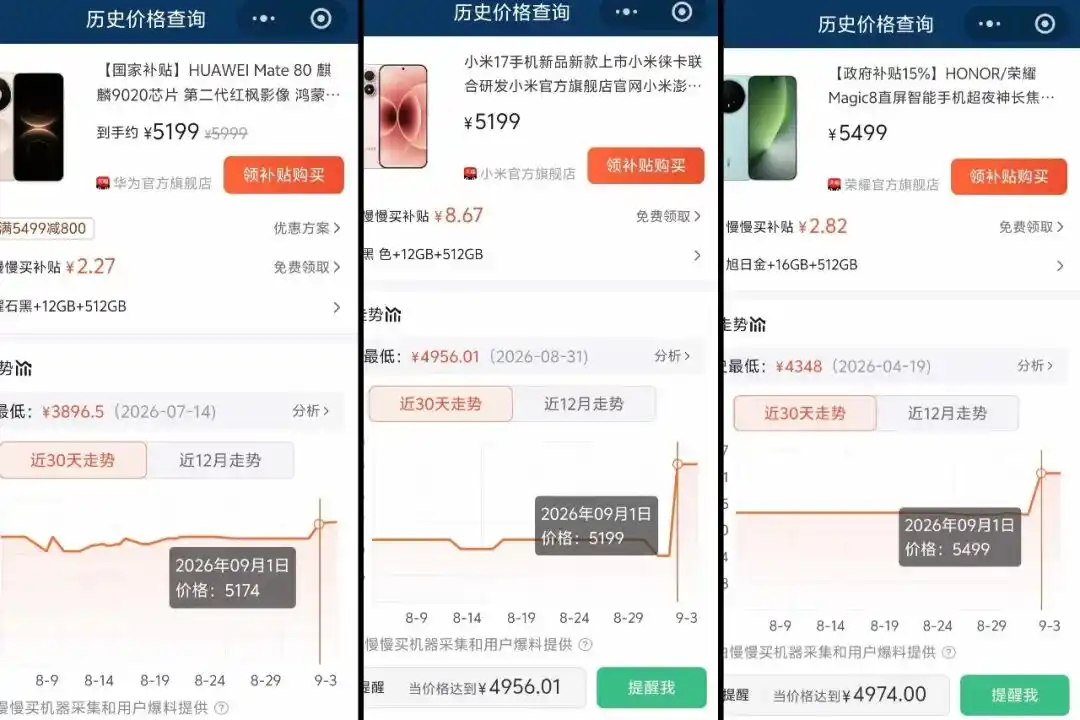
Beyond store visits, the Star Market Daily tracked prices at official Tmall flagship stores through a price-comparison mini program. The data showed that comparable models from Huawei, Xiaomi and Honor jumped together on Sept. 1, while some Xiaomi 17 and Honor Magic 8 variants had already gone through two large increases in August.
For Xiaomi 17 12GB+256GB, the first increase on Aug. 2 pushed the price to around 4,999 yuan, where it stayed for most of the month. It dipped briefly on Aug. 30 and 31, then climbed to 5,199 yuan on Sept. 1. Huawei Mate 80 12GB+256GB held between 4,799 yuan and 4,999 yuan from July 31 through Aug. 31 before rising to 5,174 yuan on Sept. 1. Honor Magic 8 16GB+512GB was priced at 4,699 yuan on Aug. 1, jumped to 4,999 yuan on Aug. 2, hovered near that level, and then surged again to 5,499 yuan on Sept. 1, making for a cumulative increase of 800 yuan within one month.
On Sept. 1, the phrase “multiple phones officially raised prices” shot to No. 1 on Weibo’s trending list.
Even so, the Star Market Daily said offline foot traffic did not differ much from other workdays. One consumer told the paper that if someone is still hesitating, it usually means the need is not urgent and the purchase can wait until year-end promotions.
Huaqiangbei saw more chip-driven recycling activity
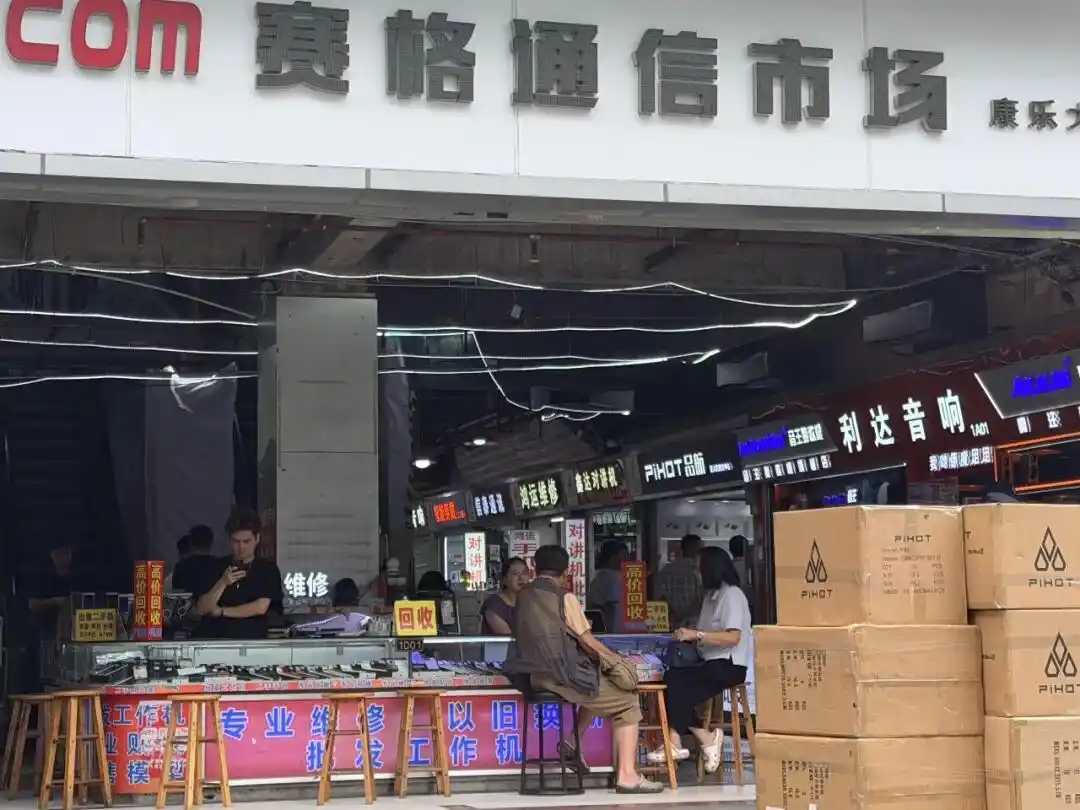
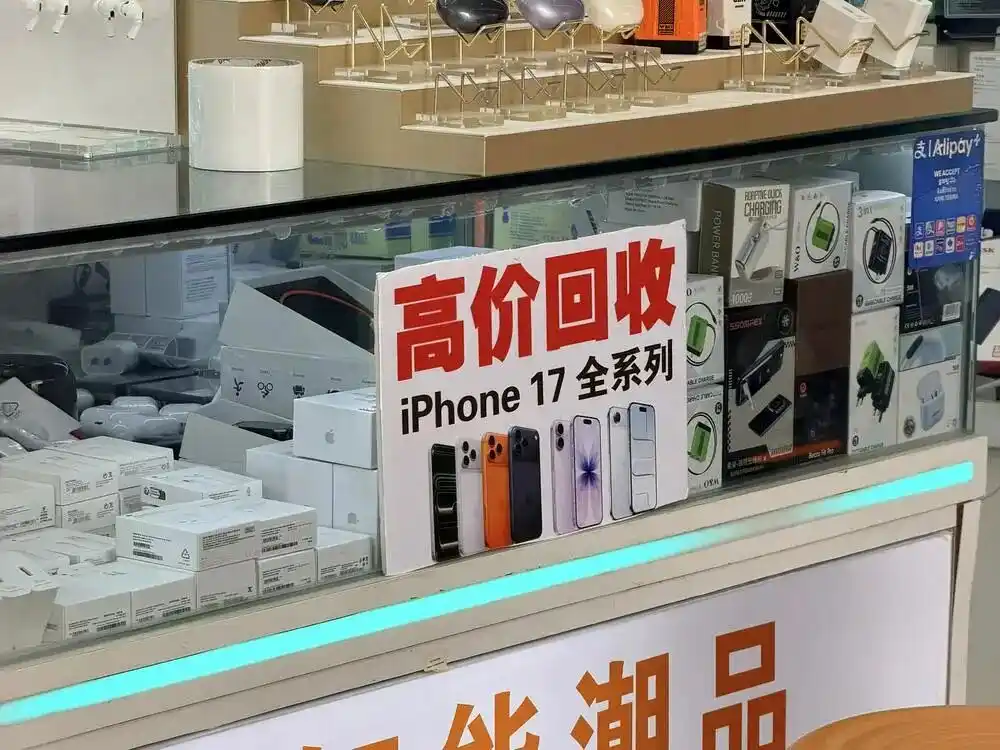
The changes were not limited to new phones. In Shenzhen’s Huaqiangbei second-hand market, the newspaper found that the real force behind the recovery trade was not the Sept. 1 retail adjustment, but the sharp rise in memory chip prices over the past year.
One stall owner said new-phone price increases can lift trade-in prices for corresponding models, but only to a limited extent. Earlier spikes in memory costs had been much more important in pushing up buyback prices and resale prices for used phones. Another recycler said “mint-condition” second-hand devices were roughly 100 to 200 yuan more expensive than before. On that day, the quoted buyback price for a used Huawei Mate 80 256GB “mint-condition” phone was about 3,300 yuan, and around 3,800 yuan for the 512GB version.
When the reporter asked how much a one-year-old Xiaomi 17 might fetch, a stall owner said the phone would have to be inspected in person because condition affects the quote. At most, the owner said, such a device would be bought for about 2,000 yuan.
What mattered more to traders was the way higher chip prices were changing the economics of the business. Chen Shenyu, a manager at CIC, told the Star Market Daily that the AI boom has taken up global memory-chip capacity, pushing up prices for standard mobile memory and advanced-process chips and forcing higher prices for new phones. He said Huaqiangbei’s active recycling market reflects a dismantling arbitrage model: scrap and water-damaged phones are bought, large-capacity memory chips are removed from their motherboards, cleaned and reballed, and then supplied at a lower grade to automotive accessories, IoT hardware or refurbished phones sold overseas.
But the trade is far from risk-free. The newspaper said Huaqiangbei’s scrap-phone market had just gone through a violent swing. At the peak, the buyback price of a scrap phone rose from less than 100 yuan to more than 200 yuan. Then in late March this year, conditions changed sharply, with mainstream memory prices falling by more than 40% within a month, leading many shops to stop buying scrap devices.
Chen said this kind of activity is speculative arbitrage created by a short-term supply-demand mismatch in the industrial chain. He warned that dismantled chips come with yield loss and compatibility risks, while demand from low-end downstream markets is limited. Once upstream semiconductor manufacturers adjust capacity, he said, the premium in the recycling market can disappear quickly. A stall owner made the same point more bluntly: the market will not stay this good forever, and many people who bought in large volumes earlier are now stuck holding inventory.
Memory costs are rewriting smartphone economics
New-phone price increases with stable foot traffic on one side, and a roller-coaster recycling market on the other, point to the same underlying driver: memory chips. Their impact is now being felt across the smartphone cost structure.
Counterpoint Research data showed smartphone memory prices in the second quarter of 2026 rose by more than 80% from the previous quarter. The share of memory chips in a phone’s bill of materials has also climbed from 10% to 15% in the past to more than 20%, and in some lower-end models it is nearing 30%.
Guo Tianxiang, a research manager at IDC China, told the Star Market Daily that almost every major component is getting more expensive except screens, including memory, SoC, PCB and MLCC. He said Qualcomm had already notified clients of price increases beginning in September. Memory prices may rise more slowly than in the first half of the year, but they are still expected to keep moving up.
Guo also said smartphone prices have already gone through several rounds of increases since March, and he expects new models launched by different brands from this month onward to continue rising. Shenghao Bai, a senior analyst at Counterpoint Research, gave a similar view, saying the latest increases were mainly driven by higher prices for key upstream components. Memory chips remain at elevated levels and are expected to keep rising in the second half of 2026, though at a slower pace. SoC prices have also moved up recently, and for now the trend looks set to continue in the short term.
The sub-1,000-yuan phone market is fading fast
As costs climb, smartphone makers are being forced to rethink pricing. Chen Shenyu of CIC said that with chips and memory both at cyclical highs, the costs of processors, memory, displays and batteries are already heavy. Once tooling and channel margins are added, selling a phone at around 1,000 yuan can easily become unprofitable, leaving brands little choice but to cut low-end product lines.
IDC data showed models priced below 1,000 yuan still accounted for 22% of the market in 2023, but that share dropped to 2.7% in the first quarter of 2026. OPPO, vivo, Xiaomi and Honor have all stopped selling phones priced below that level.
Ivan Lam, a senior analyst at Counterpoint Research, said the effect of higher memory costs will become more visible in the second half of the year and all manufacturers will be affected. He said traditional lower-priced phones, especially devices below 2,000 yuan, will face a much tougher sales environment, though the impact will not be limited to the low end. Mid-range and higher-end models will not be fully insulated either.
IDC also estimated that global smartphone shipments in 2026 will fall 16.7% year over year, the largest drop on record, while average selling prices will rise 27.6% to $581.
Fewer units sold, higher prices charged: that is the shape of the new cycle taking hold in smartphones. For China’s handset industry, whether this round of increases turns into a route toward a technology premium or remains a reluctant response to cost pressure is still an open question in the report.
The article was originally published via the WeChat account of Cailian Press and written by Li Jiayi and Huang Xinyi.