
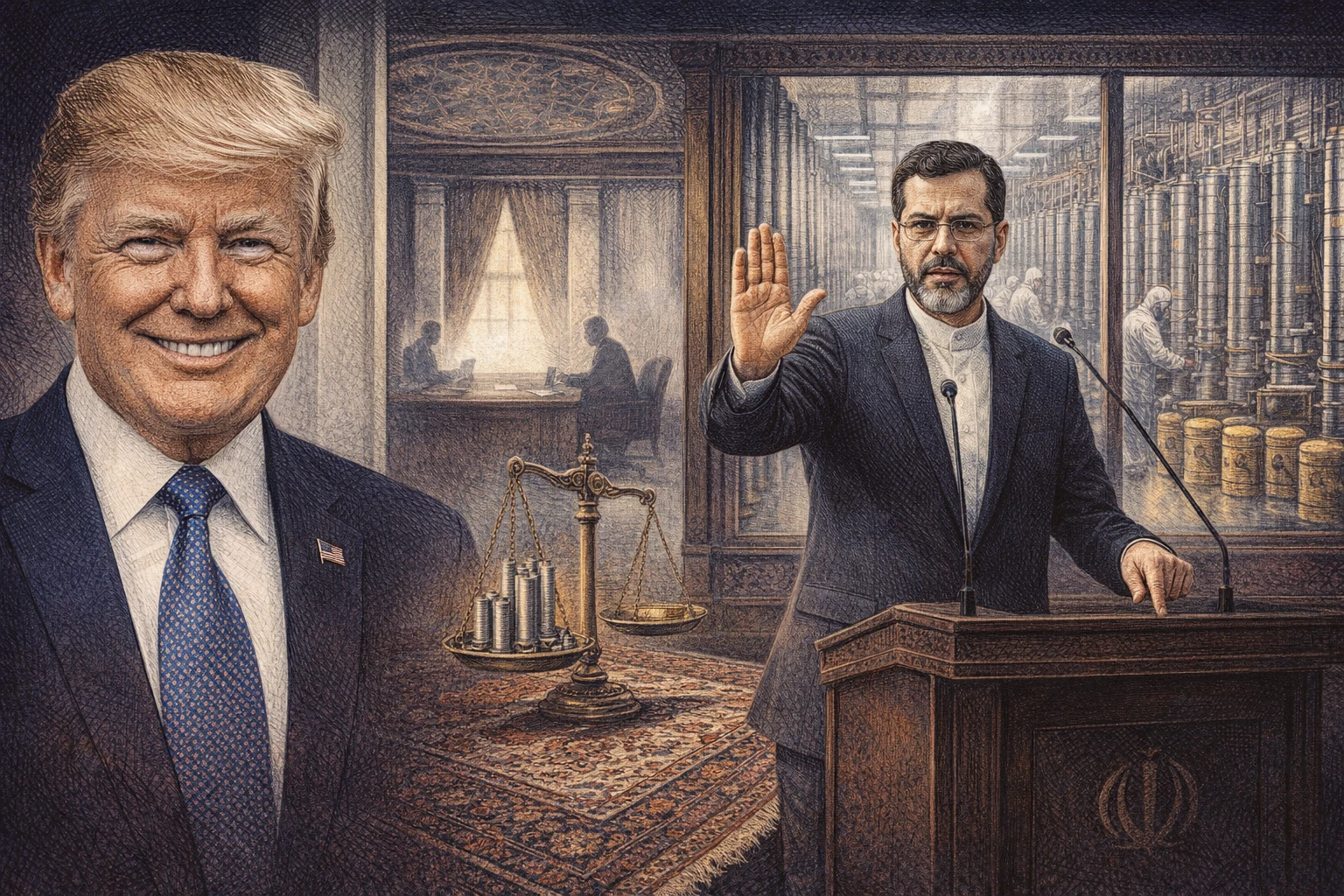
Iranian Deputy Foreign Minister Saeed Khatibzadeh said on April 19 that no enriched uranium will be sent to the United States, rejecting recent claims linked to Donald Trump. In comments to the Associated Press, Khatibzadeh said he could state clearly that none of Iran's enriched uranium would be transferred to the US.
The remark was a direct response to Trump's recent position. According to the report, Trump said the US military would enter Iran to retrieve about 440 kilograms of enriched uranium believed to remain buried under the rubble after US strikes on Iranian nuclear facilities last year. Khatibzadeh said such a plan was absolutely unworkable, adding that Iran is willing to address concerns but will not accept terms it sees as impossible.
US demands met with outright rejection from Tehran
At the center of the talks are three US demands: dismantling the Fordow, Natanz, and Isfahan nuclear sites; shipping all remaining enriched uranium in Iran to the United States; and halting uranium enrichment for 20 years. Tehran has rejected the package in full.
Another deputy foreign minister, Majid Takht-Ravanchi, had already laid out Iran's position. He said Tehran could discuss the scope of limits on its nuclear program, but a zero-enrichment framework is a red line. Iran maintains that enriching uranium on its own soil is a sovereign right that cannot be taken away.
Iran counters 20-year pause with a five-year proposal
Iran has formally rejected the 20-year suspension proposal and offered a shorter five-year alternative. The counteroffer shows that Tehran has not closed the door on negotiations, but it is also setting a firm ceiling on concessions.
Iranian officials argue that the current US negotiating stance is too hard-line for the talks to make real progress. Tehran's core position remains unchanged: it is willing to accept some limits, but it will not give up domestic enrichment capacity altogether.