
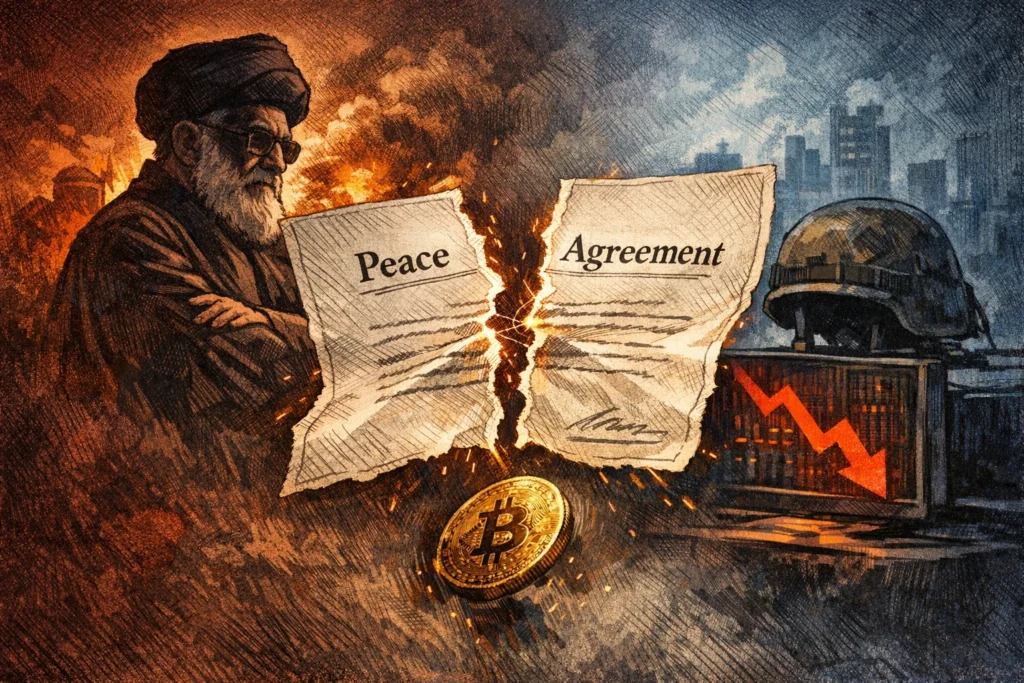
Iran has formally stepped away from the ceasefire arrangement it signed with the United States in June, reopening a confrontation that had briefly been framed as a pause in hostilities. On July 18, Iran’s Supreme Leader Mojtaba said U.S. President Donald Trump’s signature on the agreement was "worthless" and declared that Tehran was no longer bound by the ceasefire.
The announcement followed a missile strike by Iran on July 17 that hit a U.S. base in Jordan, killing two American service members and leaving one soldier missing, according to U.S. Central Command. The U.S. military then said it had carried out retaliatory airstrikes inside Iran for an eighth consecutive night. The stated objective was to reduce Iran’s ability to threaten commercial shipping in the Strait of Hormuz.
Mojtaba says Trump’s signature no longer carries weight
Mojtaba, who has rarely appeared in public statements in recent months, issued a written statement through Iranian state media on July 18. He accused Washington of continuing to violate the initial peace arrangement reached between the two countries and said Trump’s signature was now "worthless," adding that U.S. commitments no longer had any binding force.
He also warned that the Iranian people and what he described as the resistance front would make the United States learn an "unforgettable lesson."
Fars, the Iranian semi-official news agency, reported that Deputy Foreign Minister Gharibabadi had earlier confirmed Tehran had unilaterally stopped implementing its ceasefire commitments with the United States. The Associated Press also cited his remarks. Gharibabadi blamed Washington for breaking the preliminary agreement reached in June and said the Iranian government’s focus had now shifted to self-defense.
June agreement gives way to renewed fighting in July
According to the report, Iran and the United States signed the Islamabad Memorandum of Understanding on June 18. The preliminary peace deal included a 60-day ceasefire, the reopening of the Strait of Hormuz, a U.S. pause on oil export sanctions, and the launch of nuclear talks.
Trump later said at the NATO summit on July 8 that the ceasefire was "over." Shortly before and around that period, the U.S. military struck Islamic Revolutionary Guard Corps speedboats, air defense systems, and radar stations between July 7 and July 9, setting the stage for the current round of escalation.
U.S. confirms eighth straight night of strikes and issues worldwide travel warning
U.S. Central Command said on July 18 that American forces had attacked targets in Iran for an eighth straight night. It also said another round of strikes was launched later that day, again focused on degrading Iran’s capacity to threaten commercial traffic through the Strait of Hormuz.
The U.S. State Department on the same day issued a rare worldwide travel advisory, urging American citizens overseas to remain on high alert. It warned that the situation in the Middle East could trigger "unforeseen escalations" and said U.S. diplomatic facilities outside the region could also become targets.
The report said Iran has attacked U.S. bases in Jordan, Kuwait, Bahrain, Oman, and Qatar with drones and missiles during the current conflict, showing that its retaliatory campaign has spread beyond a single country.
Brent crude nears $90
The worsening security situation in the Middle East has also fed into global asset pricing. Brent crude contracts have climbed close to $90, the report said, marking a one-month high.
Market attention is now on whether higher oil prices could add to inflation pressure and raise the probability of a Federal Reserve rate hike in September.