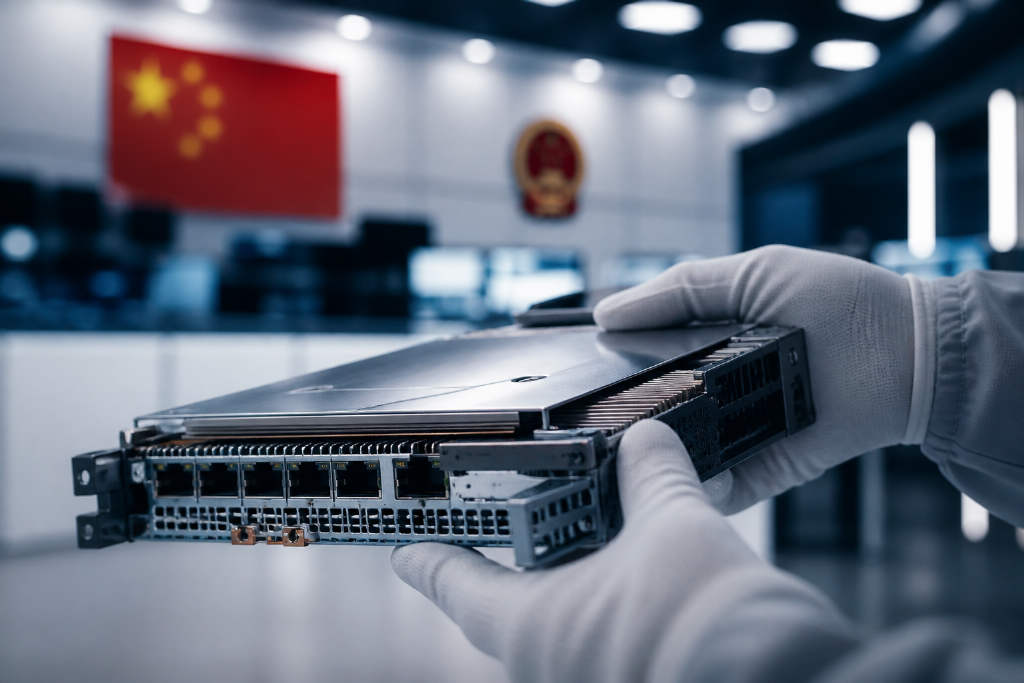
On July 30, the Yangtze River Delta (Jiaxing) Token Operations Center officially launched, with Jiaxing City Investment and Development Group taking the lead. The article says the center follows a “five unifications” model, including a unified API, token metering, settlement, subsidy offsets, and security audits, while offering access to more than 100 major models such as DeepSeek and Qwen. It frames the move as part of a broader shift in which infrastructure-like AI services are being absorbed by state-backed operators. The piece also points to 2026 moves by China’s three telecom giants, notes their 2025 revenue growth rates, and argues that as tokens become more like utilities, pure token-selling margins may shrink.
On July 30, the Yangtze River Delta (Jiaxing) Token Operations Center officially launched, with Jiaxing City Investment and Development Group, a state-owned urban builder that has handled roads, bridges, gas services, and urban renewal, taking the lead.
At a local inspection, a city leader asked the question hanging over the room: “Why is it your city-investment group that is doing this?”
The article says Jiaxing’s answer is not that the group produces tokens or builds giant compute clusters. Its head of operations, Ma Yinxiao, put it plainly: “We are a transporter.” In practice, that means integrating scattered compute and models and acting as a “model wholesaler.”
The Jiaxing model is built around “five unifications”: a unified API entry, unified token metering, unified fee settlement, unified policy offsetting, and unified security auditing. Once connected, a company can access more than 100 mainstream large models, including DeepSeek and Qwen, through three service tiers: inclusive packages, on-demand plans, and custom offerings.
The goal, the article says, is to make AI capability as accessible and transparent as water or electricity.
Why now? The piece links Jiaxing’s move to China’s long infrastructure playbook. New infrastructure that is eventually treated as a public service often follows the same path: private capital tests demand first, state-backed platforms take over operations later, and the service eventually becomes part of municipal utilities.
Water, power, gas, and broadband all went through that cycle. Jiaxing, in the article’s view, is now at the “state-backed takeover” stage for compute infrastructure.
It also says Jiaxing has real assets behind the move. As a national compute hub node city, it hosts four 10,000-GPU-scale compute centers run by Runze, Alibaba, China Telecom, and China Mobile, and its compute scale ranks first in Zhejiang. On the industrial side, the city has 6,327 industrial firms above designated size and more than 230 AI science and technology companies.
The article then broadens the frame. Jiaxing is not the only state-backed player trying to sell tokens. In spring 2026, China’s three telecom operators all signaled that they were entering the “token era.”
China Telecom chairman Ke Ruiwen said, in the article’s quoted wording, that “the intelligent cloud system is a token operating system.” China Mobile called for “dual high-speed growth of Byte + Token,” and Shanghai Mobile rolled out a general service priced at 1 yuan for 400,000 tokens, with phone bills also usable for payment.
The article cites 2025 revenue growth rates of 0.9% for China Mobile, 0.07% for China Telecom, and 0.68% for China Unicom. It uses those figures to argue that traditional traffic-based businesses have run into a growth ceiling and need a new unit of measurement to support their revenue curve.
From cloud vendors such as Alibaba Cloud, Tencent Cloud, and Baidu AI Cloud, to model companies such as DeepSeek, Zhipu, and KIMI, to token factories and relay stations, everyone is selling tokens. Now city-investment groups are joining in too.
The article’s larger point is that token services are becoming utility-like. As AI access costs keep falling, tokens are turning into a basic supply layer for the digital economy. But the margins on naked token sales are likely to keep shrinking, eventually resembling the low-margin utility model of tap water or electricity.
That is why, the article says, only large platforms and state-backed players can sustain this kind of capital-intensive business. Jiaxing’s entry therefore looks less like the beginning of a gold rush and more like a valuation anchor event: when the most conservative and policy-dependent form of capital starts doing the same business, excess profits may already be gone.
The article then turns to the value chain. The biggest money in water is not made by the company that lays pipes and builds water plants; it is made by brands that turn water into beverages, coffee, or packaged products.
Token economics, the article argues, may follow the same pattern. ByteDance’s Jimeng product consumes SeedDance video-generation tokens under the hood, but users pay for a finished video. Cursor and Windsurf run on code-model tokens, yet developers are really buying coding productivity.
The closer a product is to end users, and the better it translates token consumption into something people are willing to pay for, the higher the margin. The farther away it sits, and the more it sells raw tokens, the closer it gets to a low-margin utility.
Still, token selling is not going away. Even today’s most profitable AI applications are still selling tokens underneath the surface. The difference is that they wrap those tokens in a value layer users understand and pay for: a video, a function, or a conversation.
Jiaxing already has a local example. Phyduc Design Technology’s AI Smart Design platform in Pinghu uses standardized token services to cut the design cycle for down jackets, bags, and children’s clothing from weeks to hours, while improving development efficiency by as much as 30 times and reducing image-generation costs by at least 50%.
The article says this shows the deeper logic of Jiaxing’s approach. The city is not only selling raw tokens. It is also combining token services with local industries such as textile new materials, smart terminals, and advanced equipment, turning tokens into part of real workflows such as quoting assistants, best-seller prediction, and AI quality inspection systems that can read circuit diagrams.
Once tokens are embedded in a workflow, the article says, they stop being a unit of measurement and become a production tool. And production tools, unlike raw utility inputs, can command a premium.

This article was originally published by Bit.Fan. For more cryptocurrency news and market insights, visit www.bit.fan. Disclaimer:
The market information, project data, and third-party content displayed on this platform are for industry information sharing only and do not constitute any form of investment advice or return commitment.
Cryptocurrency trading carries high risks. Users should fully assess their risk tolerance and make independent decisions. All profits, losses, and legal responsibilities are borne by the users themselves.