
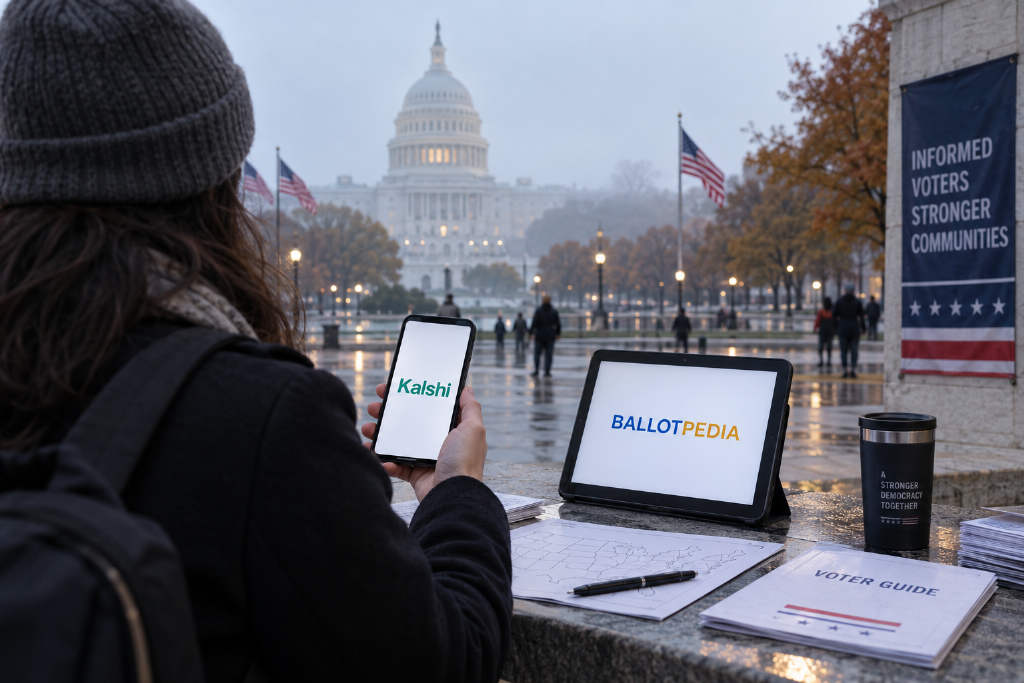
Prediction market exchange Kalshi has introduced a new feature, My Ballot, ahead of the U.S. midterm elections. The service combines verified nonpartisan sample ballot data from Ballotpedia with Kalshi’s event prediction data to give voters a searchable political information tool.
Kalshi said U.S. midterm turnout is typically lower than turnout in presidential elections, and many voters go into the election without knowing much about past voting records. My Ballot is meant to fill that gap.
Address-based lookup for local election information
Users can enter an address to pull up political data for their district. The system identifies the contests on that ballot, including races for Congress, governor, state legislature, and ballot measures.
Kalshi describes My Ballot as a personalized guide built on Ballotpedia’s nonpartisan sample ballot lookup tool, which the report calls the most comprehensive source of ballot information in the United States.
Ballotpedia was founded in 2007. What began as a small volunteer team has grown into a key resource for voters, media organizations, and researchers. Kalshi said the new feature is built on that data foundation and adds another reference layer to its existing midterm prediction products.
Linked with race data already available on Kalshi
The platform connects election information with live prediction markets and pairs that with data already available through Race Intel. Those inputs include polling averages, fundraising figures from the Federal Election Commission, and historical vote records.
That setup gives users a way to review both ballot information and market pricing while checking federal and local contests tied to their address.
Kalshi says many visitors use the site for information, not trading
On Kalshi, prediction prices are formed through an open order book. Participants commit capital and trade against one another, turning those transactions into continuously updated market signals.
According to the news release, more than 80% of visitors to The Midterms Hub did not place trades and instead used the platform as a regular source of political information. With My Ballot now live, Kalshi expects to draw more users looking up election data during the campaign period.
Key points from the report
- Kalshi launched My Ballot, combining Ballotpedia’s personalized ballot data with the exchange’s event derivatives market data.
- The tool matches elections at both the federal and local levels based on a user’s address, covering Congress, governor, state legislature, and ballot measures.
- Prediction market prices are built through an open order book and reflect real-time market signals formed by user trading.
- More than 80% of visitors to The Midterms Hub used the data as a news and decision-support resource rather than for trading.
- Ballotpedia, Kalshi’s partner on the project, is a nonprofit organization founded in 2007 that provides nonpartisan U.S. political election data.