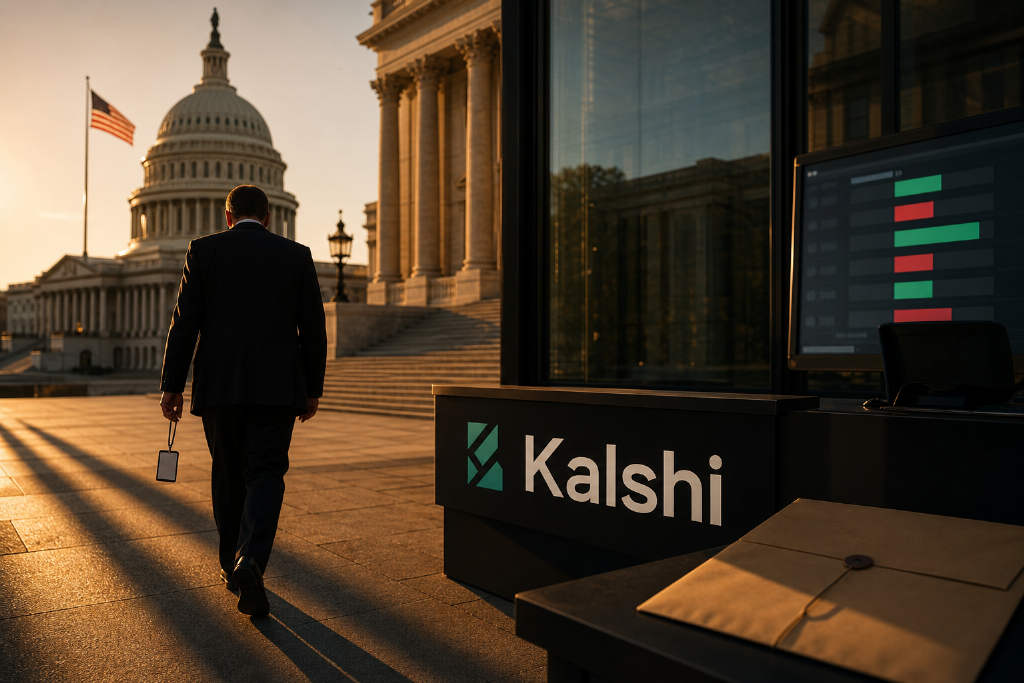
Kalshi said on Aug. 31 that it had permanently banned a former member of the U.S. House of Representatives and fined him $71,000. Combined with a $35,000 settlement payment he made to the Commodity Futures Trading Commission, or CFTC, in July, the total financial penalty comes to about $106,000. According to the platform, the former lawmaker bought contracts tied to not attending the 2026 State of the Union, then later said he would attend, which pushed up the price of contracts tied to attending. He ultimately did not appear and made about $17,600 from the trade. Kalshi said the action was meant to punish manipulation. The report also noted that the individual had been expelled from the House in 2023 over fraud. The item was cited by Techub, with CryptoBriefing named as the source.
Kalshi said on Aug. 31 that it had permanently banned a former member of the House of Representatives and imposed a $71,000 fine.
When combined with a $35,000 settlement payment the individual made to the Commodity Futures Trading Commission, or CFTC, in July, the total comes to about $106,000.
According to the platform, the former lawmaker bought contracts tied to not attending the February 2026 State of the Union, then later said he would attend, pushing up the price of contracts tied to attending. He ultimately did not show up and made about $17,600 in profit.
The report added that the individual was expelled from the House in 2023 over fraud. Kalshi said the move was intended to punish manipulation.
CryptoBriefing was cited as the source.
This article was originally published by Bit.Fan. For more cryptocurrency news and market insights, visit www.bit.fan. Disclaimer:
The market information, project data, and third-party content displayed on this platform are for industry information sharing only and do not constitute any form of investment advice or return commitment.
Cryptocurrency trading carries high risks. Users should fully assess their risk tolerance and make independent decisions. All profits, losses, and legal responsibilities are borne by the users themselves.