Federal Reserve Chair Kevin Warsh is preparing to speak at the Jackson Hole global central bank symposium, and Wall Street is focused on more than whether he sounds hawkish or dovish. The bigger question is how his message could reprice Treasury yields and U.S. stocks.
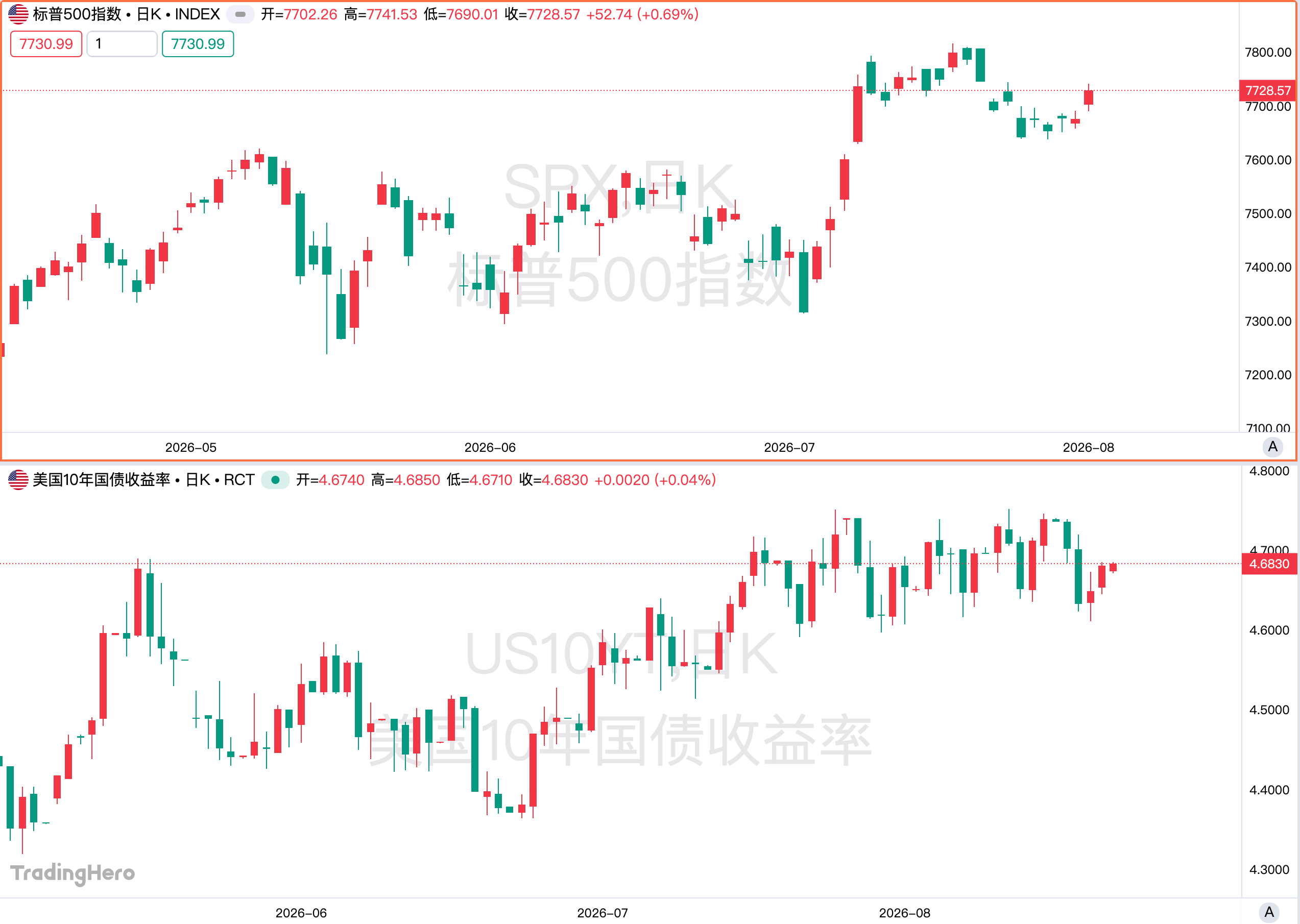
Markets are already on edge. The S&P 500 has traded unevenly after setting a record high two weeks ago. The 10-year U.S. Treasury yield is still around 4.66%, while the 30-year yield briefly climbed to 5.34% last week, the highest level since the global financial crisis, and was still near 5.20% in Friday’s Asian session.
At the same time, the Fed’s PCE inflation gauge rose 3.7% year over year in July, well above the central bank’s 2% target. Markets currently put the probability of a 25-basis-point rate hike in September at about 34%.
The market’s bigger fear is ambiguity, not hawkishness
According to the article by Zheng Yao for Jin10 Data, Warsh has stressed reducing forward guidance since taking office in May and has pledged to push inflation back to 2%, but he has rarely explained the policy path in detail. After the Fed’s July meeting, he declined to spell out how the central bank would respond under different economic scenarios. Some of those comments even fueled speculation over whether the 2% inflation target might be adjusted, after which long-dated Treasuries sold off.
That is why the market’s immediate concern is not that Warsh might sound tough on inflation. It is that he may once again avoid offering a clear framework.
Torsten Slok, chief economist at Apollo Global Management, said Warsh does not need to signal the next rate decision in advance, but he should at least explain how he views inflation and employment. If he continues to withhold a policy framework, long-end rates could move materially higher.
A tougher tone does not automatically mean a deeper long-bond sell-off
This time, the market is not simply following the old chain of hawkish remarks, lower bond prices and higher yields.
Market participants at JPMorgan, Apollo Global Management and Morgan Stanley argue that if Warsh clearly defends the 2% inflation target and convinces investors that controlling prices remains the Fed’s top priority, that could actually strengthen the central bank’s credibility and trigger buying in 30-year Treasuries.
Priya Misra, a portfolio manager at JPMorgan Investment Management, said that if Warsh can rebuild confidence in the Fed’s ability to fight inflation, some of the concern surrounding the Fed’s credibility would ease.
That matters directly for term premium. A New York Fed measure tracking term premium on long-dated bonds is now close to its highest level since 2014, a sign that investors are demanding greater compensation to hold long-term U.S. government debt.
Vishal Khanduja, head of fixed income at Morgan Stanley Investment Management, said term premium could fall meaningfully if the Fed regains anti-inflation credibility. In other words, even if Warsh delivers a hawkish speech, the 30-year yield could still decline.
For stocks, the yield curve is the key signal
The article lays out three possible market reactions after Warsh speaks on Friday.
- First, if he clearly defends the 2% inflation target and presents a credible policy framework, long-dated Treasuries could rise, with the 30-year yield and term premium moving lower. That could give U.S. equities, especially richly valued technology stocks, some relief.
- Second, if he directly reinforces expectations of further rate hikes, short-end yields could rise first, putting more immediate valuation pressure on equities.
- Third, if he remains vague, markets may question the Fed’s anti-inflation credibility even more, leaving long-dated Treasuries as the main risk point. The 30-year yield could retest recent highs and weigh on stocks through financing costs and valuation pressure.
Powell’s 2022 Jackson Hole speech remains the clearest reference point
Wall Street is still looking back at Jackson Hole in 2022. Then-Fed Chair Jerome Powell delivered a short but forceful anti-inflation speech, sending the S&P 500 down 3.4% that day. A month later, the index had fallen 9.92% in total.
This year’s setup is more complicated, the article said. U.S. government debt has surpassed $40 trillion. Fiscal deficits and continued long-bond supply are pushing term premium higher, while large-scale fundraising by artificial intelligence companies is adding to capital demand.
Slok warned that, taken together, these factors mean that 「the entire yield curve faces upside risk」.
For Warsh, the real task on Friday may not be to hand the market a clear answer on whether the next move is a hike or a cut. It may be to convince investors that the Fed still has a credible framework for bringing inflation under control. For equities, the most important signal may not be how forceful he sounds, but whether long-end Treasury yields begin to fall or keep climbing.