
South Korea’s album exports rose to a record high in the first half of 2026, even though streaming has long been the dominant format in music consumption. According to trade statistics from the Korea Customs Service, the country exported $257.478 million worth of albums from January to June, equivalent to about KRW 382.3 billion, up 125% from the same period a year earlier and the highest first-half figure on record.
The export map shifted as well. The U.S. became South Korea’s biggest album export market for the first time, overtaking Japan with imports worth about KRW 110.1 billion. China ranked second at about KRW 91 billion, while Japan fell to third at about KRW 67.8 billion. Germany, Taiwan, Hong Kong, the Netherlands, the U.K., France and Poland also made the top 10.
That performance looks out of step with the streaming era on the surface. But the numbers point to something broader than music sales alone: K-pop is exporting a consumer model that bundles idols, collectibles, fan communities and participation.
Returns from BTS and BLACKPINK helped drive the surge
The sharp increase in K-pop album exports in the first half of 2026 coincided with the return of several globally established groups. BTS released its fifth full-length album, "ARIRANG," in March, its first studio album in three years, and reached major Billboard singles and album charts in the U.S. BLACKPINK released its third mini album, "DEADLINE," in February, with cumulative sales approaching 2 million copies by June.
Luminate, a U.S. entertainment data company, said BTS’s "ARIRANG" helped lift total CD sales in the U.S. by 16% in the first half of 2026. The album sold 567,000 CDs and 331,000 vinyl records in the U.S. during the period, making it a major source of growth for the country’s physical music market.
Eight of the top 10 best-selling CDs in the U.S. in the first half were tied to K-pop. Alongside BTS at No. 1, the list included ENHYPEN, ATEEZ, Stray Kids, TOMORROW X TOGETHER and KATSEYE, the girl group developed through a HYBE partnership in the U.S.
The figures suggest K-pop is not only established in U.S. streaming and concert markets. It is also helping sustain a physical music business that has otherwise been shrinking.
K-pop albums are selling collectibles and access, not just CDs
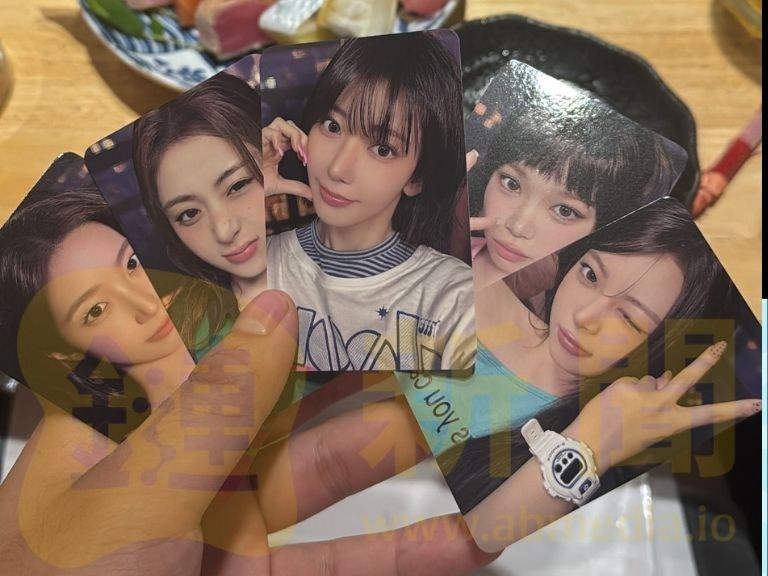
The article argues that the continued growth of K-pop physical albums in the streaming age cannot be explained simply by fans wanting to listen on CD. Many releases come in multiple covers and packages, with photobooks, posters, limited editions and random photo cards. Fans trying to obtain a specific member version or complete a set may buy several copies at once, sometimes dozens.
That gives a physical album several roles at the same time: a music format, a collectible, artist merchandise and a marker of fan identity. Some entertainment companies also tie album purchases to fansign events, video calls or lottery-based participation, turning album sales into tickets for fan access.
That structure helps explain why K-pop can keep building a large physical export market even while Spotify, YouTube and short-form video platforms dominate everyday listening.
HYBE had already tested blockchain-based collectibles
Against that backdrop, the piece asks whether blockchain can absorb part of this global fan economy. It notes that Chain News previously reported that HYBE partnered in 2022 with Dunamu, the parent company of South Korea’s largest crypto exchange Upbit, to launch the digital collectibles platform Momentica. The aim was to turn K-pop photo cards into digital collectibles.
Physical photo cards have already shown that fans are willing to spend money for rare versions, specific members and complete collections. If cards are issued on-chain, the article says, they could in theory record supply, ownership and transaction history, reducing problems tied to counterfeits and unclear provenance.
Digital collectibles also avoid logistical and geographic constraints. Fans in the U.S., Taiwan, Europe and other overseas markets would not need to wait for physical goods to be shipped before receiving a limited collectible.
Still, the article says the speculative bubble around NFTs created a real challenge for entertainment companies. If a product focuses only on scarcity and resale value, while offering little artist content, membership utility or community features, fans can easily see it as another form of extraction.
For that reason, the real question is not whether every photo can be minted as an NFT. It is whether digital assets can offer a more complete experience than physical photo cards.
tripleS used blockchain to bring fans into some decisions
Beyond HYBE’s large-platform approach, South Korean girl group tripleS has taken a route that is closer to Web3-style community governance. Its agency, Modhaus, uses a blockchain-based system that lets fans take part in some group activities, sub-unit formation and planning decisions through digital collectibles and voting mechanisms.
In traditional K-pop, fans can influence an agency through album purchases, support campaigns and social traction, but final decisions remain with management. The tripleS model turns part of that participation into a product. Fans are not only consumers; within a defined scope, they can become participants in group operations.
The article says that fits naturally with existing K-pop fan culture. Fans already organize voting, fundraising, birthday support campaigns, group album purchases and promotional activity on their own. Blockchain, in this reading, is an attempt to convert those informal community behaviors into a verifiable and structured participation system.
There are limits. Song production, artist health, contracts and professional entertainment decisions are not areas that should be handed entirely to token holders or buyers of digital collectibles. A workable model, the article argues, would need to balance professional management with fan participation instead of financializing every decision.
Bang Si-hyuk also had an investment link to Story Protocol
HYBE founder Bang Si-hyuk’s connection to blockchain goes beyond digital photo cards. The article says he also participated in an investment tied to Story Protocol, a blockchain IP infrastructure project. Story Protocol aims to register characters, plotlines, relationship settings and derivative-use permissions on-chain so IP owners and creators can track usage and revenue distribution.
The article suggests this kind of technology could have a deeper connection to entertainment than simple NFT issuance. K-pop is not only songs. It also includes group worldbuilding, characters, music video narratives, stage concepts, games, comics and fan-made derivative works. Those assets often span multiple platforms and licensing relationships, which are difficult to track in real time under traditional copyright systems.
If IP licensing can be executed through on-chain standards, fans or independent creators could potentially produce remixes, comics, games or derivative content under clear rules, while part of the revenue is automatically distributed to original rights holders.
At the same time, the article notes that Story Protocol’s development has not matched outside expectations despite backing from investors including a16z. It describes the ecosystem as quiet enough to be called a "ghost chain."
With K-pop physical album exports hitting a new first-half high, the broader issue is not simply whether entertainment companies can issue NFTs. The harder question is whether blockchain-based assets can combine collectible value, participation rights and durable product design in a way that fits the structure of the fan economy.