
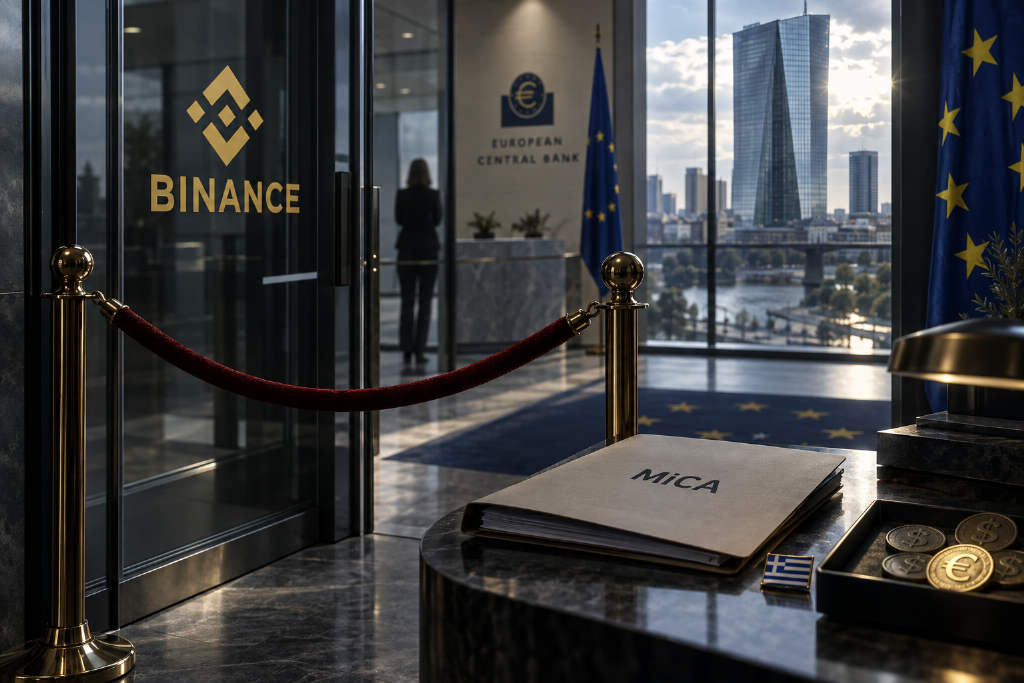
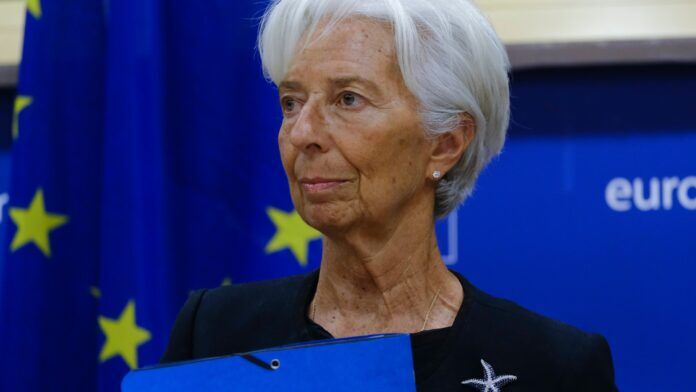
European Central Bank President Christine Lagarde blocked Binance from operating in the European Union, according to a Wall Street Journal report cited by Bitcoin Magazine. The report said the exchange was close to entering the trading bloc before being told it could not proceed after Lagarde stepped in.
MiCA authorization remains a hard requirement
Under EU law, local Crypto-Asset Service Providers, or CASPs, must hold a MiCA license. Binance does not have one.
The article said Binance withdrew its MiCA application in Greece in June. Citing interviews with officials, the Wall Street Journal said Lagarde wanted to keep the controversial exchange out of the European Union. Binance had already pleaded guilty in the United States to financial-crime violations.
Lagarde’s position on Bitcoin and CBDCs
The report said Lagarde has long opposed Bitcoin while backing central bank digital currencies. In 2021, she described Bitcoin as a highly speculative asset used for money laundering. She also criticized cryptocurrencies more broadly and said central banks would never hold bitcoin.
Her stance is different on CBDCs. A central bank digital currency is a digital form of fiat money such as the U.S. dollar or the euro, and countries are at different stages of researching or launching them. Under Lagarde, the European Union has been moving quickly on a digital euro. She has described the digital euro as essential to Europe’s financial autonomy while also criticizing privately issued stablecoins.
Concern over dollar-based stablecoins in Europe
The Wall Street Journal report, citing multiple interviews, added that Lagarde was worried Binance would reinforce the dominance of dollar-based stablecoins in Europe instead of helping euro-based counterparts gain ground.
Binance is the world’s largest crypto exchange, and billions of dollars in stablecoins are traded on its platform each day. In 2023, Binance and its CEO Changpeng Zhao pleaded guilty to anti-money-laundering violations and paid a record $4.3 billion fine.
Binance said in June that it was still working to pursue MiCA authorization in another EU member state.