
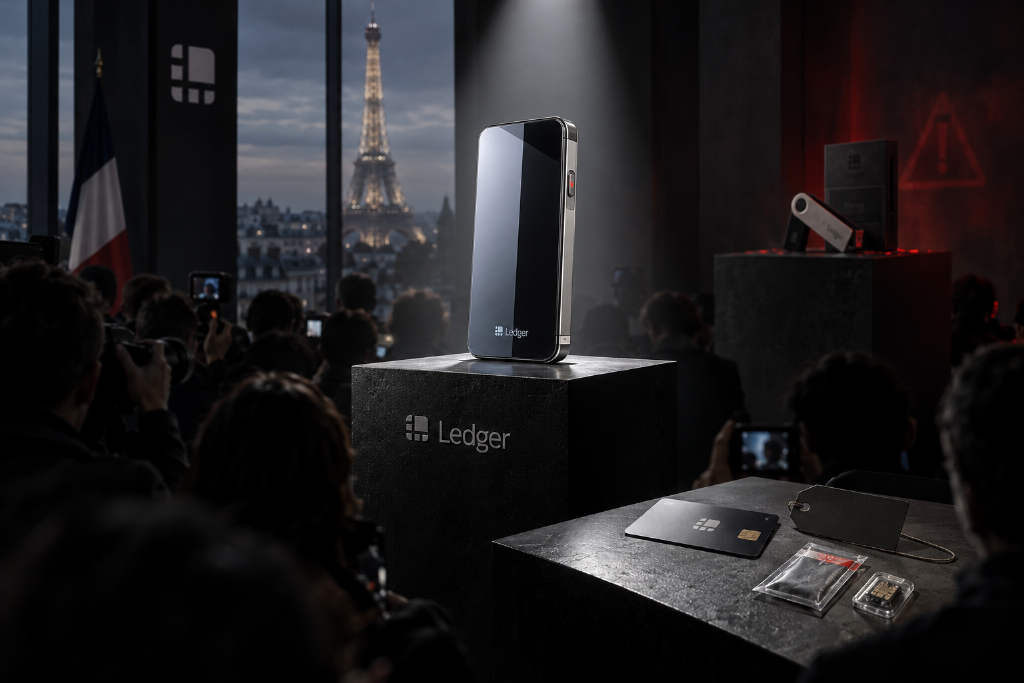
Ledger has launched Ledger Atom, a phone-like hardware wallet, even as the company is still working through a trust crisis triggered by a recent supply-chain attack linked to an authorized distribution channel.
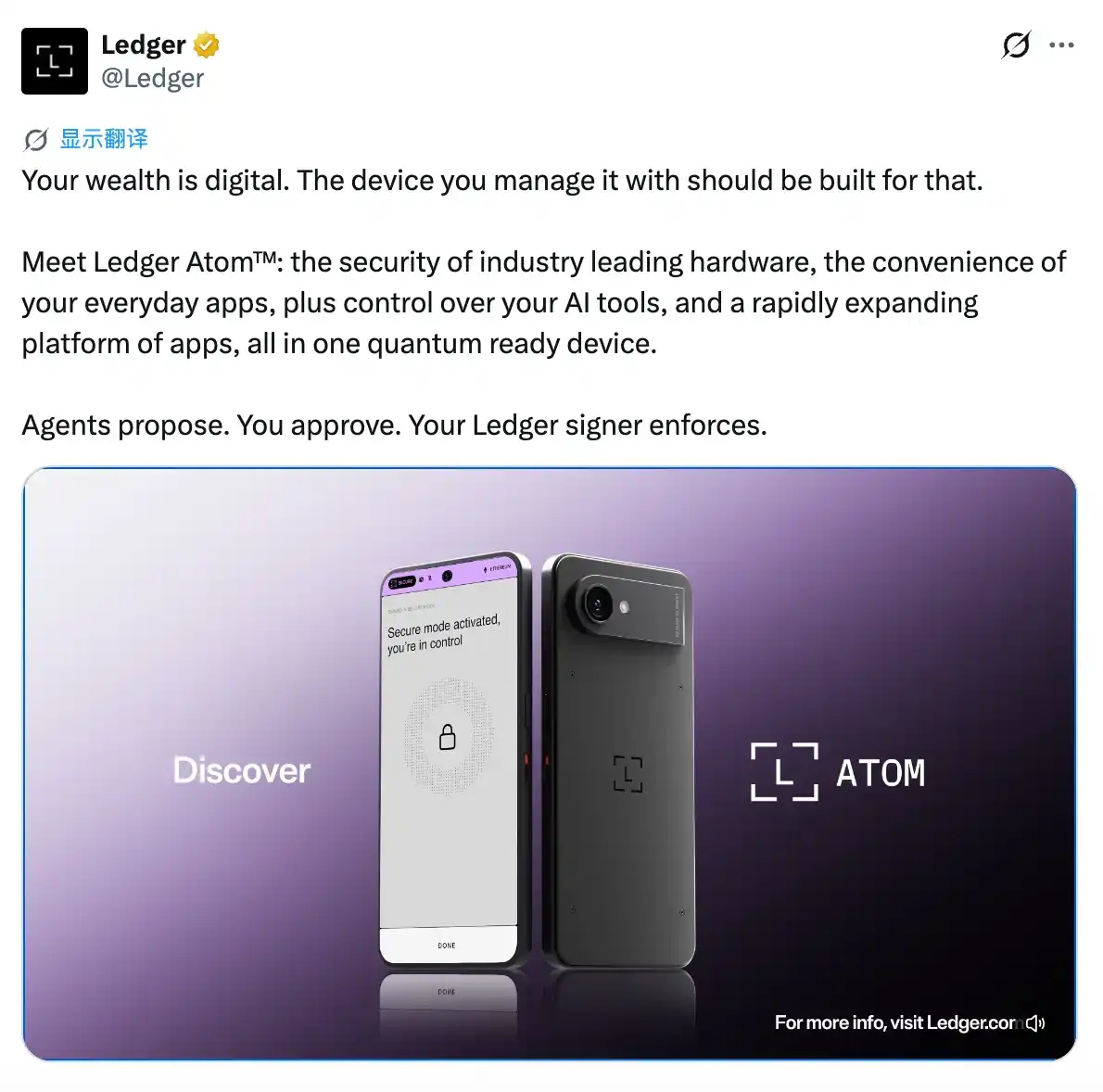
On Oct. 16, Ledger announced Atom as a device that looks and feels closer to a smartphone than a conventional hardware wallet. The company does not describe it as a normal phone. Instead, it positions Atom as a product that combines everyday apps, crypto asset management, and hardware security features in one device.
Atom centers on dual operating systems, hardware isolation, and anti-tamper protections
Ledger said the founder edition is available for preorder at $849, with users able to reserve a unit by paying a refundable $100 deposit. The standard version is expected to cost $899 and is scheduled for release in mid-2027.
Atom does not offer full phone communication features. According to the company, the device supports mobile data and can connect over 4G and 5G networks, but it does not support cellular voice calling, including VoLTE, VoNR, and VoWiFi. It also does not support text messaging. Even with a SIM card or eSIM installed and network coverage available, users cannot place emergency calls such as 112 or 911 from the device.
Security architecture is one of Atom’s main selling points. The device uses a dual-OS model that separates everyday applications from sensitive operations tied to asset security, a setup Ledger says is meant to reduce the risk of malware altering transaction details or tricking users into signing malicious transactions. A standard mode based on the Android Open Source Project, or AOSP, runs consumer apps and online services such as WhatsApp, Instagram, and TikTok. Ledger OS runs inside an isolated secure-chip environment and handles private-key storage, transaction signing, AI agent authorization, and identity verification. When a user initiates a transaction, the details can be checked on a secure screen before signing.
Although both operating systems share the same display, Ledger says it has tried to enforce isolation at the hardware level. The company said the device uses an FPGA hardware multiplexer to control access to the screen and touchscreen. When the device switches into secure mode, the FPGA cuts off the standard mode from the display and touch layer. In theory, even if the standard mode were fully compromised by malware, an attacker would not be able to forge or alter the transaction approval interface shown to the user, steal private keys through that path, or inject touch input.
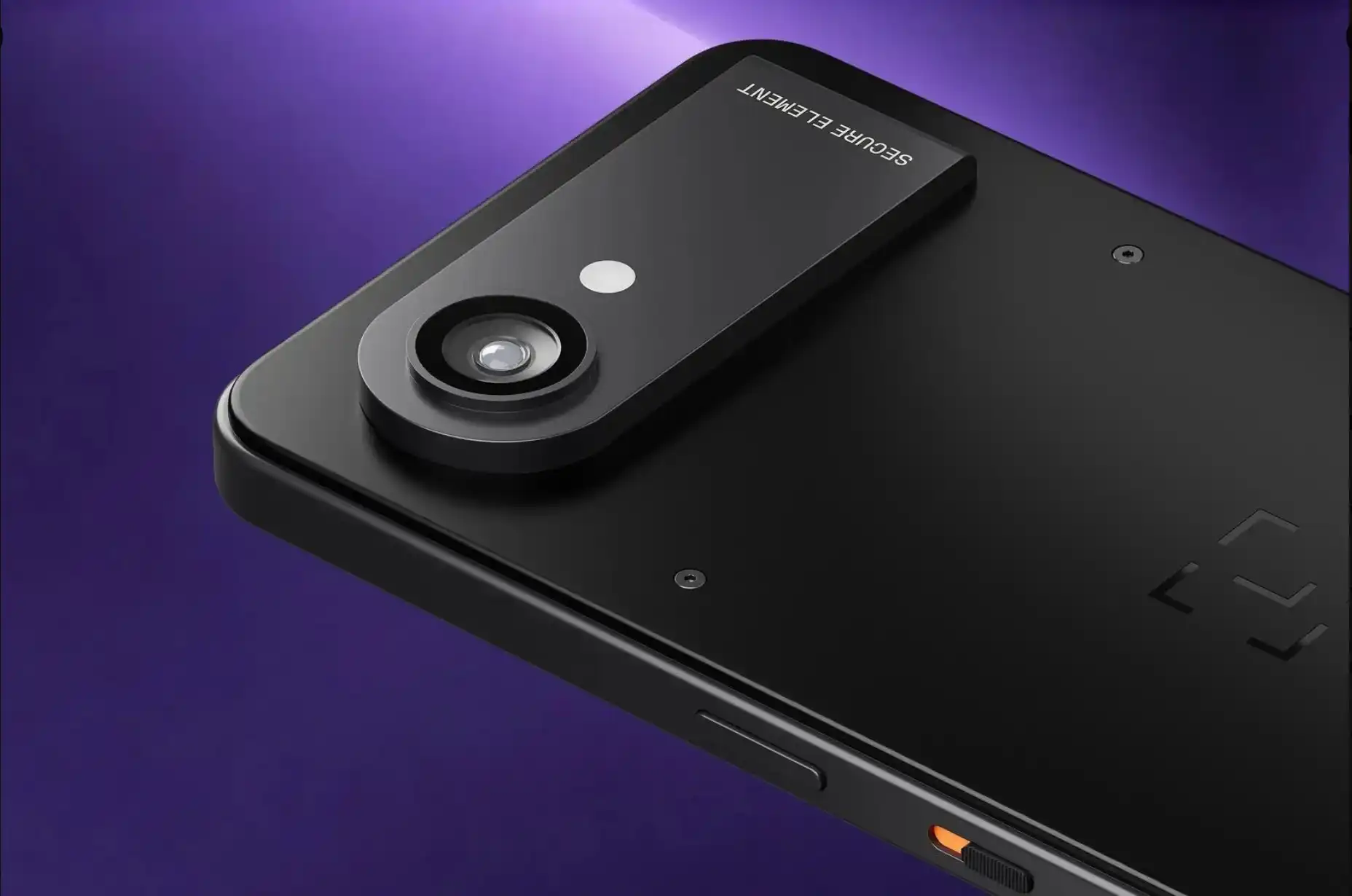
Privacy is another focus. Atom includes a physical privacy switch that can cut power to the camera and microphone at the circuit level. Those sensors also turn off automatically when the device enters secure mode. Ledger also says the product supports post-quantum cryptography aligned with National Institute of Standards and Technology, or NIST, standards as preparation for future quantum-computing threats.
In response to tampering risks exposed by recent hardware-wallet incidents, Ledger added multiple protective measures to Atom and described them as its most advanced anti-tamper and anti-disassembly system to date. The device places protective shielding around key sensitive components and includes sensors that can detect whether the screen or back cover has been removed. Its packaging is also designed to help identify whether the box has been opened. The tamper-detection system has its own battery, which allows it to keep running even when the device itself is powered off.
Ledger is bringing AI agents into the asset-management flow
Ledger is also tying AI agents to the Atom experience. Its Ledger Agent Intent system allows AI agents, including OpenClaw, to monitor markets, prepare transactions, and offer suggestions, but without access to private keys. Any request involving fund transfers or other sensitive actions must still be physically approved by the user on Atom’s secure screen before execution.
That means AI can assist with analysis and transaction preparation, while control over assets remains with the user.
On the software side, Atom will ship with Ledger Wallet for crypto asset management and transaction signing. Ledger also said it is working with Solana Mobile to bring the Seeker app to the device. In addition, it announced a partnership with Cyber50 to explore how Atom and its hardware-level security features could be used to strengthen communications security and privacy protection.
For distribution, Ledger said it plans to sell Atom only through its official website at the initial stage, rather than through third-party sellers, in an effort to reduce the kind of supply-chain attack risk highlighted by the recent CryptoBilis incident. On upgrade options for current users, Ledger said it does not currently plan to offer a trade-in program for customers affected by that event, though it has not ruled out promotional upgrade offers in the future.
Launch timing draws criticism while the security crisis remains unresolved
Atom has not reached the market yet, but criticism has already surfaced across the community.
A central reason is that Ledger’s trust problem has not been resolved. Earlier, a supply-chain attack was exposed in the CryptoBilis channel, an authorized Ledger distributor in Southeast Asia. Compromised devices were fitted with malicious hardware, leading to user losses that the report described as close to $100 million.
Ledger has since suspended product sales through related authorized channels in Southeast Asia and Hong Kong. The company said the attack stemmed from local distribution links rather than vulnerabilities in its chips, operating systems, or servers.
According to Ledger, a highly organized criminal group spent months purchasing genuine devices, taking them apart, and adding custom hidden components designed to steal recovery seed phrases generated during the initialization process. Those tampered devices were then pushed back into the market through distributors in Southeast Asia. Ledger said the attackers spent millions of dollars building a logistics network, seed-phrase collection servers, and infrastructure used for theft and money laundering, ultimately coordinating the theft of user assets.
Even so, the questions users care about most remain unanswered. Ledger has responded to the incident, but it still has not clearly explained how losses for affected users will be handled or whether compensation or replacement devices will be offered. Against that backdrop, the company’s decision to introduce a new device centered on hardware isolation and anti-tamper protections has done little to calm doubts.
Community concerns also focus on physical threats and price
Another area of criticism comes from the product form itself. Atom may add stronger software isolation and defenses against remote compromise, but it still faces physical-world risks. Compared with a traditional hardware wallet, the device has a more smartphone-like look and user experience. Its visible Ledger branding, critics say, could make it attractive to criminals. Some community members have mocked it as a “walking ATM.”
That concern is tied to a real pattern of attacks. In recent years, wrench attacks targeting crypto holders have become more frequent. Unlike remote hacks, these attacks target the holder directly through physical assault, kidnapping, torture, or threats to life in order to force the victim to hand over private keys or move funds on the spot. Security firm CertiK previously disclosed that 52 verified wrench attacks occurred in the first half of 2026, with recorded losses reaching $124.1 million. That represented a 33.3% year-over-year increase in incident count, while losses rose to 11.8 times the amount recorded in the same period earlier.
Pricing has become another flashpoint. Atom is seen as much more expensive than most of Ledger’s current hardware wallet lineup and close in price to many upper-midrange smartphones. At the same time, Ledger has made clear that Atom is not a conventional smartphone and differs materially from standard phones in functionality. For many users, that has made the security premium a hard sell.
In the crypto market, security remains the central value proposition of a hardware wallet. New technical features and a redesigned device category, on their own, may not be enough to win back confidence while the company is still facing unresolved questions over a security incident and user claims.