LIT has turned into one of the market’s standout tokens this year.
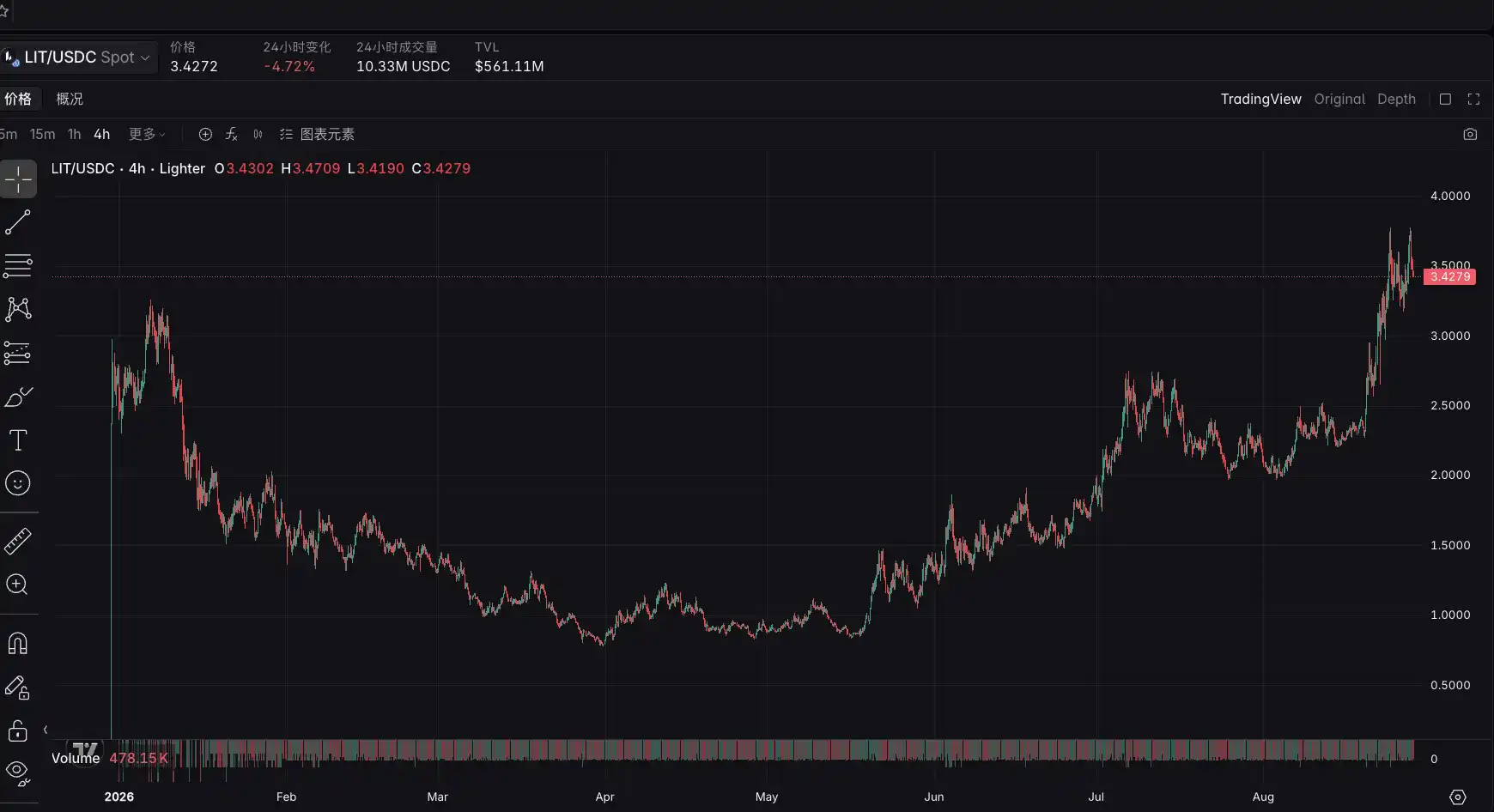
From its record low of $0.7794 in late March to a peak of $3.79 five months later, the token climbed by nearly 5x. Over the past 30 days, LIT gained 75%, and it added another 24% over the past seven days. The source article said LIT now ranks No. 76 globally by crypto market capitalization, with a market value of $865 million.
The piece argues that the move was not just a byproduct of a rising market. Bitcoin and HAPE were also up, and that gave altcoins a boost, but the article says LIT had project-specific drivers behind the rally.
Lighter’s U.S. positioning moved to the center of the story
Perpetual DEXs have been one of crypto’s key sectors over the past two years, with Hyperliquid serving as the benchmark project in the category. The article said Hyperliquid has recently been making unusual progress in the United States, facing limited friction on regulation, compliance and institutional access. In the author’s framing, that has helped establish the idea that this business can operate in the U.S.
Lighter sits in the same lane, but the report says it carries even stronger U.S. credentials. Lighter is described as a U.S. domestic project registered in Delaware, with its token issued directly by a U.S. C corporation rather than routed through a Cayman or Swiss foundation, which is more common in the sector. Its founder, Vladimir, is an American who immigrated from Russia as a child.
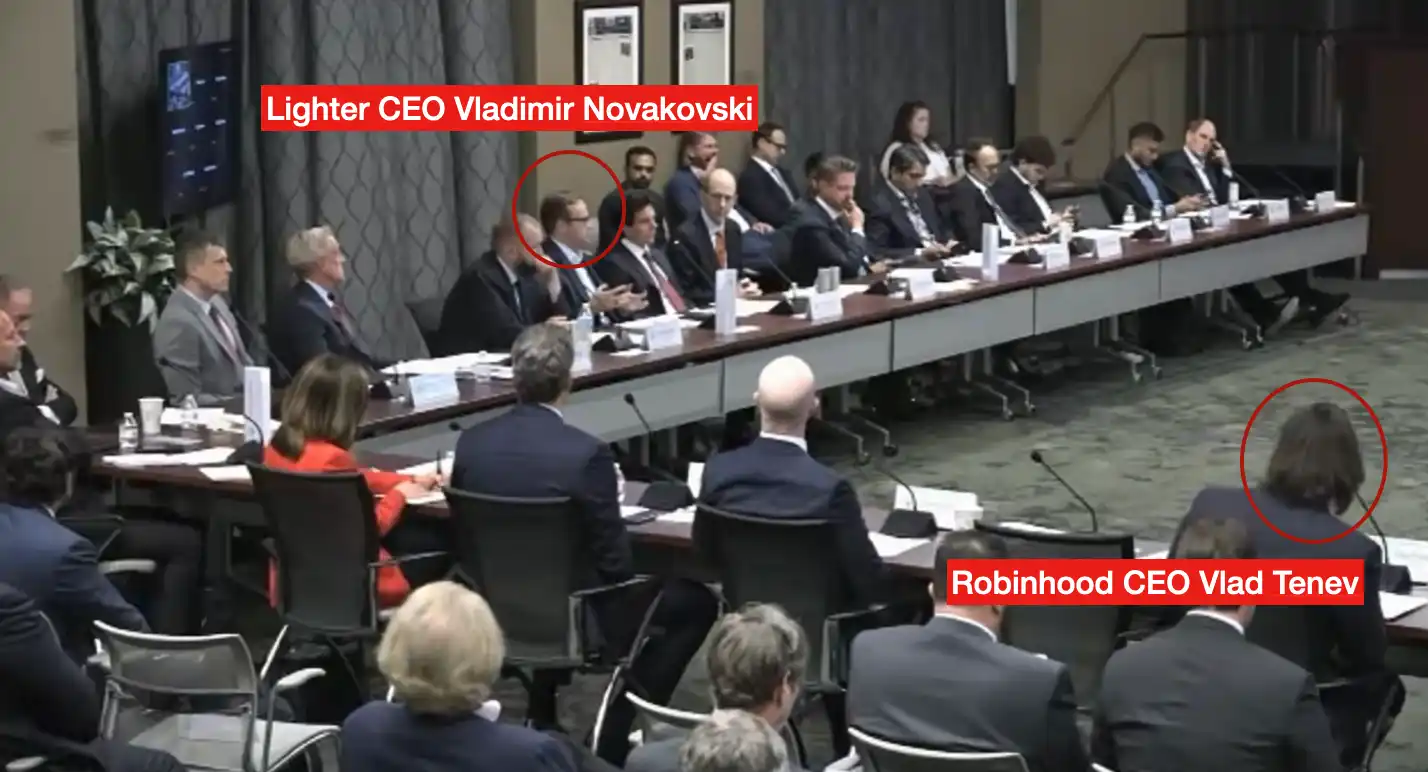
On Aug. 20, the Commodity Futures Trading Commission’s newly created innovation advisory committee held its first meeting to discuss what a decentralized exchange would need to look like in order to operate legally in the United States. Lighter founder and CEO Vladimir was at the table as a participant in that discussion.
Telegram Wallet, Robinhood Chain and Upbit added momentum
Lighter’s business is also in expansion mode.

In April, Telegram Wallet launched perpetual contracts exclusively powered by Lighter, covering 150 million registered users. On July 1, Robinhood’s own chain went live, and its perpetual engine was also provided by Lighter under a 50-50 revenue-sharing arrangement. The article added that Lighter still charges zero fees to retail traders, with both maker and taker fees set at 0 across 241 markets.
On Aug. 24, Upbit, described in the article as South Korea’s largest exchange, listed a KRW trading pair for LIT. The token rose another 22% that day.
Even with those catalysts, the article says one question still stands out: among all perpetual DEX projects, why was Lighter the one that managed to turn Robinhood, the largest retail brokerage in the U.S., into a distribution channel while securing a 50-50 split?
The two founders were high school classmates
In a podcast hosted by Laura Shin, Lighter founder and CEO Vladimir said the partnership had been “12 years in the making,” and “from another angle, you could even say 25 years.” He added: “Because Robinhood founder Vlad Tenev and I were high school classmates. We were the only two Vlads in our school.”
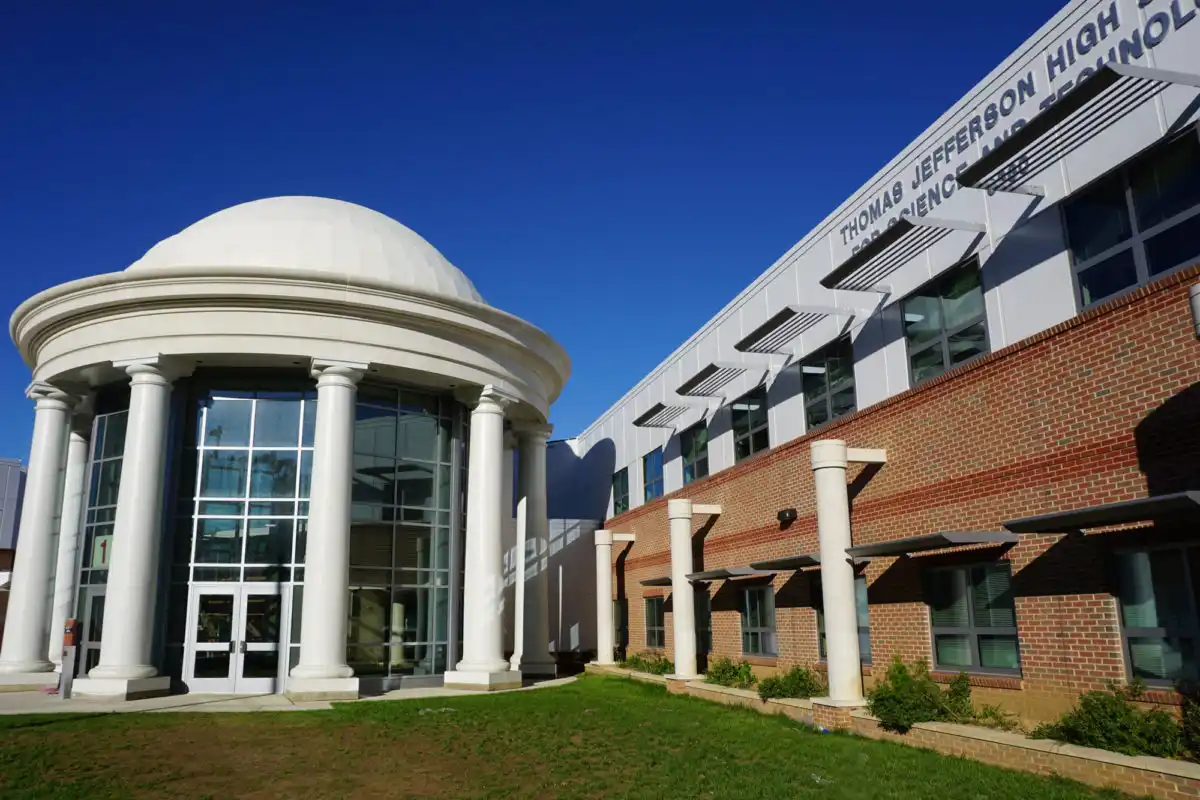
According to the article, Vladimir and Robinhood co-founder Vlad Tenev both attended Thomas Jefferson High School for Science and Technology, or TJ, one of the best-known and hardest-to-enter public STEM high schools in the United States. The school is portrayed in the piece as a recognizable credential in Silicon Valley, quant circles and the startup world because of the concentration of top engineering and science students from the Washington metropolitan area.
The article then refers to Lighter’s founder as the “older Vlad” and Robinhood’s founder as the “younger Vlad,” noting that the former was three grades ahead.
It says the older Vlad was already one of the school’s most prominent students in his senior year. He won first place in the U.S. Physics Olympiad, then represented the U.S. at the 32nd International Physics Olympiad in Antalya, Turkey, where he took silver. He also reached the national finals of the Intel Science Talent competition with a project titled “Optimal Hologram Design for Optical Neural Computation.” Only two students from the school made that national final that year, and while most finalists were 16 to 18 years old, he was just 15.
The older Vlad later recalled on Quora that he still remembered his first math team practice two weeks after entering the school, unsure how long he could keep up in that environment. To improve, he and several classmates organized extra after-school sessions focused on math team, computer team and Olympiad training. The article says that culture continues today.
The younger Vlad’s first impression of him was as the senior student running those after-school competition sessions. That was how the two became familiar with each other.
The older Vlad later became an early Robinhood adviser
After high school, the older Vlad entered Harvard and graduated early after two years. He was then personally recruited by Citadel founder Ken Griffin for his first job, where he worked in quantitative research and built high-frequency trading systems for foreign exchange markets.
He later moved to Graham Capital, described as a global macro and trend-following fund managing more than $10 billion, where he rose to portfolio manager and director and stayed for seven years.
At the same time, the younger Vlad was building companies in New York. The article says that two years after the Lehman crisis, he first started a company called Celeris, which did not work out. In January 2011, he shifted to Chronos Research, selling low-latency trading software to banks and hedge funds, and reached several million dollars in annual revenue within a year.
The article notes that the older Vlad was a portfolio manager at a multi-billion-dollar quant fund while the younger Vlad was pitching low-latency software to funds, making Graham the kind of target customer Chronos would normally seek. It also explicitly says there is no clear public source confirming they worked together at the time.
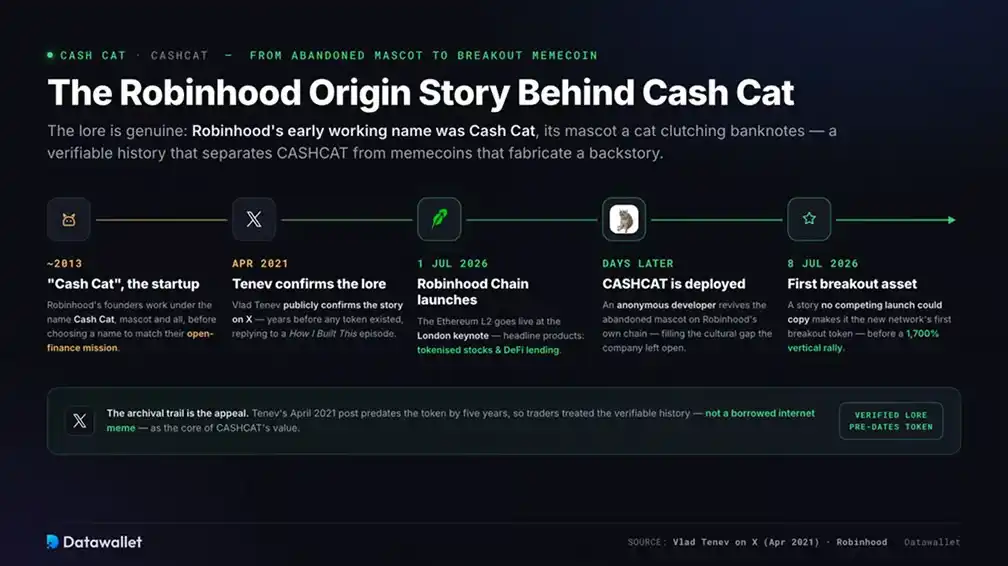
By 2013, though, when the younger Vlad began a new startup, the older Vlad had become an early adviser and helped support that effort. That startup later became Robinhood. The article also says Robinhood’s earliest name was Cash Cat.
Looking back on that period in the podcast, the older Vlad said: “I was an early adviser to Robinhood. I think before that the company was called Cash Cat, right? They had just changed the name to Robinhood and were building the waitlist. I already knew the team then, and I was involved in some things.”
From Addepar to Lunchclub, the relationship kept going
The following year, the older Vlad changed jobs and joined Addepar as vice president of engineering. The article describes Addepar as a wealth management software company founded by Joe Lonsdale, a co-founder of Palantir.
Addepar was in Mountain View, while Robinhood was in Palo Alto, less than 10 kilometers away, and the article says their relationship grew closer during that period.
It also presents this as a time when both founders’ careers were moving quickly. The older Vlad is said to have hired two interns. One was Scott Wu, who a decade later built the AI coding agent Devin; the article says his company reached a $10.2 billion valuation and acquired Windsurf last year. The other was Alexandr Wang, who this year sold Scale AI to Meta in a $14.3 billion deal and then joined Meta to lead its superintelligence lab.

In November 2017, two years after leaving Addepar, the older Vlad co-founded AI social startup Lunchclub with Scott Wu. The company used machine learning to match people based on their backgrounds and goals, then arranged a lunch meeting with someone worth meeting.
In September 2019, Lunchclub raised a $4 million seed round led by Andreessen Horowitz. The article says Robinhood’s co-founders were among the angel investors who joined that round.
In August 2020, Lunchclub raised a further $24.2 million in Series A funding led by Lightspeed, with Coatue also participating, at a valuation above $100 million. The investor list included Michael Ovitz, Max Levchin, Adam D’Angelo and the younger Vlad.
Lighter emerged after crypto’s 2022 shock
The article then shifts to 2022. In May, Luna collapsed, wiping out more than $40 billion. In November, FTX went bankrupt and users were unable to retrieve their funds.
That, according to the article, is where the older Vlad saw an opening. He believed the matching process on trading platforms could itself be made verifiable, using zero-knowledge proofs so that every fill could be mathematically proven fair, with no one able to cut in line and no one able to misuse customer assets.
He called that project Lighter.
The older Vlad later said that when Lighter started, on-chain perpetuals accounted for only 1% of the overall perpetual market. Hyperliquid represented the ceiling of the sector at the time. By this year, he said, Lighter’s on-chain share had reached 10% to 20%.
Funding, Robinhood Ventures and the chain-level structure
The article says Lighter raised $68 million in November 2025 at a $1.5 billion valuation. The round was led by Peter Thiel’s Founders Fund and Ribbit Capital, with Haun Ventures participating. Robinhood Ventures also joined the round.
Then, on July 1, 2026, Robinhood Chain mainnet launched. The article describes it as Robinhood’s own Ethereum layer-2 network built with Arbitrum technology, producing blocks every 100 milliseconds, with no native token and fees settled in ETH.
The perpetual product running on Robinhood Chain is powered by Lighter.
Rather than route Robinhood orders directly into its main order book, Lighter runs a separate market called Lighter Domains. The two books are independent, but both sit on Ethereum, allowing market makers to quote on both sides using the same balance sheet and move capital between them almost instantly.
On the Robinhood side, USDG is used as both collateral and the quote asset. Lighter’s main venue uses USDC. Revenue is split 50-50.

The older Vlad said in the podcast that this structure does create friction for market makers. Still, he said they are willing to participate because they know the flow coming from Robinhood contains a high share of retail orders, “and that is the flow they ultimately want.”
U.S. users are still excluded, and no one has the license yet
For now, the service is not available to Americans. The article says the perpetual product in Robinhood Wallet excludes users in the United States, the United Kingdom, Canada, Switzerland, the UAE and Singapore for policy reasons.
It also says both Vlads are members of the same new innovation committee, and that the older Vlad is seeking a decentralized perpetuals license from the CFTC.
According to his description, that license would cover both Lighter’s own frontend and broker frontends connected to it, such as Robinhood, in the same way Robinhood currently accesses prediction markets through Kalshi’s license.
“At the moment, no one has obtained this type of license yet,” the older Vlad said.