
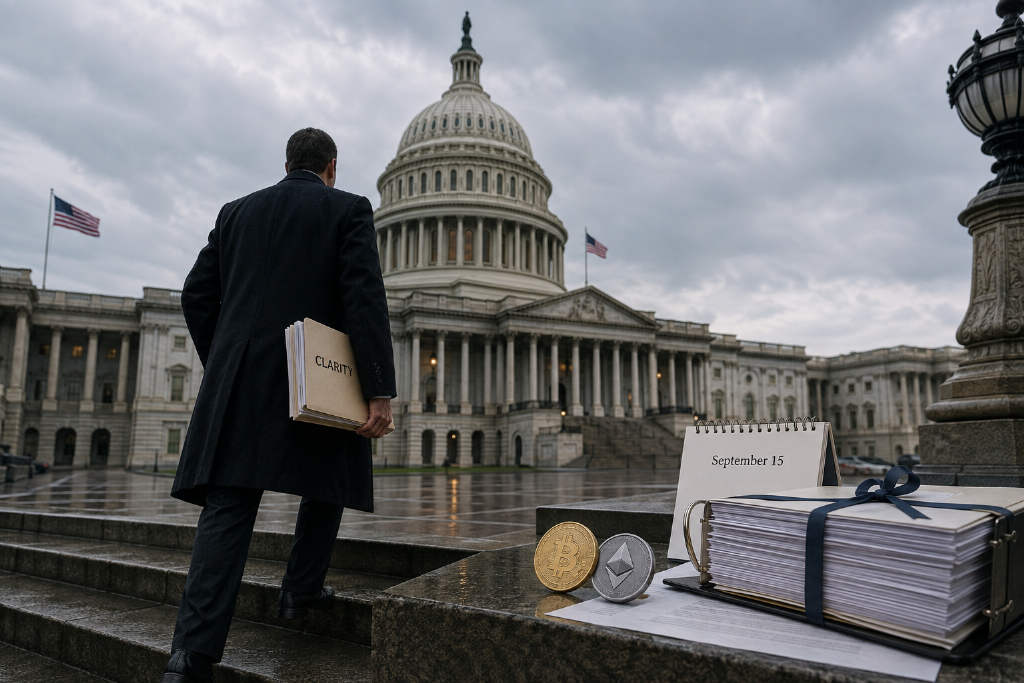
U.S. Sen. Cynthia Lummis of Nebraska said on X that if the CLARITY Act does not pass during the current Congress, the next meaningful chance to revive crypto market structure legislation may not come until 2030.
Lummis said getting the bill done now would avoid losing years of jobs, investment and tax revenue. She also said the current Congress has less than eight months left in its term, leaving a narrowing window to move the legislation.
The legislative path from Q1 to September has been uneven
According to the report, Treasury Secretary Bessent warned earlier this year that if the bill did not pass in the first quarter, a Democratic reversal could reset the effort entirely.
By August, the Senate had to deal with 130 amendments in its first markup stage, along with 8,000 opposition letters from banks. The Senate is expected to hold a key procedural vote on Sept. 15.
A more recent development came on Sept. 6, when the National Sheriffs’ Association withdrew its opposition to the CLARITY Act and shifted to a neutral stance, clearing one obstacle ahead of the Sept. 15 vote. Even so, Lummis kept her focus on the shrinking timetable.
Why Lummis pointed to 2030
The report says Lummis was not picking 2030 at random. The current U.S. Congress, the 119th Congress, runs through January 2027. If the bill fails within that period, a new Congress would need to introduce it again and restart the legislative process from the beginning. That alone would require at least six to 12 months of preparation.
With the possibility of the 2028 U.S. presidential election interrupting the process, the next practical window for major market structure legislation could slip to 2030.
Sept. 15 procedural vote is the next near-term test
The article identifies the Sept. 15 Senate procedural vote as the key near-term event. If that vote succeeds, the bill would move to a formal vote later in September.
If Lummis’ warning proves accurate, the market may also need to watch the White House’s progress in filling an open seat at the Commodity Futures Trading Commission, or CFTC. The report says people familiar with the matter indicated that filling the vacancy has become one of the conditions in the negotiations over the bill.
The report also points to possible implications for Taiwan
The article says the CLARITY Act matters beyond the U.S. market. It states that Taiwan’s crypto exchange regulatory framework largely follows the pace of U.S. legislation. If the bill is delayed, Taiwan’s own classification of stablecoins and digital assets, including the boundary between the two under regulation, could also be pushed back and affect the industry’s expansion timetable.