
SemiAnalysis said in a new report that Meta’s superintelligence lab is not a frontier-model leader today, but could surpass Google within the next six months if its hiring push, reinforcement learning data pipeline and computing expansion all land as planned. In that scenario, Meta would become the strongest pursuer behind OpenAI and Anthropic.
The report stops short of saying Meta has already caught up. Meta released Muse Spark in April, and Axios reported on July 9 that Muse Spark 1.1 had opened its API to developers, priced at $1.25 per million input tokens and $4.25 per million output tokens. Axios said the model was not the “big leap” Meta had hoped for, and that a larger model codenamed Watermelon is still in training.
SemiAnalysis is betting on the pace of catch-up
The core of the report is not Meta’s current ranking. It is the speed of its recovery after Llama 4 fell short. SemiAnalysis said Mark Zuckerberg is restructuring the company’s AI organization more aggressively, shifting money, talent, internal engineering resources and data center capacity toward the superintelligence lab.
By the firm’s own testing and judgment, Muse Spark and its follow-up versions still fall short of frontier status across many benchmarks and general agent settings. The report also makes clear that details such as Muse Spark 1.1 being roughly comparable to Opus 4.6 or GLM 5.2, or comments around internal token usage, are the authors’ assessments rather than Meta’s official position. Based on public information, Meta still has not produced a model that directly challenges OpenAI and Anthropic.
What SemiAnalysis is focused on instead is the slope. It argues that if the next round of model training and RL data generation begins to show up in products, Meta could be in a stronger position six months from now than current leaderboards imply.
The $14.3 billion Scale AI deal is about more than data
One of Meta’s most visible moves is its $14.3 billion investment in Scale AI. Fortune, Forbes and Reuters previously reported that the deal brought Scale AI founder Alexandr Wang into Meta, where he would join or lead teams tied to the superintelligence effort.
In SemiAnalysis’s view, the transaction is not simply an acquisition of a data-labeling business. It looks more like a concentrated talent grab. The report points to Scale’s safety, evaluation and alignment team, SEAL, as an important source of expertise for Meta’s evaluation, alignment and post-training stack.
Reuters also previously reported that Meta offered compensation packages worth hundreds of millions of dollars to some AI engineers. SemiAnalysis reads that as a sign that superintelligence has become a company-level priority for Meta, not a standard product iteration cycle. For a large technology company, the bigger challenge is not only budget size, but whether research, product, infrastructure and management are operating toward one goal.
The report also cites recent podcast remarks from Alexandr Wang saying that leading frontier labs tend to first believe that superintelligence is close, then make business decisions around that belief. SemiAnalysis interprets Meta’s recent moves as a shift toward an AGI-first priority similar to OpenAI and Anthropic.
About 3,000 engineers are said to be moving toward RL task creation
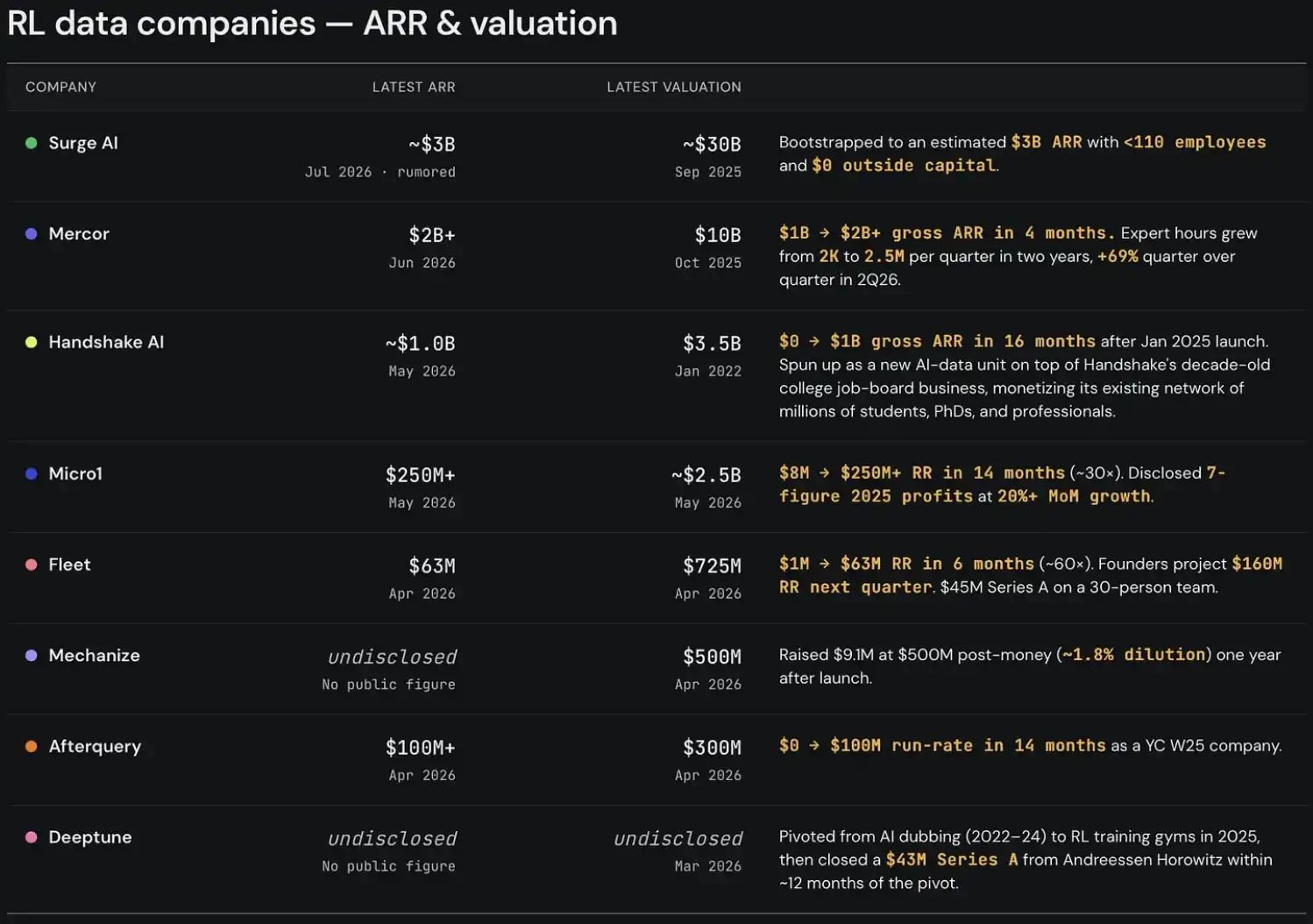
The second pillar in the report is reinforcement learning task production and real-work data.
SemiAnalysis said Meta has reassigned about 3,000 engineers to become full-time RL task creators. The figure needs to be read within the report’s framing, but if executed as described, it would give Meta a clear edge: instead of mostly outsourcing human-generated data, it would turn its own engineering organization into a pipeline for producing training tasks.
The report argues that model improvement no longer depends only on pretraining corpora. What matters more is whether a model can complete tasks in environments that resemble actual work, including understanding context, using tools, running tests, fixing errors and iterating on the result. Codebase repair, product analysis and use of internal tools are all closer to real white-collar work than exam-style benchmarks.
It adds that many RL tasks look difficult on paper, but in practice the prompts often spell out the steps too explicitly and do not match how work is actually done. Screen recordings, day-to-day workflows, tool-use logs and internal evaluation systems may be better suited to training models that can automate white-collar tasks.
That is one reason the report sees room for Meta to close the gap with Google. Google has DeepMind, Gemini, TPUs and a cloud business. Meta, by contrast, is concentrating internal organization, data and engineering resources on a single model objective.
Multi-gigawatt compute expansion is the third line of the thesis
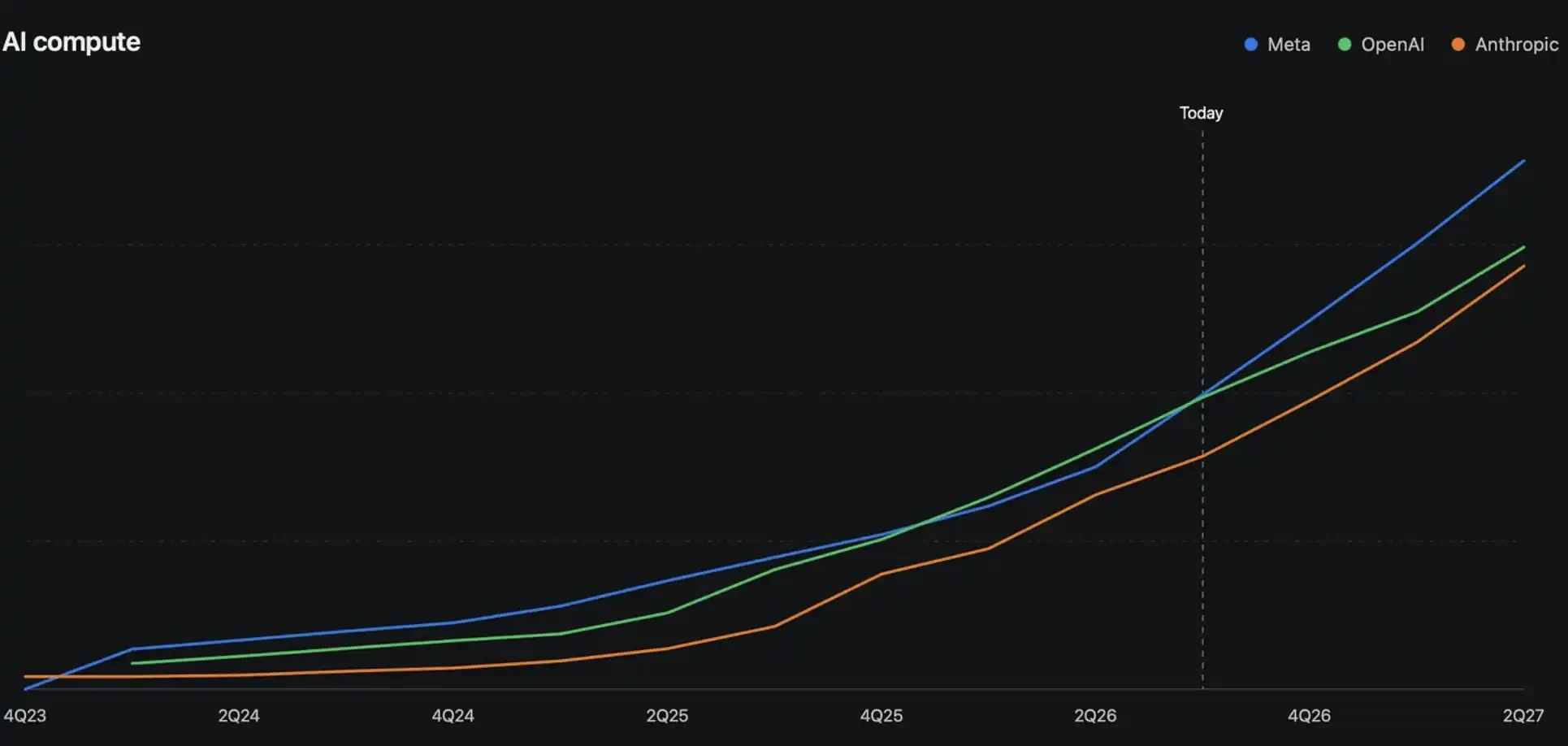
Compute is the third major input in the report. In a July 2 article, SemiAnalysis said Meta signed more than 5 GW of capacity in the first half of this year, bringing total deals since 2024 to nearly 10 GW. It expects most of the incremental capacity to flow to Meta’s superintelligence lab.
The report says the main point is not data center design details but the direction of capital spending. Meta is not scaling compute for conventional cloud services, in this view. It is preparing larger clusters for internal model training, post-training and agent loops. The heavier the training and RL workload, the more deployment speed affects the pace of model iteration.
SemiAnalysis also mentions concepts such as cross-region interconnection and rapidly deployed data centers. Those specifics remain part of the firm’s modeling rather than confirmed company plans, but the direction is plain: Meta is trying to buy time with infrastructure.
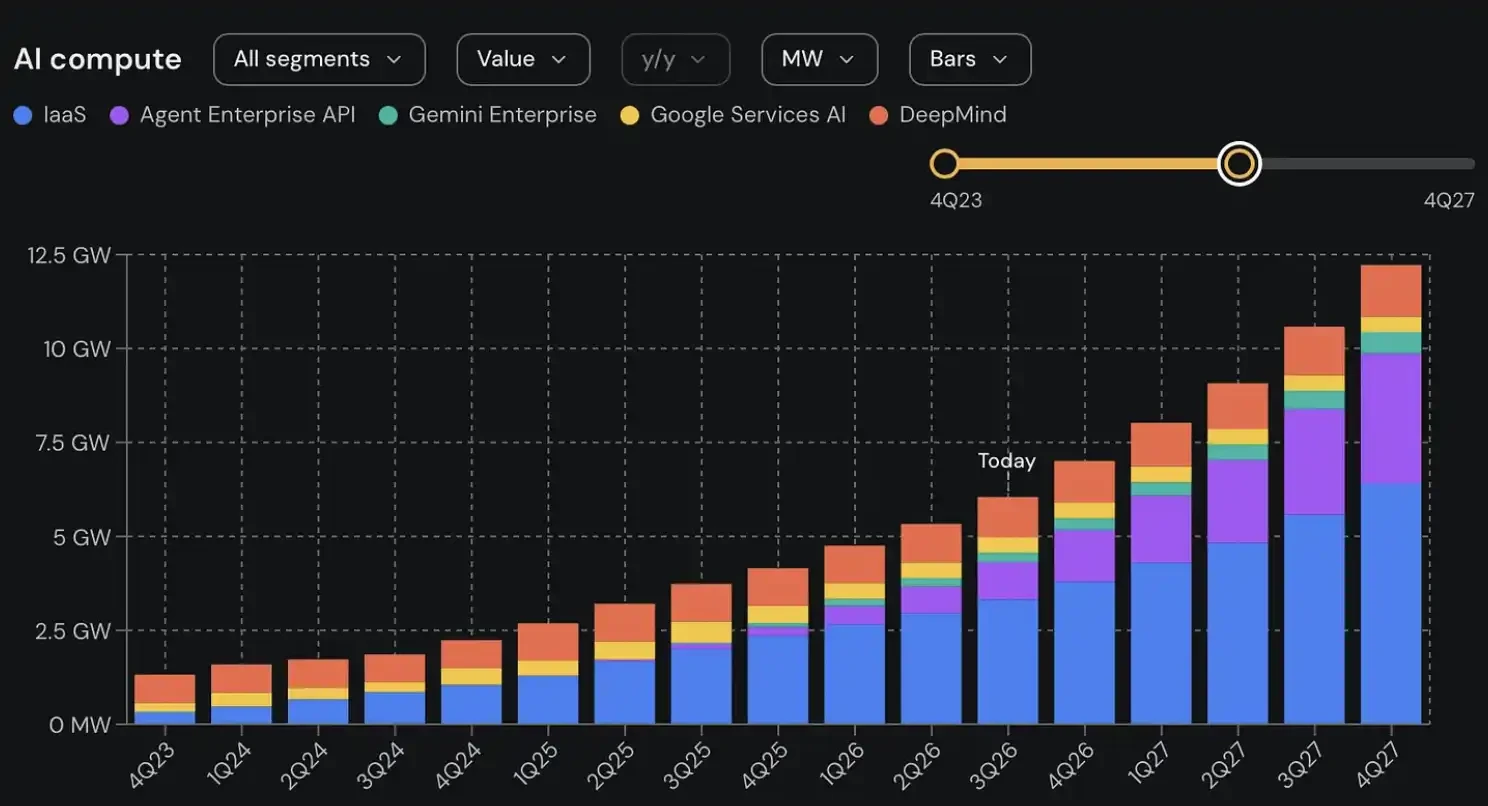
For Google, the dispute is not whether it has compute, but how that compute gets allocated. SemiAnalysis expects a meaningful share of Google’s new data center capacity to serve IaaS and third-party API businesses, which could leave DeepMind with less concentrated access to frontier-training resources than outsiders assume. Even if Google expands AI infrastructure through outside financing or capital markets, some of the new capacity could still be absorbed by cloud customers.
That leads to the report’s more controversial call: the race for AI’s third spot may no longer belong securely to Google, and could become a reshuffling among Meta, Google and other high-compute players.
The biggest gap is still the absence of a proven frontier model
The most striking part of the report is also the riskiest part. It is a six-month bet, not a description of an outcome that has already happened.
Meta now has the pieces SemiAnalysis thinks matter: the $14.3 billion Scale AI deal, the arrival of Alexandr Wang, compensation packages worth hundreds of millions of dollars, multi-gigawatt compute expansion and a shift of internal engineering resources toward RL task generation. But those are still inputs to a catch-up effort, not proof of model leadership.
Muse Spark 1.1 does not yet show that Meta has reached the level occupied by OpenAI and Anthropic. Watermelon and other larger models are still in training, and their performance, cost, usability and developer reception have not been tested by the market.
Google is still firmly in the race. DeepMind, TPUs, Gemini and its cloud business remain hard advantages. The real disagreement, as framed by SemiAnalysis, is whether Google’s resources are spread across search, cloud, API customers and internal model work while Meta is pushing a larger share of its resources into one superintelligence lab.
If Meta’s next-generation models fail to show a clear step forward, the $14.3 billion talent push and large-scale compute buildout will look more like heavier capital spending. If the new models and agent products deliver, the pecking order behind the top two labs could start to shift.