
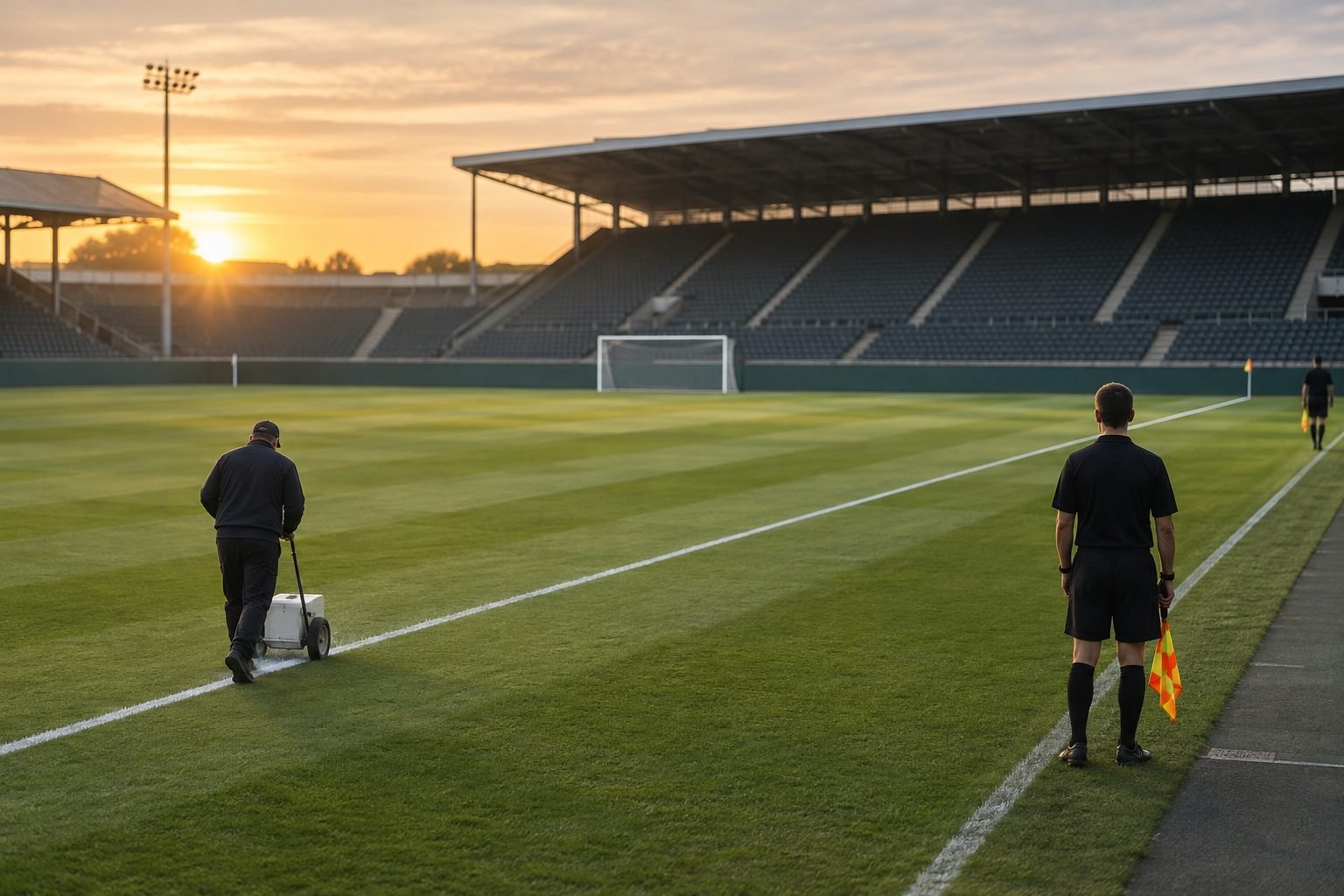
The diagonal system in football is the wide diagonal system the referee should usually use: play should be between the referee and the lead assistant referee, the lead assistant referee should stay in the referee’s field of vision, and the referee should be close enough to see play without interfering with it.
What the system means
Under the IFAB guidance for match officials, the best position is the one from which the referee can make the correct decision. Any positioning advice has to be adjusted to the teams, the players and the events in the match.
The recommended positions are basic guidelines. They are areas where the referee is likely to be most effective, and those areas may be larger, smaller or shaped differently depending on the match situation.
Basic positioning for the referee and assistant referee
Here are the core positioning recommendations and requirements for the referee team.
| Official | Recommendation or requirement |
|---|---|
| Referee | Should keep play between the referee and the lead assistant referee |
| Referee | Should usually use a wide diagonal system, so the lead assistant referee is in the referee's field of vision |
| Referee | Should stay towards the outside of the play, close enough to see it without interfering with it |
| Assistant referee | Must be in line with the second-last defender, or the ball if it is nearer the goal line |
| Assistant referee | Must always face the field of play, even when running |
Staying towards the outside of the play makes it easier to keep play and the lead assistant referee in the referee’s field of vision.
For assistant referees, short distances should be covered with side-to-side movement. That matters especially for offside, because it gives a better line of vision.
What the referee should watch beyond the ball
The action that matters is not always near the ball. A referee should also watch player confrontations away from the ball, possible offences in the area play is moving towards, and offences that happen after the ball has been played away.
Positioning during consultation and mass confrontation
Here is how positioning and duties are divided in those situations.
| Situation | Official | Requirement or recommendation |
|---|---|---|
| Disciplinary communication | Assistant referee and referee | Eye contact and a basic discreet hand signal may be sufficient |
| Direct consultation | Assistant referee | May advance 2-3 metres onto the field if necessary |
| Direct consultation | Referee and assistant referee | Should both face the field when talking, to avoid being heard by others and to observe the players and the field |
| Mass confrontation | Nearest assistant referee | May enter the field to assist the referee |
| Mass confrontation | Other assistant referee | Must observe and record details of the incident |
| Mass confrontation | Fourth official | Should remain near the technical areas |
When dealing with disciplinary issues, eye contact and a basic discreet hand signal from the assistant referee to the referee may be sufficient.
FAQ
Where should the referee stand in football?
The best position is one from which the referee can make the correct decision. All positioning recommendations must be adjusted to the teams, the players and the events in the match.
Why do referees run diagonally?
The lead assistant referee should be in the referee’s field of vision, so the referee should usually use a wide diagonal system. Staying towards the outside of the play makes it easier to keep play and the lead assistant referee in view.
What does the referee watch off the ball?
The referee should watch confrontations between players away from the ball. Attention should also stay on possible offences where play is heading and on offences after the ball has been played away.
Why does the assistant referee stay level with the second-last defender?
That position supports offside judgment. If the ball is nearer the goal line than the second-last defender, the assistant referee must be in line with the ball instead.