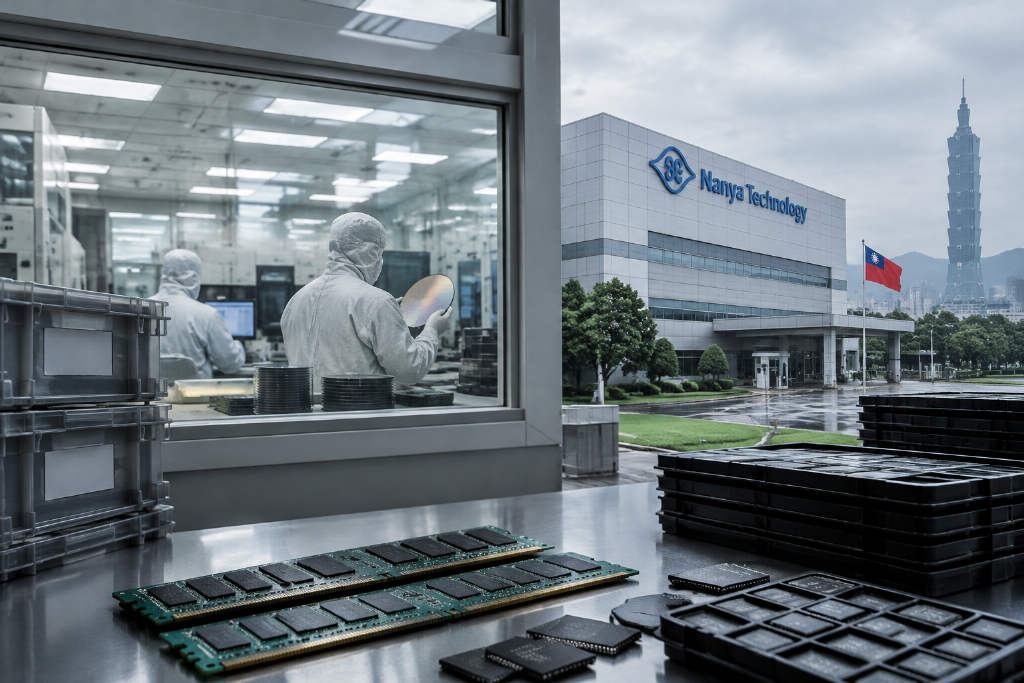
Nanya Technology said to raise DRAM contract prices again, with hikes of up to 20%

Nanya Technology said to raise DRAM contract prices again, with hikes of up to 20%

N
News Editor
2026-10-07 01:40:49
Taiwan-based memory maker Nanya Technology has reportedly informed customers of another round of DRAM contract price increases, with the largest increase said to reach 20%, according to local media. The company declined to comment on customer-specific pricing. The report said the latest price round could feed through to the broader market and lift Nanya’s average selling price and profitability. TrendForce expects the DRAM market to remain in short supply in the fourth quarter of 2026, forecasting conventional DRAM contract prices to rise 10% to 15% quarter over quarter. It also said consumer DRAM prices are likely to keep climbing as major manufacturers continue output cuts and supply relies heavily on Taiwan producers. Rising AI computing demand has also been supporting server DRAM and HBM demand, while advanced-node capacity is being directed toward high-performance products, limiting supply flexibility for traditional DRAM. Samsung, SK Hynix, and Micron have recently been expanding or adjusting DRAM, HBM, and packaging capacity plans.

Local media reported that Taiwan-based memory manufacturer Nanya Technology has recently notified customers of another increase in DRAM contract prices, with the maximum hike said to be as high as 20%.

Responding to the market speculation, Nanya said it would not comment on matters related to customer quotations.

The report added that industry participants believe the latest round of price increases could gradually pass through to the market and lift Nanya’s average selling price, or ASP, as well as its profitability.

TrendForce said the overall DRAM market is still expected to remain undersupplied in the fourth quarter of 2026, with conventional DRAM contract prices projected to rise 10% to 15% from the previous quarter. Consumer DRAM prices are also expected to keep moving higher because major suppliers have continued cutting output, leaving supply heavily dependent on manufacturers in Taiwan.

Demand from AI computing has continued to push up needs for server DRAM and high-bandwidth memory, or HBM. At the same time, advanced-process capacity has been tilted toward high-performance products, reducing supply flexibility for traditional DRAM.

Samsung, SK Hynix, and Micron have all recently been expanding or adjusting their DRAM, HBM, and packaging footprints. Micron’s CEO previously said that with demand continuing to grow and new capacity remaining limited, the company has not yet seen a clear inflection point for DRAM supply and demand to return to balance. The executive also said HBM demand growth is expected to continue outpacing traditional DRAM through 2028.

This article was originally published by Bit.Fan. For more cryptocurrency news and market insights, visit www.bit.fan.
100

Disclaimer:

The market information, project data, and third-party content displayed on this platform are for industry information sharing only and do not constitute any form of investment advice or return commitment.

Cryptocurrency trading carries high risks. Users should fully assess their risk tolerance and make independent decisions. All profits, losses, and legal responsibilities are borne by the users themselves.