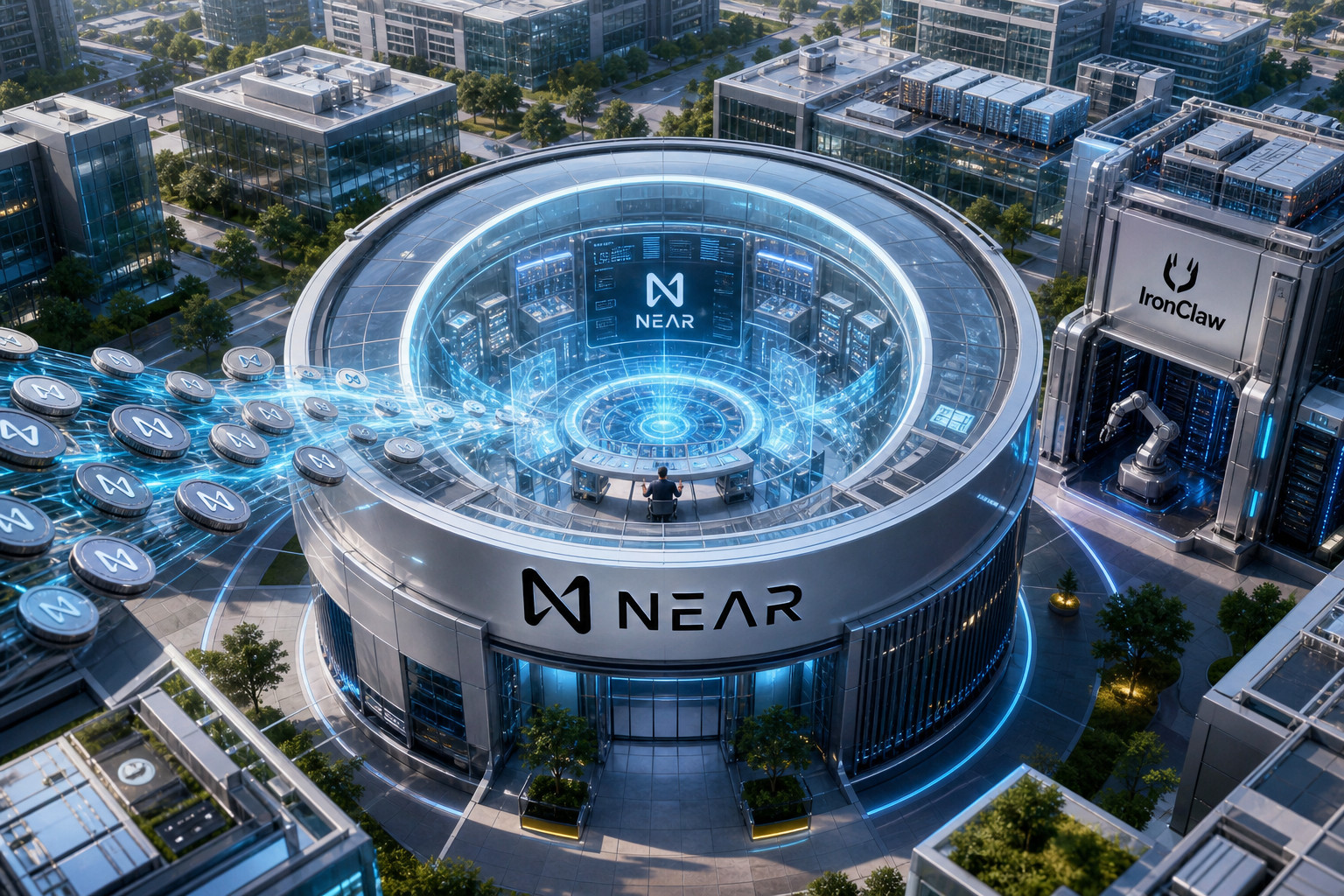
NEAR AI has rolled out a new feature called Staking for NEAR AI, letting users stake NEAR tokens in exchange for private AI compute credits. According to Techub News, the feature has attracted more than 500,000 NEAR in staked tokens roughly two weeks after launch. The minimum stake is 50 NEAR, which is enough to activate the IronClaw autonomous agent. Under the current setup, staking 500 NEAR generates about $5 in monthly compute credits, while users can withdraw their principal at any time. The protocol uses Trusted Execution Environment, or TEE, technology to protect data privacy. The staking model is designed to support the IronClaw 1.0 agent framework, which CryptoBriefing said performed strongly across several benchmark tests, including PinchBench and OfficeQA.
NEAR AI has introduced a feature called Staking for NEAR AI, allowing users to stake NEAR tokens in return for private AI compute credits, according to Techub News.
About two weeks after going live, the feature had drawn more than 500,000 NEAR in total staked tokens. The minimum stake is 50 NEAR, enough to activate the IronClaw autonomous agent.
How the staking model works
The protocol uses Trusted Execution Environment, or TEE, technology to protect data privacy. Under the current structure, staking 500 NEAR generates about $5 in compute credits per month. Users can also withdraw their principal at any time.
Support for IronClaw 1.0
The mechanism is intended to fund the IronClaw 1.0 agent framework. CryptoBriefing said the framework posted strong results in several benchmark tests, including PinchBench and OfficeQA.
This article was originally published by Bit.Fan. For more cryptocurrency news and market insights, visit www.bit.fan. Disclaimer:
The market information, project data, and third-party content displayed on this platform are for industry information sharing only and do not constitute any form of investment advice or return commitment.
Cryptocurrency trading carries high risks. Users should fully assess their risk tolerance and make independent decisions. All profits, losses, and legal responsibilities are borne by the users themselves.