
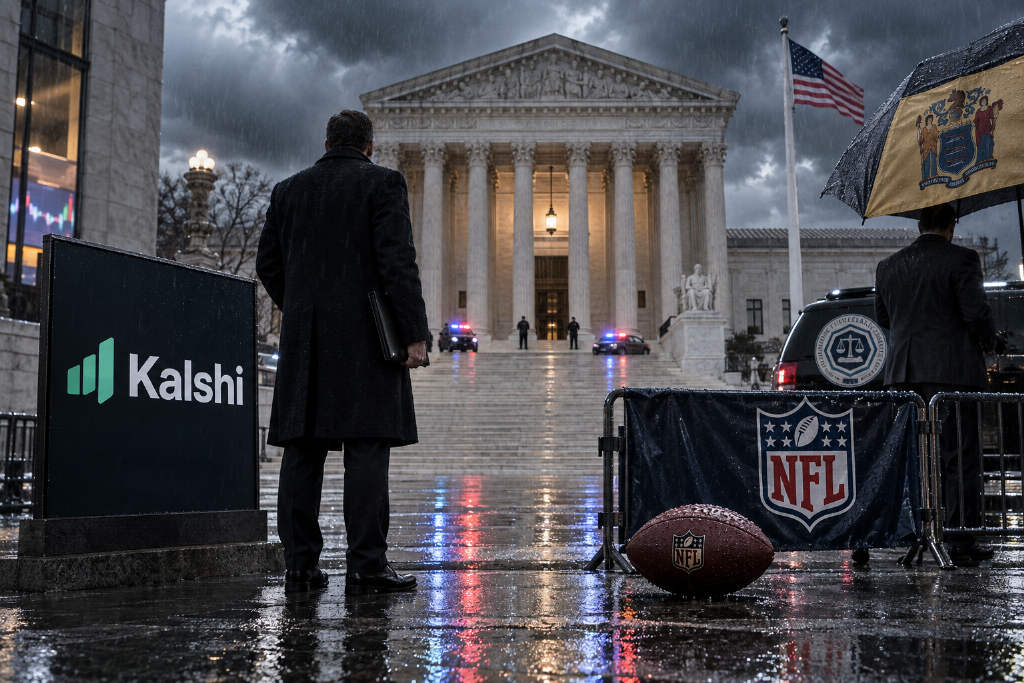
The NFL has taken a clear position in the legal battle over sports prediction markets, and it is not on Kalshi’s side.
In an amicus brief filed Thursday, the league urged the U.S. Supreme Court to hear New Jersey’s appeal of a Third Circuit decision that found Kalshi’s sports event contracts are swaps under the exclusive jurisdiction of the Commodity Futures Trading Commission, or CFTC. That reading shields the contracts from state gambling laws.
A circuit split is now at the center of the case
According to the report, the Sixth and Ninth Circuits have reached the opposite conclusion, creating a split among federal appeals courts that only the Supreme Court can settle. Kalshi, along with rival prediction market platforms such as Polymarket, has faced resistance from state regulators for years.
Decrypt also disclosed that its parent company, Dastan, operates Myriad, a prediction market that is unavailable to U.S. residents.
The NFL says sports contracts belong under state gambling oversight
In its filing, the NFL sided with the Sixth and Ninth Circuits. The league argued that Dodd-Frank’s definition of a swap covers instruments used to hedge existing risk, not bets that create new risk. On that basis, it said sports contracts should be regulated under state gambling law.
The brief laid out the league’s objections in detail. The NFL said it had asked the CFTC and operators such as Kalshi to prohibit contracts that one person could easily manipulate, contracts tied to injuries or officiating, and contracts whose outcomes could be known in advance. Those requests, the league said, were declined.
The filing raises age, staffing, and insider-trading concerns
The NFL also noted that 18-year-olds can trade on Kalshi, while most states require sports bettors to be at least 21. It added that the CFTC has only 543 employees nationwide, suggesting the agency lacks the staffing needed to police these markets.
Without league-specific lists of prohibited bettors, the brief said, operators’ nominal insider-trading policies or prohibitions are merely “paper tigers.”
NFL contracts made up a large share of trading volume
According to the brief, NFL-related contracts accounted for $1.8 billion of the $3.3 billion traded across prediction markets on the first Sunday of the season. The league is represented by former U.S. Attorney General William Barr and wants a ruling before the 2027 season.
The NFL is not asking for prediction markets to disappear. If the justices ultimately side with the Third Circuit, the league said it would intensify efforts to persuade the CFTC, market operators, and Congress to adopt stronger integrity and consumer-protection measures before then.
Sports gaming lawyer says the filing boosts odds of Supreme Court review
Sports gaming attorney Daniel Wallach said in a post on X that the brief “meaningfully increases the chances of a cert grant.”
“It is extremely telling that the sports league which has most forcefully advocated for federal regulation is essentially saying ‘this ain’t it,’” he wrote. Wallach also noted that former CFTC and SEC Chair Gary Gensler and former Sen. Christopher Dodd of Connecticut, both of whom helped pass Dodd-Frank, filed briefs backing New Jersey.
Other leagues and platforms have taken a different approach
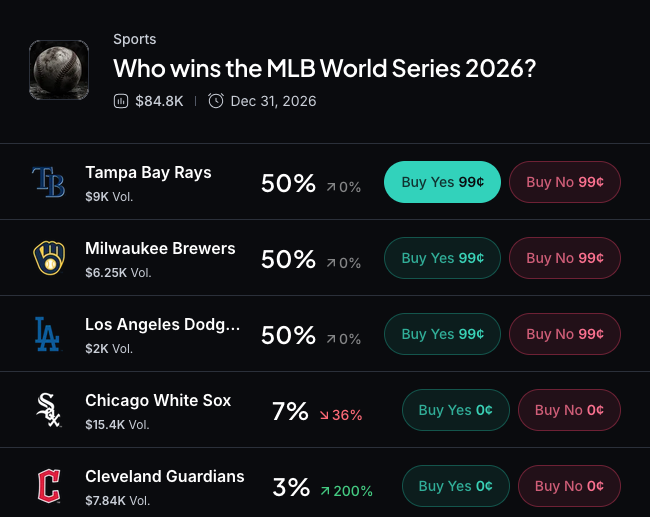
Other sports leagues have been more open to prediction markets. MLB named Polymarket its exclusive prediction market sponsor in March and signed an integrity agreement with the CFTC. The NHL became the first major league to license its trademarks to prediction markets. DraftKings and FanDuel have also launched prediction market products of their own.
The commercial stakes keep getting bigger
As prediction markets move deeper into the mainstream, the stakes in the case are rising as well. Bernstein analysts see a $10 trillion opportunity in prediction markets, while Robinhood CEO Vlad Tenev expects crypto contracts to eventually overtake sports contracts.