
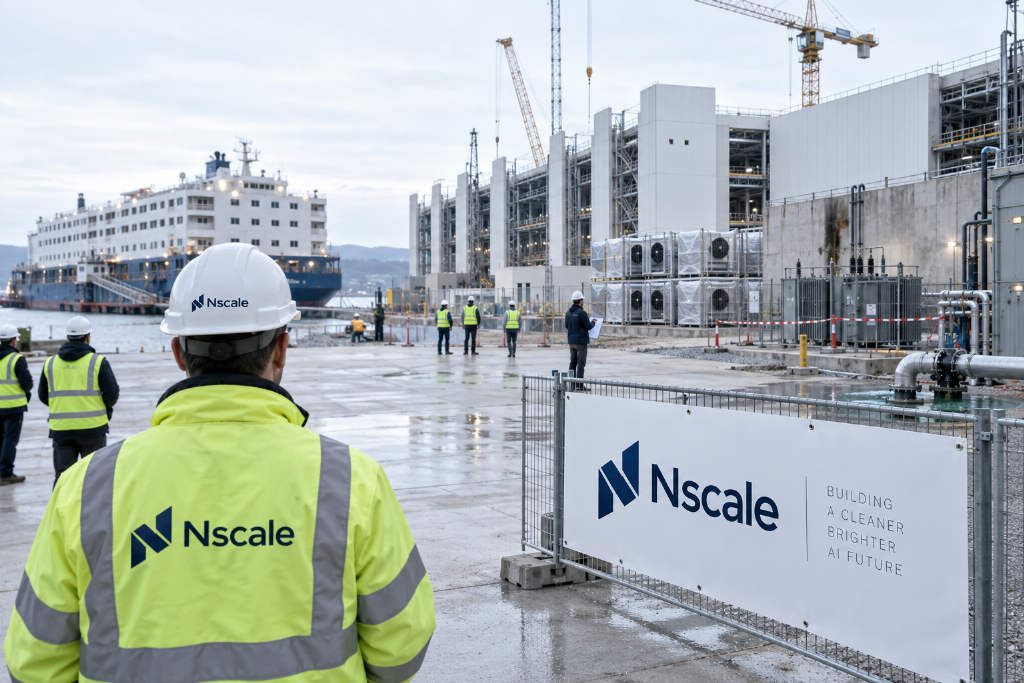
AI data center developer Nscale is aiming to raise as much as $3 billion in an IPO as early as this month, but Bloomberg reported that the company is dealing with multiple risks ahead of the listing, including construction delays, equipment failures, regulatory issues and employee complaints.
One of the main concerns centers on Nscale’s flagship 30-megawatt data center project, which is running about six months behind schedule. In an effort to speed up the buildout, the company reportedly housed hundreds of construction workers on a floating hotel barge.
Flagship site fell behind as incidents and compliance issues emerged
The project also saw a liquid-cooling system leak and a transformer fire, according to the report. Local safety inspections found 10 violations, including exposed components in part of a high-voltage system that had not been grounded.
Nscale was spun out of crypto mining company Arkon Energy in 2024. Despite securing more than $103 billion in contracts, the company has almost no operating data centers at present.
Built capacity was below 1% of the overall target as of August
As of August, Nscale had completed less than 1% of its planned target computing capacity. Bloomberg said the company has relied heavily on leased capacity from other data center operators to meet contractual commitments.
Its IPO filing shows that Microsoft and Anthropic account for about 85% of its contract value. Among those agreements, Anthropic committed about $44.6 billion in spending for dedicated AI chip infrastructure at the Monarch campus in West Virginia.
Financing and long-term chip supply are still not in place
Nscale has not yet secured the financing required to execute that contract, nor has it obtained long-term chip supply agreements needed for delivery. At the same time, the company is seeking an IPO valuation of as much as $35 billion.
Chief executive Josh Payne previously described Nscale’s model as one that would "own land, power, data centers, chips and software." Bloomberg said several of the company’s projects do not yet match that vertically integrated model, and power supply, grid connection, construction timelines and customer delivery remain potential bottlenecks.