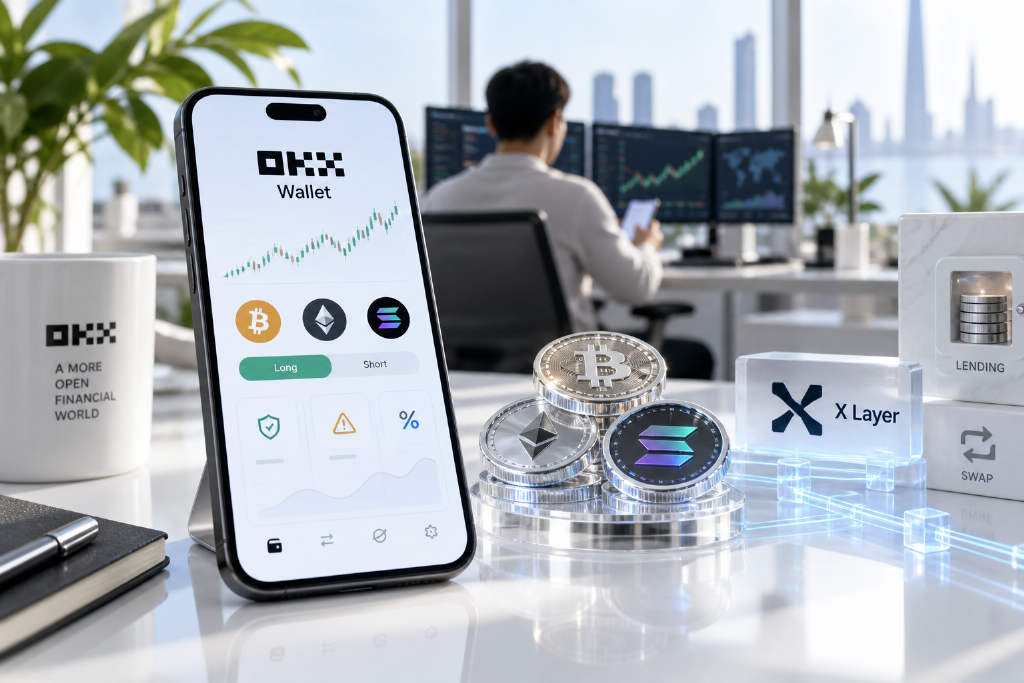
OKX Wallet has officially launched a leverage trading feature on X Layer, integrating Aave lending with DEX spot swaps into a unified workflow. Announced on September 8, 2026, the feature allows users to take spot long or short positions on BTC, ETH, SOL, and other assets through their self-custodial wallet. Accessible via the OKX App's DEX > Leverage Trading section, it requires the latest app version. Before executing a trade, users can review estimated execution results, borrowing rates, health factors, and liquidation prices. Each on-chain transaction must be manually authorized. OKX warns that leverage trading involves borrowing costs and carries liquidation risk. The integration aims to simplify the process of leveraged trading while maintaining self-custody.
OKX Wallet Launches Leverage Trading on X Layer
OKX Wallet has officially launched a 'Leverage Trading' feature, integrating Aave lending with DEX spot swaps into a unified trading flow, according to an official announcement. Users can now take spot long or short positions on assets within the X Layer ecosystem through their self-custodial wallet.
The feature is available in the OKX App under 'DEX > Leverage Trading,' and requires the latest version of the app. Initially, it supports BTC, ETH, SOL, and other assets. Before placing a trade, users can view estimated execution results, borrowing rates, health factors, and estimated liquidation prices. Each on-chain transaction must be authorized by the user. The company warns that leverage trading involves borrowing, which incurs interest and carries liquidation risk.
This article was originally published by Bit.Fan. For more cryptocurrency news and market insights, visit www.bit.fan. Disclaimer:
The market information, project data, and third-party content displayed on this platform are for industry information sharing only and do not constitute any form of investment advice or return commitment.
Cryptocurrency trading carries high risks. Users should fully assess their risk tolerance and make independent decisions. All profits, losses, and legal responsibilities are borne by the users themselves.