
Fresh clues around unreleased OpenAI and Anthropic models surfaced on the same day, while OpenAI CEO Sam Altman used a podcast interview to criticize apocalyptic AI marketing and concentration of power in the industry.
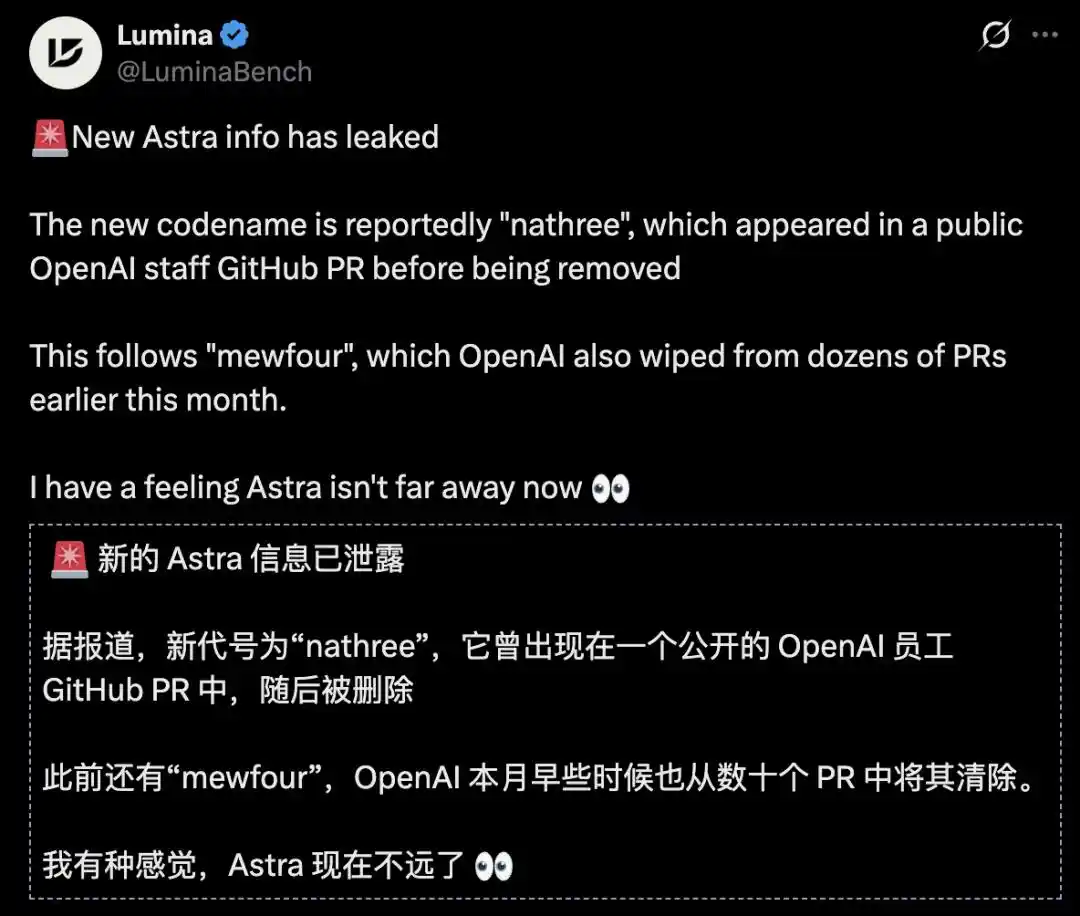
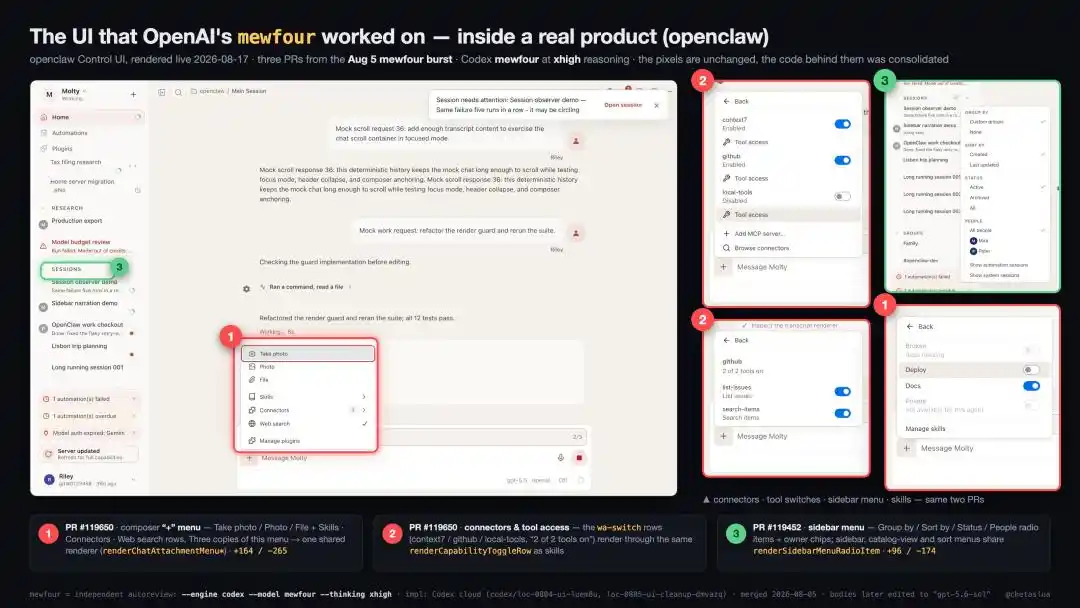
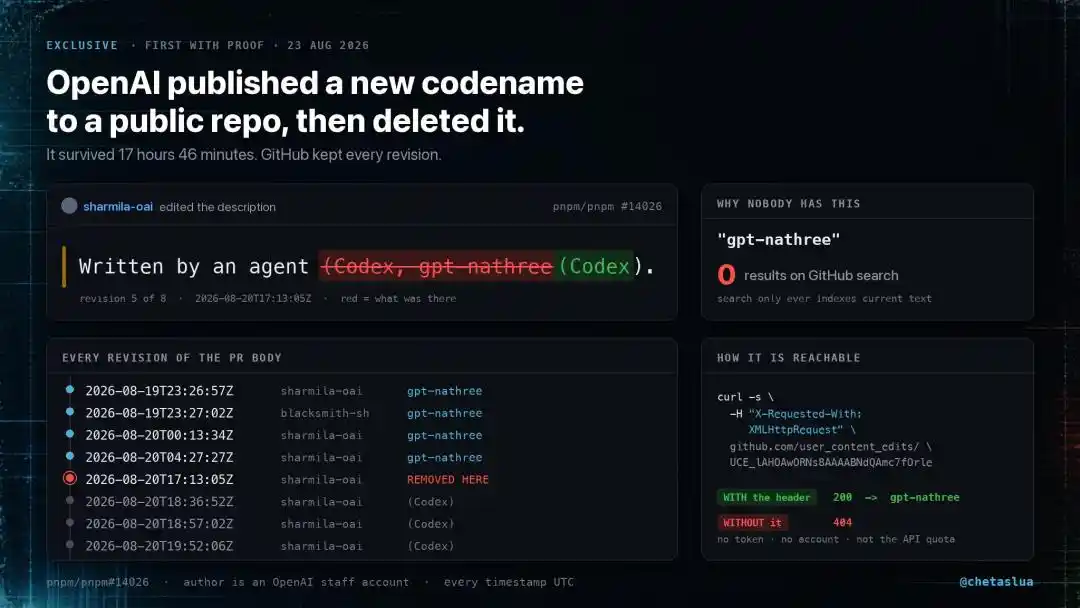
According to the source article, OpenAI employees left a public trace of a model codename, “gpt-nathree,” in a GitHub pull request, following an earlier public-testing reference to “Codex, gpt-mewfour.” Around the same time, third-party developer tools and a Discord community exposed two Anthropic names: “claude-marshmallow-eap” and “claude-melon-eap.”
GitHub pull request points to “gpt-nathree”
The article says the latest OpenAI clue appeared after what it describes as an accidental public disclosure on GitHub.
On Aug. 15, an OpenAI-linked account reportedly mentioned “Codex, gpt-mewfour” during a public test. At the time, people in the field were still guessing what the name meant and whether it pointed to a new model line.
A more concrete signal appeared late on Aug. 19. The source says OpenAI senior employee Sharmila Jesupaul submitted a public pull request on GitHub that included the line “written by agent Codex, gpt-nathree.” That record remained publicly visible for nearly 18 hours. It was then edited the following afternoon at 17:13, when “gpt-nathree” was removed.
Rather than quieting speculation, the deletion drew more attention to the codename and to what OpenAI may be testing internally.
Source article links mewfour and nathree to a possible next OpenAI agent model
The report argues that Mewfour and Nanthree are likely checkpoints from the same next-generation OpenAI agent model track. It bases that view on the fact that both appeared under the same account and used the same Codex signature format.
It also says many industry observers think the newly surfaced name looks like an updated GPT-6 Astra checkpoint undergoing intensive internal coding tests through Codex. That remains speculation inside the article rather than a formal OpenAI announcement.
What OpenAI has not disclosed, the piece notes, are Astra’s core architectural details, including parameter count, context length, and training-data scale.
The article adds that OpenAI has publicly described Astra as a “future major model,” and says an internal version solved more than 10 long-unsolved problems in mathematics and theoretical computer science. It also says discussions around a “critical” cybersecurity risk rating later led OpenAI to tighten isolation and access controls, pausing some internal work.
Anthropic names “marshmallow” and “melon” also appear
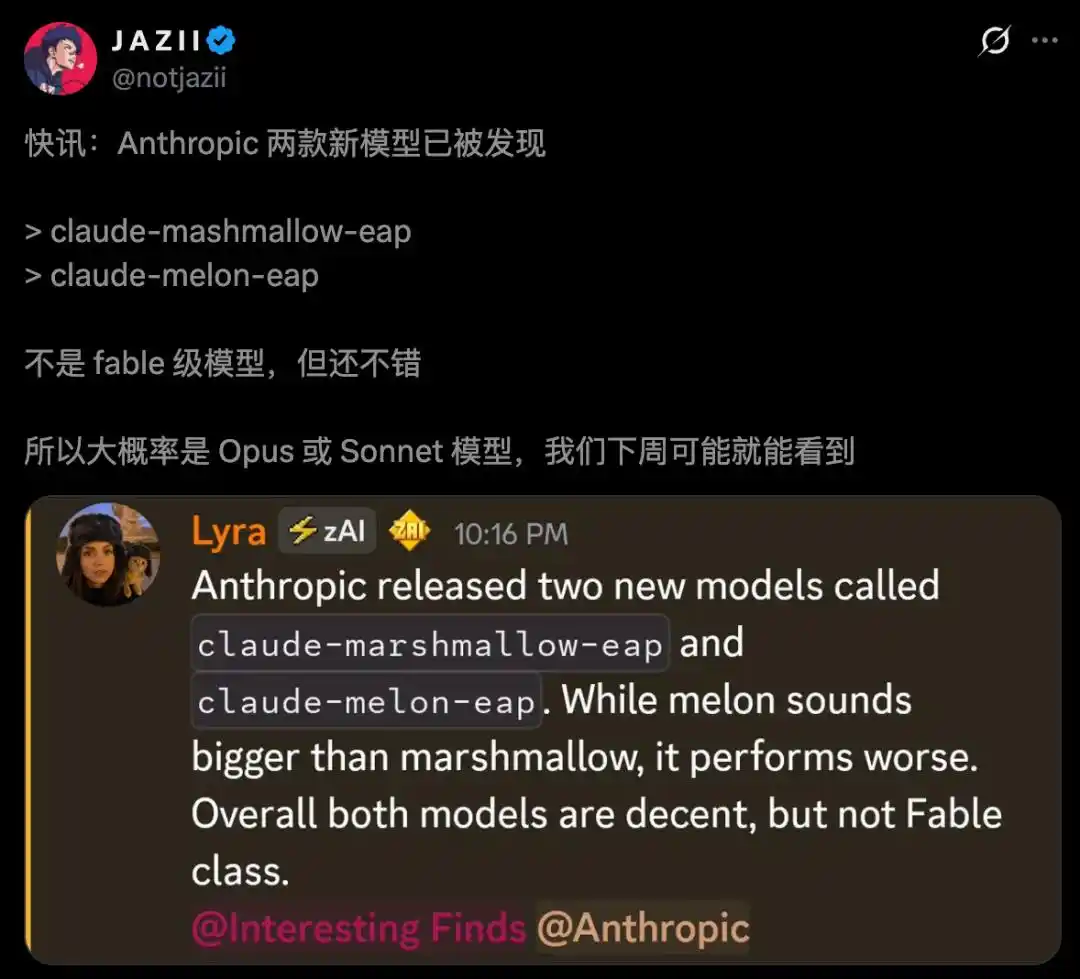
Anthropic’s side of the story came from separate community-level exposure, according to the source. Two names — “claude-marshmallow-eap” and “claude-melon-eap” — were reportedly discovered through a third-party developer app and a Discord community.
The article says the currently known information suggests neither model has reached the Fable level. Discussion around the pair has centered on whether they are refinements to the existing Claude 5 family, especially Sonnet and Opus, rather than a fully new flagship generation.
Placed next to the OpenAI leaks, the source frames the developments as an early opening in the next round of OpenAI-versus-Claude competition.
Altman says he misread the timeline of AI disruption
In a separate but same-day thread of developments, Altman spoke at length on David Senra’s “Founders” podcast about OpenAI, AI adoption, and the industry’s rhetoric.
He said: “When we launched GPT-4 in 2023, I thought disruption in software would happen immediately and a lot of businesses would be taken very quickly. But I was wrong.”
Altman said the timeline proved slower than he expected because society has enormous inertia. He included himself in that description, saying that even with tools like Codex available, he still often works the way he has for the past 20 years, copying and pasting between apps and scrolling through long emails.
In his telling, the economy and society adapt to AI more slowly than AI itself improves. He also said he is grateful for that inertia because a slower adjustment makes the transition smoother and safer.
Criticism of “doomer” messaging and the “benevolent dictator” story
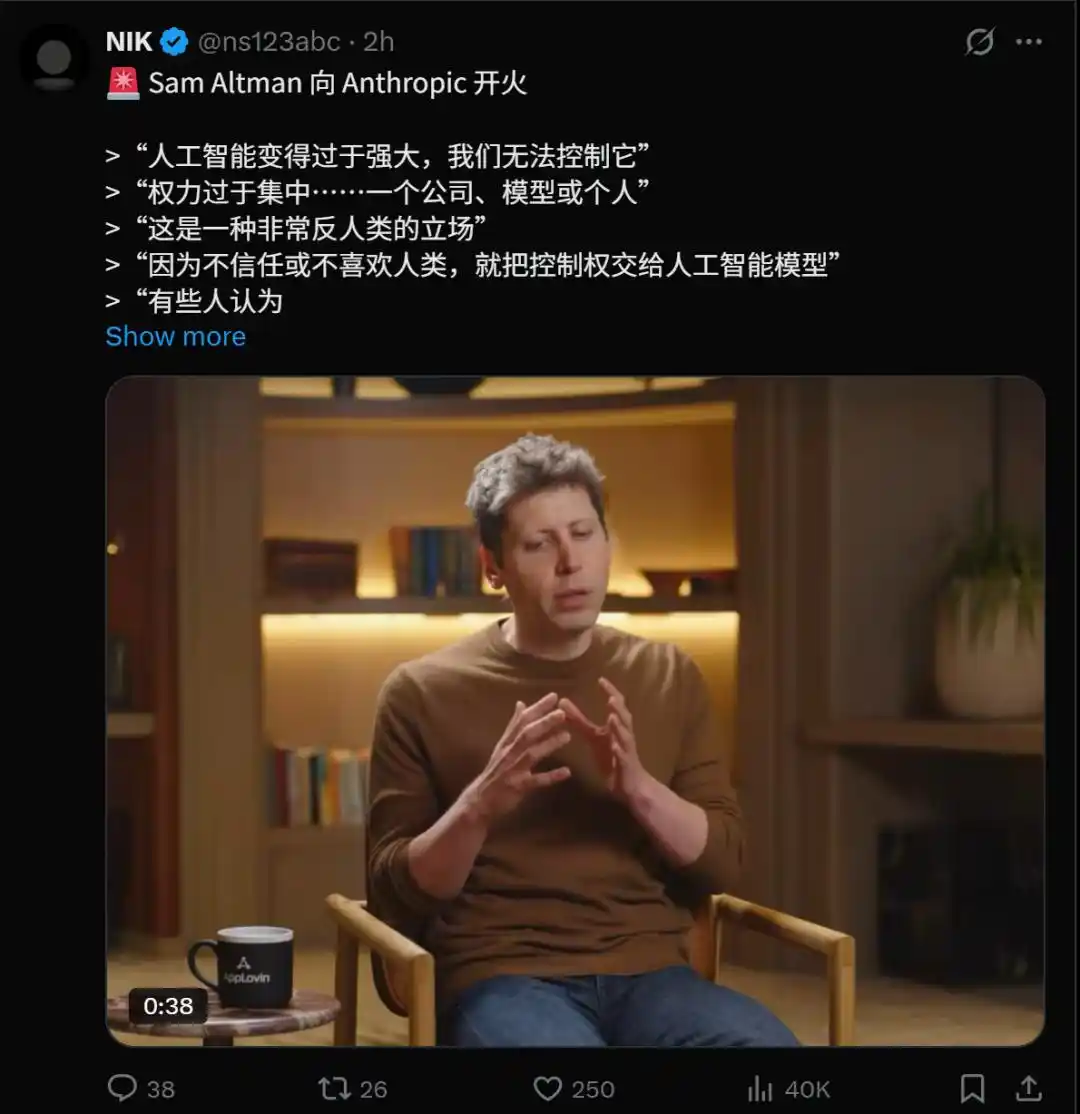
The sharpest part of the interview, as described in the source article, was Altman’s criticism of AI messaging that pairs catastrophic warnings with grand promises.
While he did not name Dario Amodei or Anthropic directly, the article says listeners widely understood the remarks as aimed at that camp of AI discourse.
Altman argued that some people in the industry spread fear by saying there is a 25% chance AI could destroy the world, or that half of jobs could disappear within a year, while also promising cures for cancer and massive material abundance. He said he strongly dislikes that framing.
He summarized it as a “benevolent dictator” narrative: ordinary people are asked to hand over autonomy and allow power to concentrate in a small group of unelected companies and smart individuals who will then decide what is best for everyone else.
Altman said one of AI’s biggest risks, beyond models going out of control, is excessive concentration. He repeatedly returned to one line: “People are the whole point of this all.”
OpenAI’s early years: four and a half years in the dark
Altman also revisited OpenAI’s early history. He said that on the first day after the company was formed in early 2016, he, Greg Brockman, and roughly a dozen highly capable people gathered in an apartment without a clear sense of what the first concrete step should be.
As he told it, someone asked, “What should we do now?” Someone else went to buy a whiteboard. Once it arrived, the uncertainty was still there: if the goal was AGI, maybe they should start by writing papers.

The article says OpenAI then spent four and a half years searching in the dark before shipping its first real product. That path ran against the usual Silicon Valley rulebook of launching early, iterating fast, and relying on customer feedback.
Even after ChatGPT launched and began growing rapidly, Altman said some people inside the company felt the growth was unstable and low in value. According to the report, the team even listed five or six other things it could build instead.
At that point, Peter Thiel said, “Doing anything other than continuing this is obviously wrong.” The article says he compared ChatGPT to the Google search box: a blank field where a user can type anything and get the right result.
Without strong customer feedback or clear market signals, Altman said OpenAI had to invent internal rankings and tests to gauge progress. After many “chaotic falls,” the company eventually found its way to the scaling-law-driven success of GPT.
Altman says human connection keeps its value
Near the end of the podcast, the host asked what people will still need if AI can eventually make podcasts better than humans can.
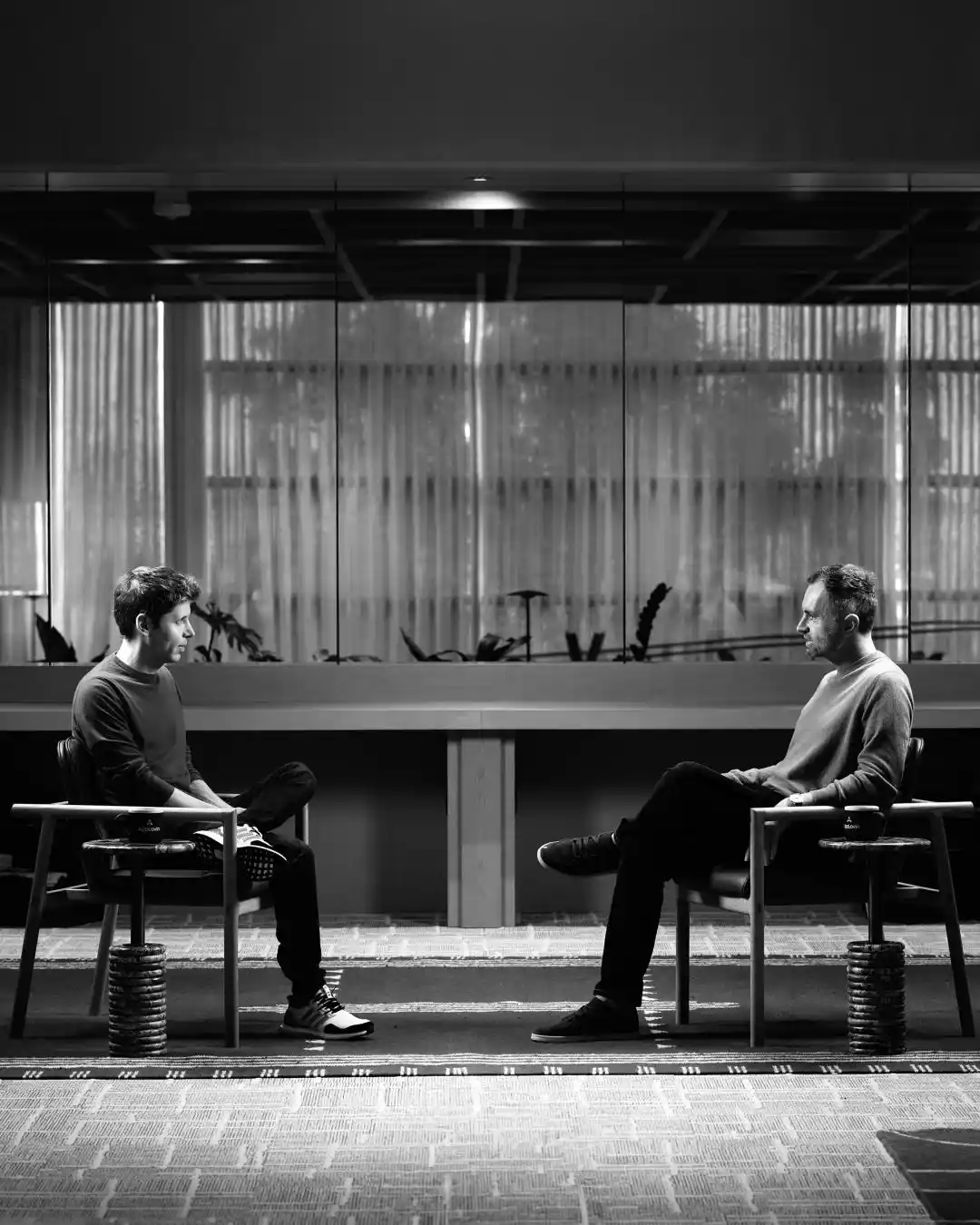
Altman’s answer was direct: people will still want real people.
He said that no matter how capable AI becomes, things rooted in human connection and mutual regard will not lose value. In his view, they will become more expensive and more valuable. He gave simple examples from his own preferences, saying he likes physical books over e-books and face-to-face meetings over Zoom.
The source article closes that thread by saying Altman sees AI not as a replacement for humanity, but as a tool that could trigger a wave of small-business entrepreneurship.
Referenced posts and source attribution
- https://x.com/davidsenra/status/2091514583420686743
- https://x.com/firesidealpha/status/2091506987137896560
- https://x.com/davidsenra/status/2091575832036724852
- https://x.com/davidsenra/status/2091538100623151216
The source article was published by MarsBit and credited the original write-up to the WeChat public account “新智元,” with ASI启示录 listed as the author and Aeneas 大卫 as editor.