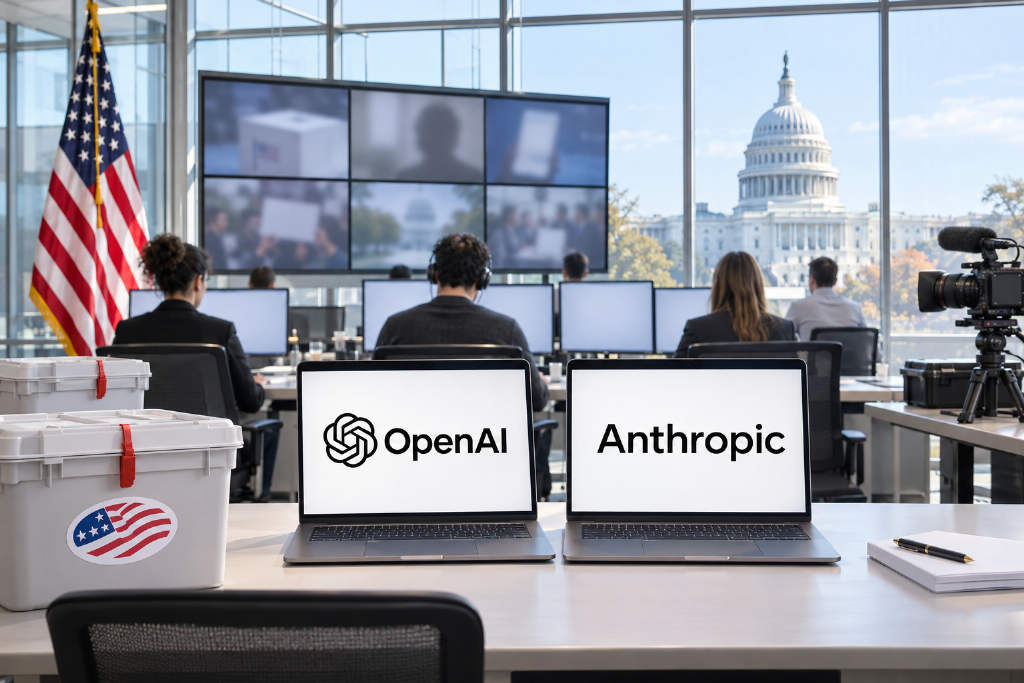
OpenAI and Anthropic will set up dedicated war rooms for the U.S. midterm elections for the first time, according to Semafor, as the companies prepare to monitor abuse and respond quickly to election-related incidents on their platforms. Anthropic said its teams have been strengthening election safeguards throughout the year and enforcing platform policies, with a specialized pre-election team tasked with watching for misuse and handling fast-moving issues.
The report places the move in a broader industry context. Tech companies have used election war rooms since 2018, when Meta first created such a team to deal with the spread of election misinformation. The risks have since expanded beyond false posts to include deepfake videos and inaccurate information surfaced by AI search tools.
Semafor cited a recent example involving Google AI Mode, which last week did not answer a question about who won the 2020 U.S. presidential election. Google said it was fixing the issue. The report also said the unpredictable nature of AI outputs, recent cybersecurity problems, and the tendency of AI search tools to mirror user expectations can make monitoring and response harder. Former Meta public policy chief Katie Harbath said war rooms are designed to let companies quickly assess unexpected problems and route them through preset escalation procedures.
OpenAI and Anthropic will set up dedicated war rooms for the U.S. midterm elections for the first time, according to Semafor, as both companies look to keep election information on their platforms accurate.
An Anthropic spokesperson said the company’s teams have been strengthening election-related safeguards throughout the year and enforcing platform policies. A specialized team formed ahead of the election will monitor platform abuse and prepare to respond quickly to unexpected incidents.
Election war rooms have precedent in tech
The use of election war rooms by technology platforms dates back to 2018, when Meta first created such a team to address the spread of election misinformation.
Deepfakes and AI search errors add to the risk
The report said current risks also include deepfake videos and inaccurate information spread through AI search. As one example, Semafor said Google’s AI Mode last week did not answer a question about who won the 2020 U.S. presidential election. Google said it is fixing the issue.
The report added that the unpredictable nature of AI outputs, recent cybersecurity issues, and the tendency of AI search tools to align with what users expect all make monitoring and response more difficult.
Katie Harbath, Meta’s former head of public policy, said the purpose of a war room is to allow companies to quickly assess unexpected problems and sort them by severity under an established process.
This article was originally published by Bit.Fan. For more cryptocurrency news and market insights, visit www.bit.fan. Disclaimer:
The market information, project data, and third-party content displayed on this platform are for industry information sharing only and do not constitute any form of investment advice or return commitment.
Cryptocurrency trading carries high risks. Users should fully assess their risk tolerance and make independent decisions. All profits, losses, and legal responsibilities are borne by the users themselves.