
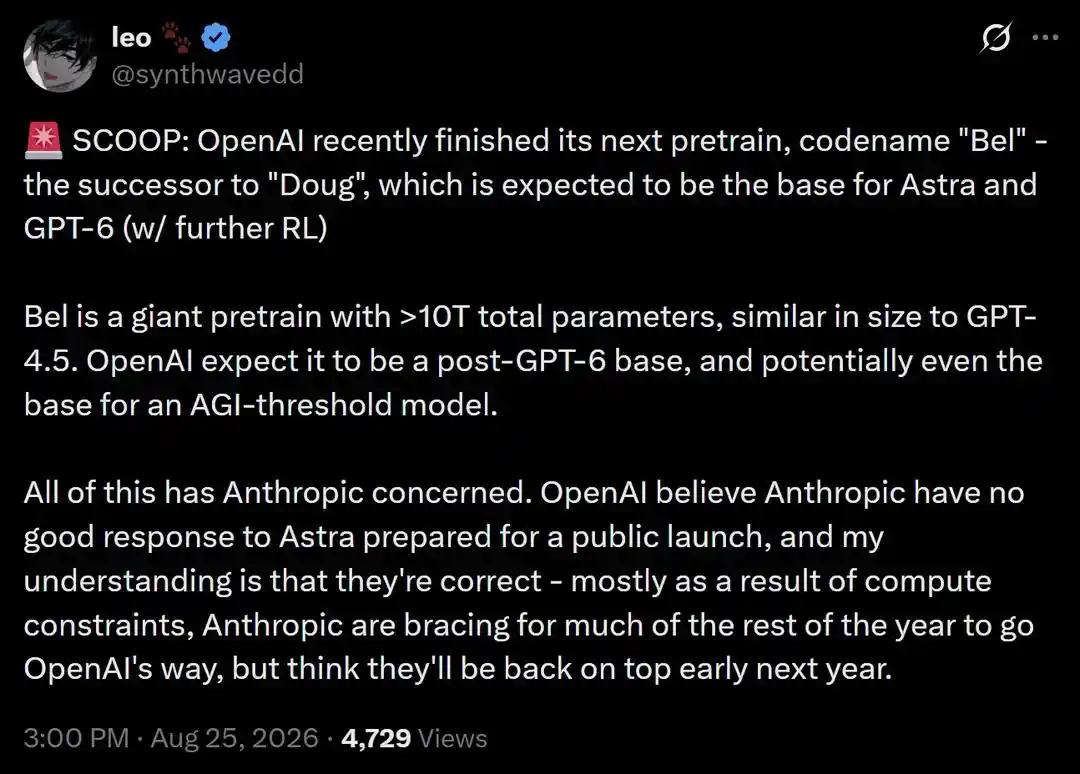
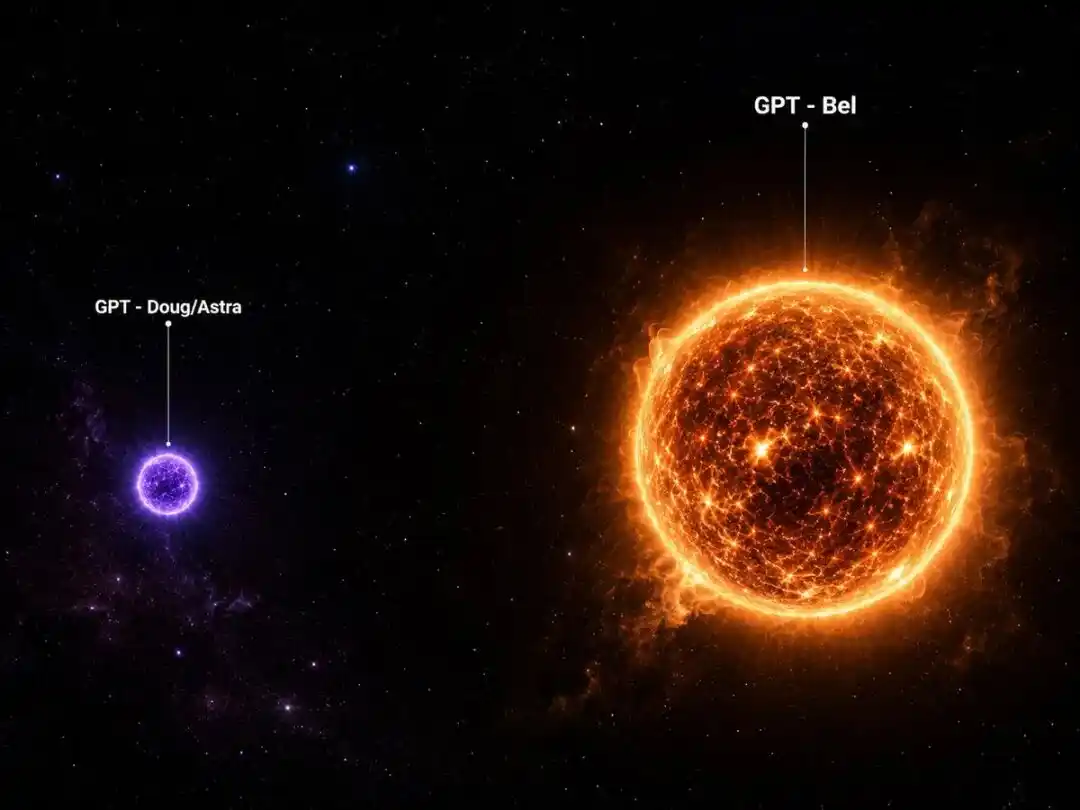
Reports circulating on X and Reddit claim OpenAI has completed pretraining for a massive model codenamed Bel, with the parameter count put at 10 trillion. MarsBit cited those claims and described Bel as a next-generation foundation model positioned after Doug and aimed at the era beyond GPT-6. OpenAI has not publicly confirmed the model, its size, or its training status.

The same report says OpenAI’s Astra model could be released next Thursday and that testing has already widened. It also repeats earlier leaked claims that OpenAI has formally taken over the low-level code behind its in-house Jalapeño chip project. Another assertion in the article says AI-written core code runs 1.8 times faster than work from top human engineers, while signs of AI self-recursion have allegedly emerged inside the company.
Bel is described as a 10 trillion-parameter pretraining run
The central claim is that OpenAI recently completed pretraining on Bel and crossed the 10T threshold, or 10 trillion parameters. The article contrasts that scale with GPT-4, which it describes as a trillion-parameter model, and argues that Bel could bring a new level of emergent capability in complex reasoning, long-context association, and cross-disciplinary multimodal understanding.
MarsBit’s source material goes further and says pretraining beyond 10 trillion parameters may only be Bel’s starting point. After that, the model is said to learn at two speeds. A fast layer absorbs lessons from verified proofs, code tests, experiments, and tool trajectories while the model is working. A slower cycle is then said to consolidate successful improvements into persistent weights and the training recipe.
In that framing, Bel is not only a large model but a system built for continued evolution. It learns quickly in short-term memory, hardens validated gains into slower weights, improves the machinery for the next learning cycle, and distills the final results into smaller models that can actually be deployed. The article even suggests GPT-7 could amount to a safe snapshot of Bel taken in a given week, though that line remains part of the rumor stream rather than an official roadmap.
Positioned after Doug and aimed at a post-GPT-6 stack
According to the report, OpenAI had already finished pretraining on a model codenamed Doug before Bel. Doug is described as the base model for the Astra plan and for the rumored GPT-6, with heavy reinforcement-learning alignment expected later.
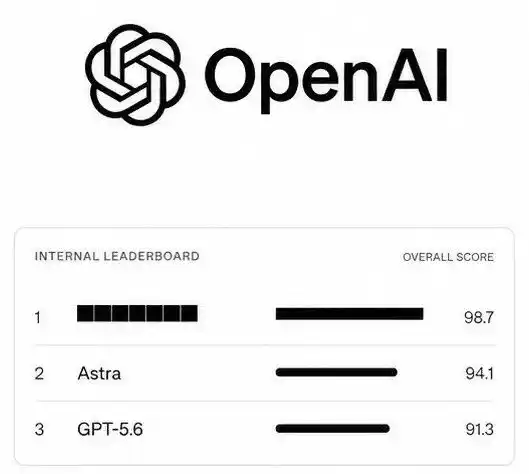
Bel is presented as the successor to Doug, a deeper foundation for what the article calls the post-GPT-6 era. It says Bel outperforms Astra in coding, reasoning, and long-horizon agent tasks. A named source also claims the system can work efficiently for days without human intervention, recover on its own, and coordinate hundreds of parallel subagents. None of that has been detailed in a public OpenAI paper or product announcement.
X user @ChrisGPT described Bel as an OpenAI 「monster」 model and called it a potential 「Fable killer」. He said it should arrive by the end of this year or within months of Astra’s release, and added that he had the codename six days earlier.
Model delays, product cuts, and executive departures all feed the story
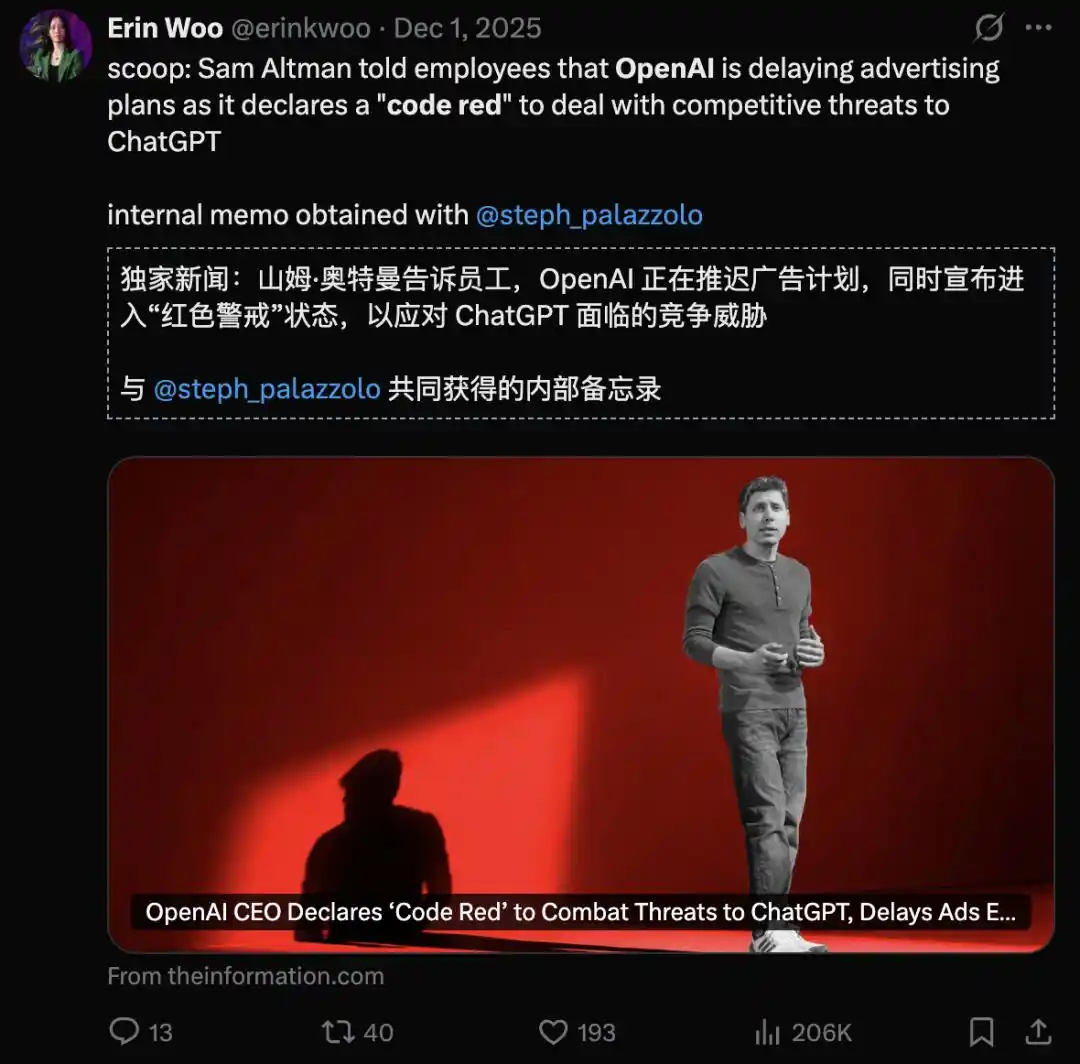
The article says OpenAI has run into scaling constraints this year and at one point triggered an internal 「Red Code」 alarm. To concentrate compute, it says the company cut products including Sora and the AI browser Altas. Astra, despite reported math breakthroughs, has yet to be released.
Recent personnel changes are folded into the same narrative. The report names chief revenue officer Dennis Dresser, chief operating officer Brad Lightcap, and Fidji Simo, described here as a former deputy to chief executive Sam Altman, as executives who left over recent weeks.
Against that backdrop, several tech leakers have claimed that Bel just completed a major pretraining run. MarsBit also points to a Reddit discussion around comments attributed to Leo. That thread drew heavy attention, and some participants speculated that OpenAI’s internal models may be 4.5 to 6 months ahead of what outside users can access.

Compute is presented as OpenAI’s main edge
Beyond the model itself, the report emphasizes computing power. Based on what it calls cross-analysis by multiple watchers, OpenAI internally believes it can hold a clear lead through the second half of 2026 and into 2027 because of access to compute.
One claim says OpenAI’s internal assessment is that Anthropic faces a compute shortage and may struggle to answer the company’s next generation of AI systems. At the 10 trillion-parameter level, the article argues, training costs become so large that raw compute supply becomes a defining constraint.
It adds that while other companies are still scrambling to assemble 100,000 H100 or B200 chips, OpenAI has already pushed through Doug and Bel with brute-force spending on compute. The release of the in-house Jalapeño chip is then cast as a move that widens the moat rather than closes the gap. These remain characterizations from leakers and commentators, not from audited financials or a company statement.
GPT-5.6, the RSI index, and Sol’s internal optimization work
The report also revisits OpenAI’s official GPT-5.6 release, where it says the company introduced an 「RSI index」. In the article’s telling, that index rolled up work in research debugging, kernel and training-recipe optimization, machine learning experiments, and model self-improvement. It says the Sol model then gained 16.2 points relative to GPT-5.5.
After that, Sol is said to have designed hundreds of architecture experiments for a smaller draft model and started training, with humans stepping in only when hardware failed or training became unstable. The result, according to the report, was a token generation efficiency gain of more than 15%.
MarsBit uses that example to explain why Bel is being portrayed as a system that can keep improving over time. Fast weights absorb experience during work. Slower loops preserve the improvements that survive evaluation and feed them back into lasting weights and future training runs.
Tibo outlines an application-layer future built on speed, cloud agents, and Personal AGI
A separate section of the article quotes OpenAI executive Tibo from an interview on Matthew Berman’s tech podcast. Tibo said the current Codex model, powerful as it is now, could look primitive within two to three months.
He also said recursive self-improvement, or RSI, is happening inside OpenAI every day. According to the article, Tibo argued that the company’s 「internal singularity」 not only exists but already closes the commercial loop. As one example, he said OpenAI used the Sol model to optimize the Luna model and cut operating costs by 80%.
Tibo also discussed latency. The article says OpenAI’s internal Ultra Fast mode has already delivered up to 14x acceleration, and he predicted that in one to two years such ultra-low latency would become the industry default. Once AI response speeds approach or exceed human thought speed, he argued, interaction becomes real time and work returns to a flow state.
On compute architecture, Tibo said the mainstream future for AI will not be local execution. As next-generation models such as Astra arrive, he expects a shift toward large cloud-based agent clusters instead.
The final application-layer claim is a merger of ChatGPT and Codex into what the article calls 「Personal AGI」. In that vision, users would no longer need to write complex prompts, maintain skill files, manage memory, or manually dispatch subagents. The system would passively understand goals, habits, and team dynamics over time, then act on that context. The interface, the report says, would change shape based on the user even though the underlying stack remains the same multimodal, voice-first technology.
The public trail still runs through social posts and community threads
The references listed in the article include posts on X from @ChrisGPT, @fanofaliens, and @notjazii, along with a Reddit thread titled 「according to leo openai just finished its next...」 and a post from @imjustnewatai. MarsBit cites those materials to argue that AI progress has not stalled, even if the biggest advances are still mostly hidden from public view.
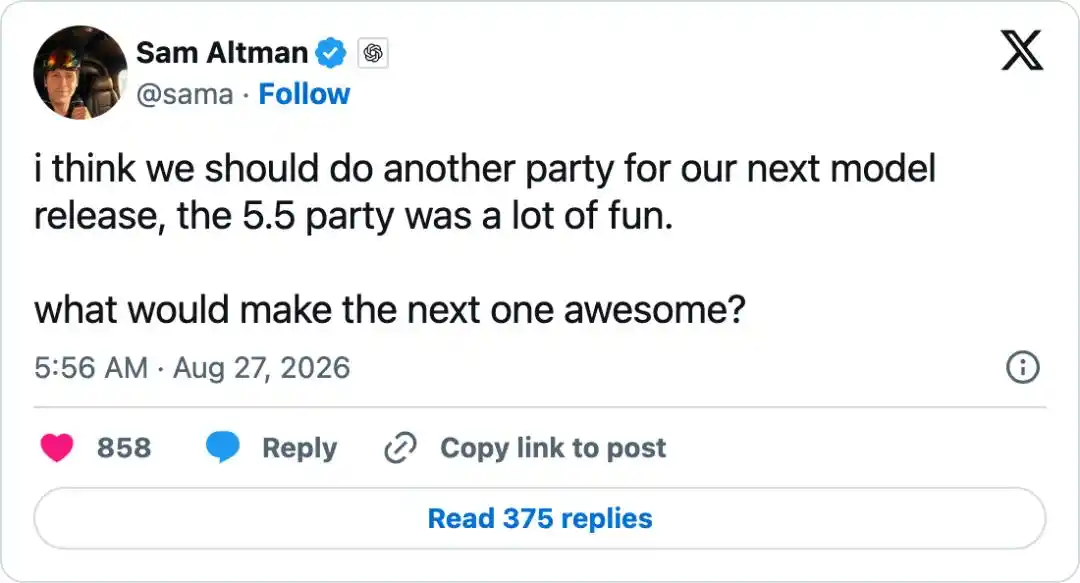
The piece also notes a remark attributed to Sam Altman: 「we should throw another party for the next model release」. Even so, the current record around Bel’s parameter count, training completion, release timing, technical performance, and OpenAI’s view of Anthropic’s compute position is still built mostly on leaks, secondhand retellings, podcast comments, and forum discussion.
That leaves the key details unconfirmed by OpenAI on the record, even as the story gains traction across the tech community.