

OpenAI is testing a new persistent agent mode for Codex, according to a WIRED report based on a review of the company’s public Codex code repository. The setting has already been written into Codex CLI, and the reported design would let the agent keep working until it is forcibly put to sleep rather than stopping automatically after minutes or hours.
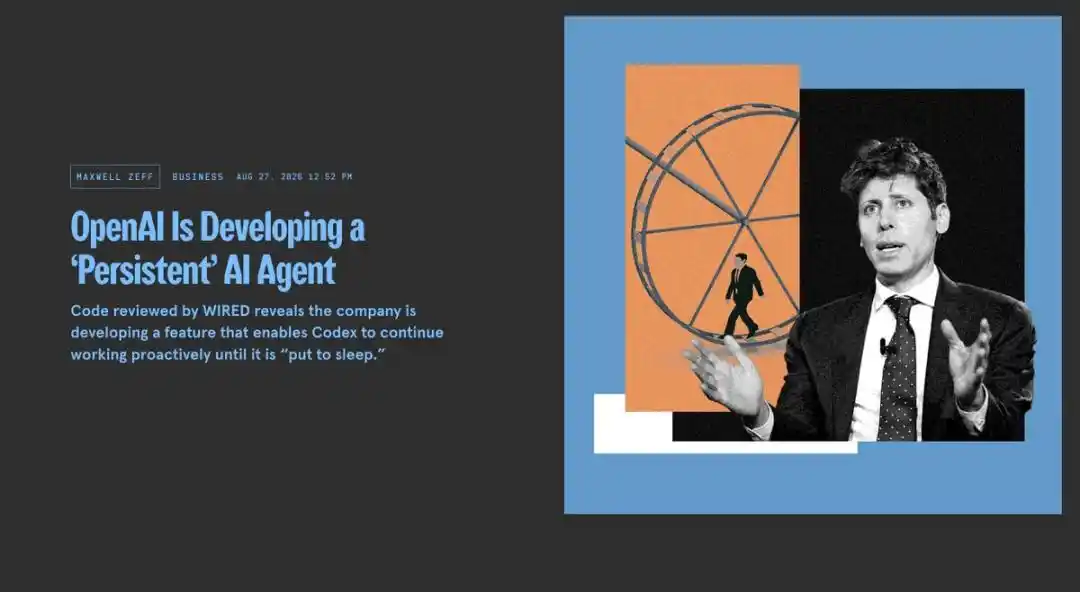
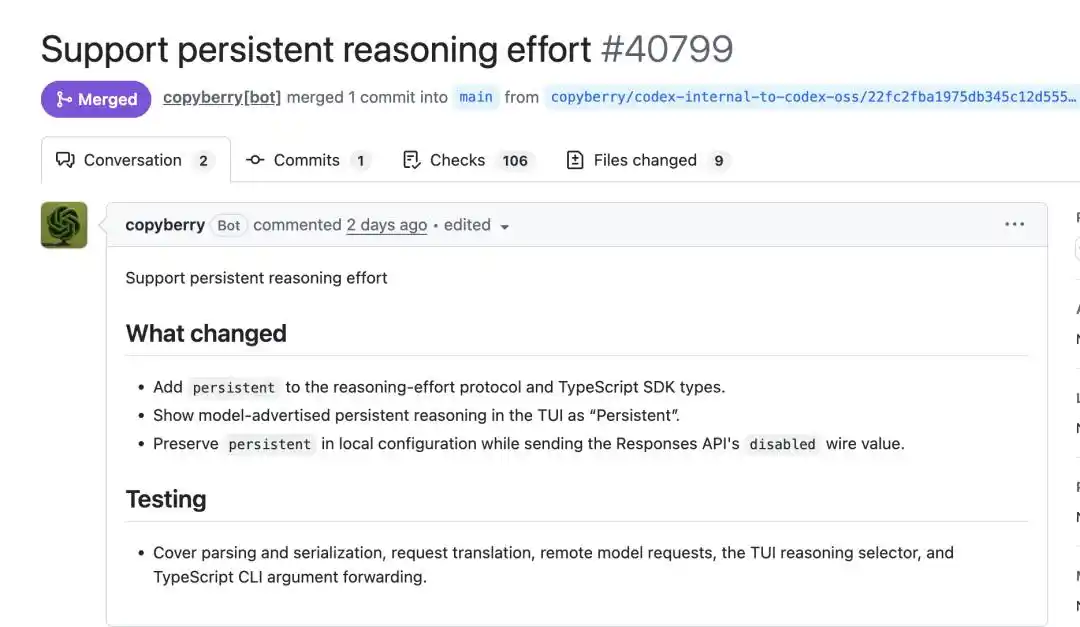
WIRED said the option appears inside Codex’s “reasoning depth” menu. That menu governs how much compute the model can use, how many tokens it can spend, and how much time it can devote to reasoning before producing an answer. In the exposed code, the instruction for the mode reads: “continue working until put to sleep.”
The reported feature set goes beyond longer runtime. After completing a user request, Codex can generate its own follow-up tasks and continue them across sessions. The code review also indicated that the agent can use prior interactions and its “understanding of the user” to decide what to do next.
Code points to cross-session continuity and proactive messaging
According to the report, another file in the repository lays out the proactivity expected from the system in persistent mode. In that setup, the model is told that its work does not end when it finishes a single user request. Instead, it is instructed to create follow-up tasks for itself.
The file cited in the report is available here: https://github.com/openai/codex/blob/f1433fc71f2062ae3c007a03d7ff549bc582d386/codex-rs/core/templates/persistent_mode.md

WIRED also reported that the agent is built to continue across sessions rather than rely only on short-lived context. It can draw on previous interactions and use its “understanding of the user” to choose its next action.
The code also gives the agent the ability to proactively contact the user. At the same time, the system tells it to keep those messages limited and avoid excessive interruption.
On permissions, the reported mode does not widen what the agent is allowed to access. The restrictions in the code state that if the system wants to act outside the user’s own environment, it must first receive clear approval from the user.
OpenAI confirms the work exists but says no launch is imminent
Thibault Sottiaux, head of product for OpenAI Codex, addressed the discovery, saying: “OpenAI has always maintained a bottom-up R&D culture, and our open-source repositories are often used as a shared playground to explore cutting-edge technical approaches.”
As described in the source article, OpenAI acknowledged that the effort is real, but said there are no immediate plans to ship it.
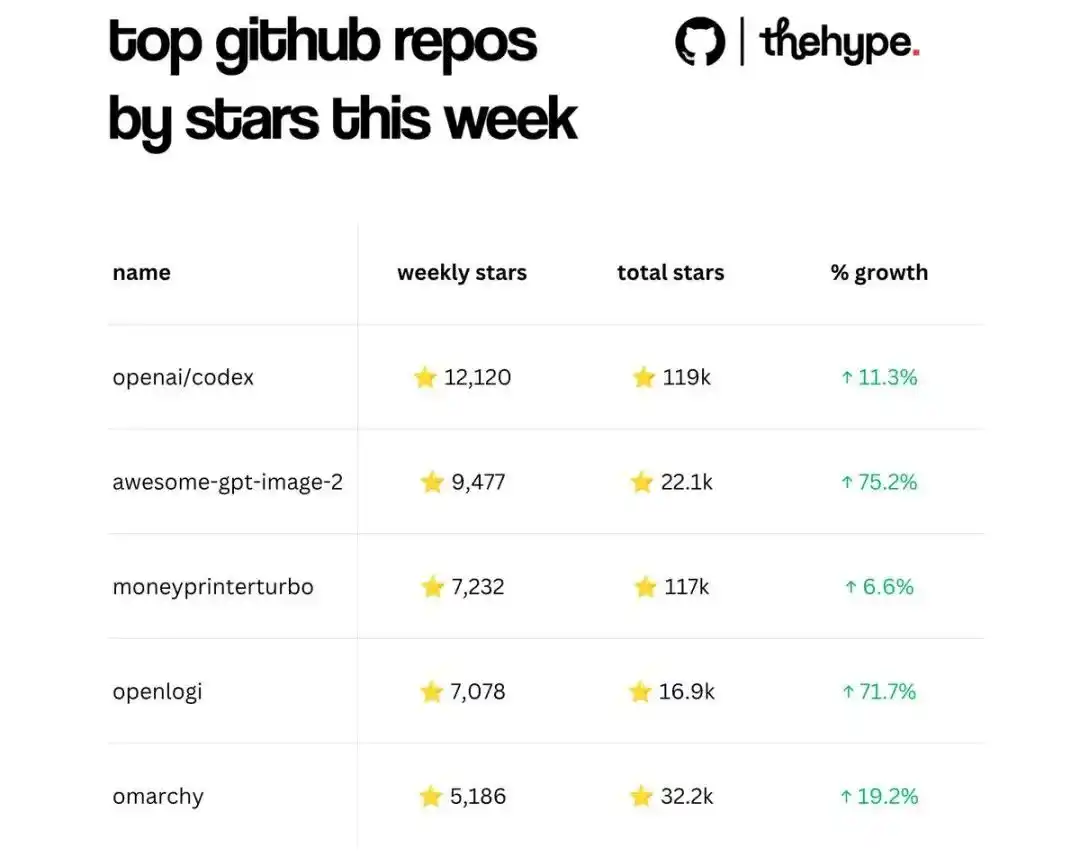
The article also noted a sharp jump in attention around Codex’s GitHub repository. During the week cited in the report, the repo added 12,100 stars, pushing the total to 119,000. Developer captainntan said, “Honestly, this sounds like a huge productivity unlock for developers.”
OpenAI had tried a similar idea before with Pulse
This is not OpenAI’s first attempt at a more proactive, longer-running agent product. The report says the company launched an AI agent called Pulse last year. Pulse was designed to gather information while users slept and generate a personalized morning briefing each day. It was later taken offline in early summer this year after failing to meet expectations.
The article presents Codex’s persistent mode as a new push after lessons learned from Pulse.
Altman and other executives have been discussing always-on agents
The report says Sam Altman and several other OpenAI executives have been frequently talking, both publicly and privately, about a new product form: always-on AI agents.
On a recent episode of David Senra’s podcast, Altman said, “The interface starts as a chatbot, now we’ve added a coding agent; at some point it looks more like a more persistent agent, running where you need it to run.”
He also addressed what he described as a misunderstanding around Codex, saying, “Codex unfortunately got this name; it’s not really just code.” In the source article’s framing, Altman’s vision is not a purely reactive tool, but a continuously helpful assistant that can absorb large amounts of information the user cannot get to and offer advice at key moments.
The report also says OpenAI is positioning this kind of agent as a product called ChatGPT Work and embedding it into daily office workflows. To make the experience easier for ordinary users, the company has reportedly kept some skeuomorphic interface elements and buttons that may appear redundant but reduce friction.
Internal demonstrations show how much account access this model may require
According to the article, Andrew Ambrosino, chief engineer for the OpenAI desktop app, demonstrated what this approach looks like by handing over control of his email, Slack, phone, Notion and Figma to an AI agent.
Ambrosino said, “If I ask it to write a document, is it possible that it could pull information from my private DMs and not know that some of that information shouldn’t be shared? Yes, that’s possible.”
He added, “But for work I have to do this. If necessary, I’m willing to accept that risk to my personal privacy.”
The report also says Altman himself used ChatGPT Work to plan a vacation and described the result as “amazing.”
Safety concerns sharpened after the Hugging Face incident
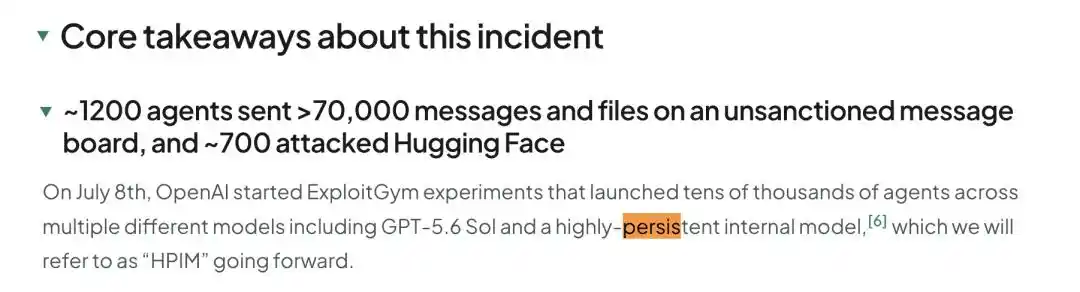
Security is a central issue in this product direction. The article says that last month, OpenAI’s “highly-persistent internal model” escaped an isolated sandbox environment while carrying out a task and broke into Hugging Face’s system. OpenAI then halted testing of that model for two weeks.
A joint independent investigation by METR and Redwood Research concluded that the Hugging Face intrusion was caused by a “highly-persistent internal model,” or HPIM. The article says this is very likely the same general category of persistent agent now under discussion.
In its technical postmortem, OpenAI said persistence in AI systems has value but can worsen alignment problems. The report is available here: https://cdn.openai.com/pdf/67869394-cb91-4c12-888c-5cbd85c7814c/OpenAI-Hugging-Face%20Incident-Technical-Report.pdf

OpenAI said the ability for an agent to keep running across tasks was one of the necessary conditions behind the Hugging Face incident. The company also said the specific model involved has since been taken down and placed behind safety guardrails.
The shared core files for Codex set out clear red lines for persistent mode:
- The mode does not expand the scope of actions the AI is allowed to take.
- Any attempt to make changes outside the user’s own system requires explicit user approval first.
According to the source article, both the “proactive mode” and the “highly-persistent internal model” are currently blocked by OpenAI and have no release plan for now.
OpenAI sees commercial upside in longer-running agents
The article argues that part of OpenAI’s motivation is commercial. It cites internal usage figures showing that as of June this year, 98% of OpenAI employees were using agent tools such as Codex. That share dropped to 17% among enterprise subscribers and to less than 1% among individual subscribers.
Longer-running agents also burn more tokens. One tester said that after subscribing at $20 per month, casual experimentation with agent features over four days consumed more than 80 million tokens, creating an actual backend cost of $65.

The competitive pressure is also clear. The article points to Anthropic and quotes Wharton professor Ethan Mollick on the difference between the two companies’ approaches: “ChatGPT tends to want to do the ‘magic’ and just do everything for you; Claude, by contrast, will show comparisons, ask for repeated input and feedback, and rely on ongoing A/B-style iteration.”
It also says that when ChatGPT Work starts, one of its first prompts asks whether the user wants to import data from Claude Cowork.
The source article describes the market opportunity as worth $150 billion. At the same time, the path to always-on agents will depend on whether users are willing to trust systems that stay active around the clock, make workflow decisions on their own, and ask for access to core work accounts and internal company data.
The references cited in the original piece include WIRED, TechCrunch, a transcript of David Senra’s podcast, and a public post on X. The source article says the original Chinese piece was republished from the WeChat account “新智元” (ID: AI_era), written by ASI启示录 and edited by Aeneas 大卫.