
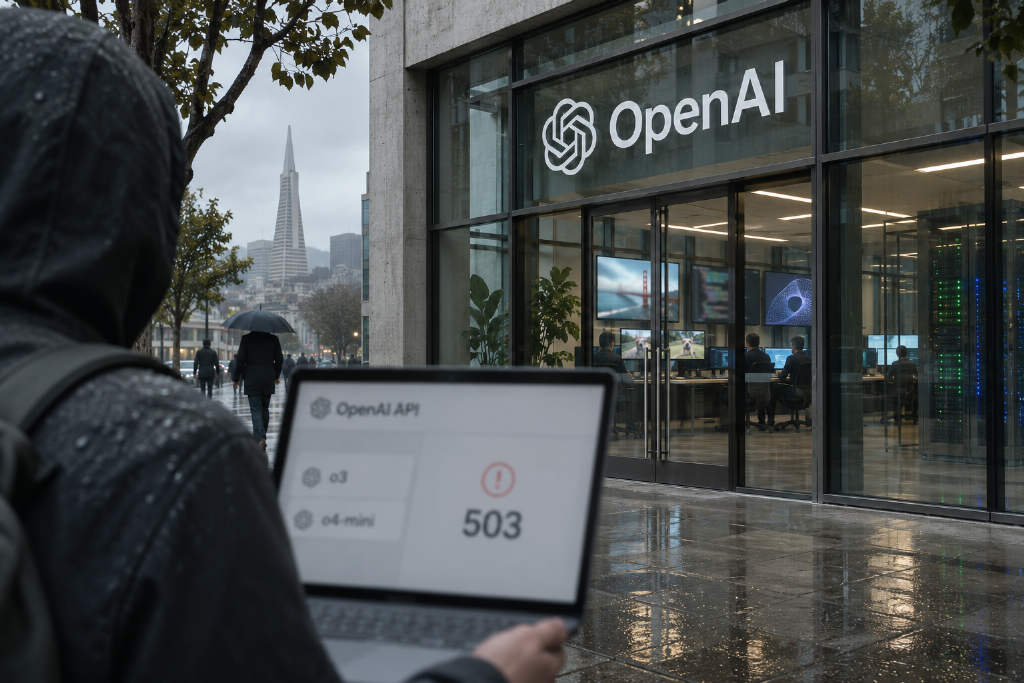
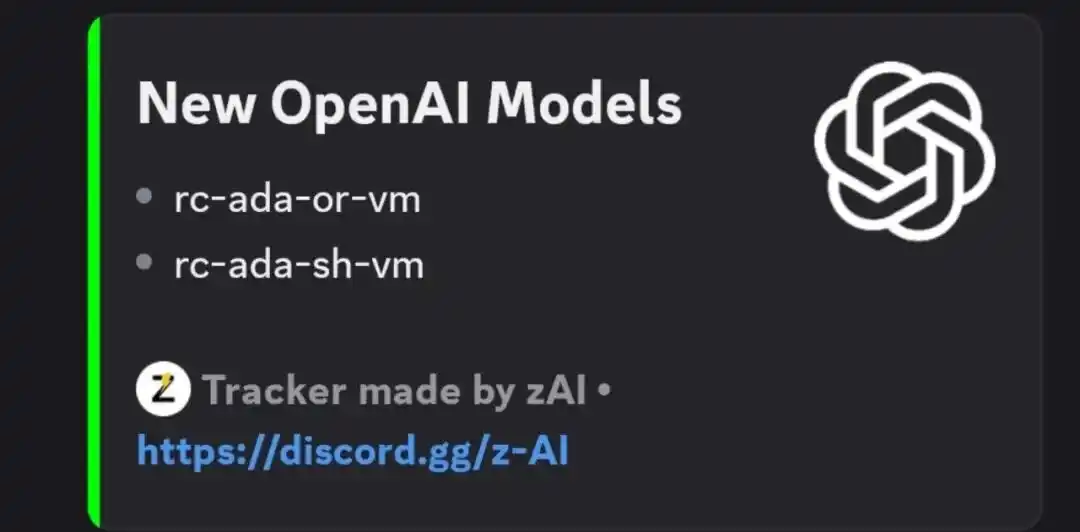
OpenAI briefly exposed two previously undisclosed model IDs in its official API model list: rc-ada-or-vm and rc-ada-sh-vm. Both entries disappeared within minutes, and developers who attempted to access them were met with "503 capacity limit" errors.

The sighting came one day after Codex lead Tibo posted the phrase "Le GPT Fat," which triggered fresh speculation that GPT-6.2 Astra could be close. Around the same time, users also began sharing tests attributed to GPT-6.2 Astra, including long-sequence video demos, front-end animation generation, and SVG rendering comparisons.
Two unreleased IDs appeared in the API, then vanished
The two model IDs seen in OpenAI's API list were rc-ada-or-vm and rc-ada-sh-vm. Developer Pankaj Kumar, Pradeep Kapoor, and the automated monitoring account AI Tracker Bot were cited in the report as having captured the change.
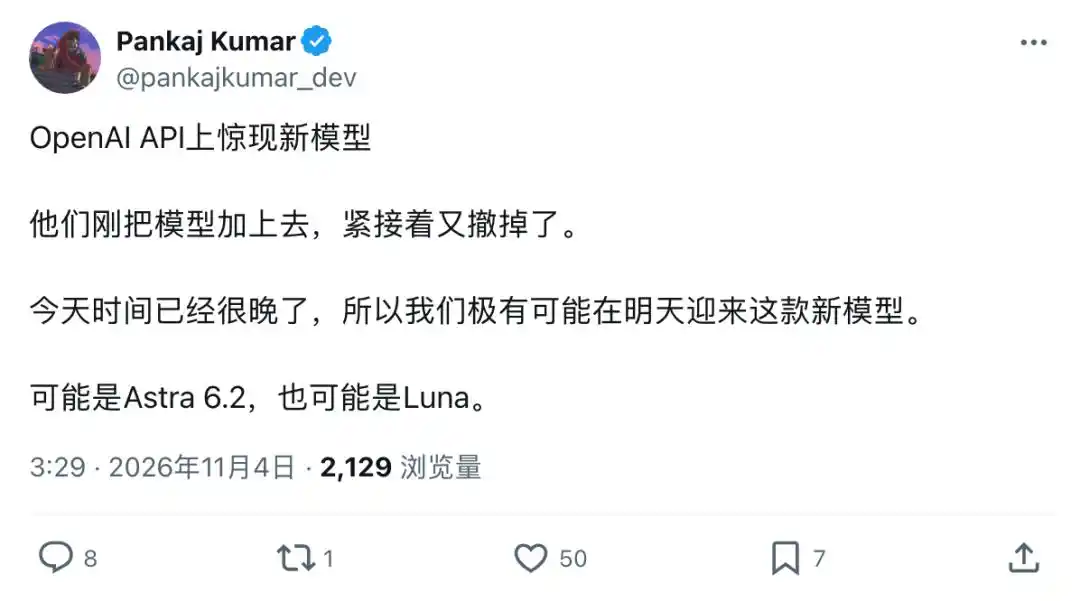
According to the article, OpenAI often performs a short production API gateway mount test 24 to 48 hours before a formal announcement. In that reading, the prefix "rc" stands for Release Candidate, while "ada" is described as the internal codename for this model generation.
The more notable detail was the shared "vm" suffix. The report described or-vm as a "brain virtual machine" responsible for task decomposition and global orchestration, while sh-vm was framed as a "hands-and-feet virtual machine" used to run command-line operations, write code, and launch software inside an isolated sandbox. On that interpretation, a dual-VM setup would suggest a model built for complex, long-horizon agent workflows.
Tests labeled GPT-6.2 Astra circulated online
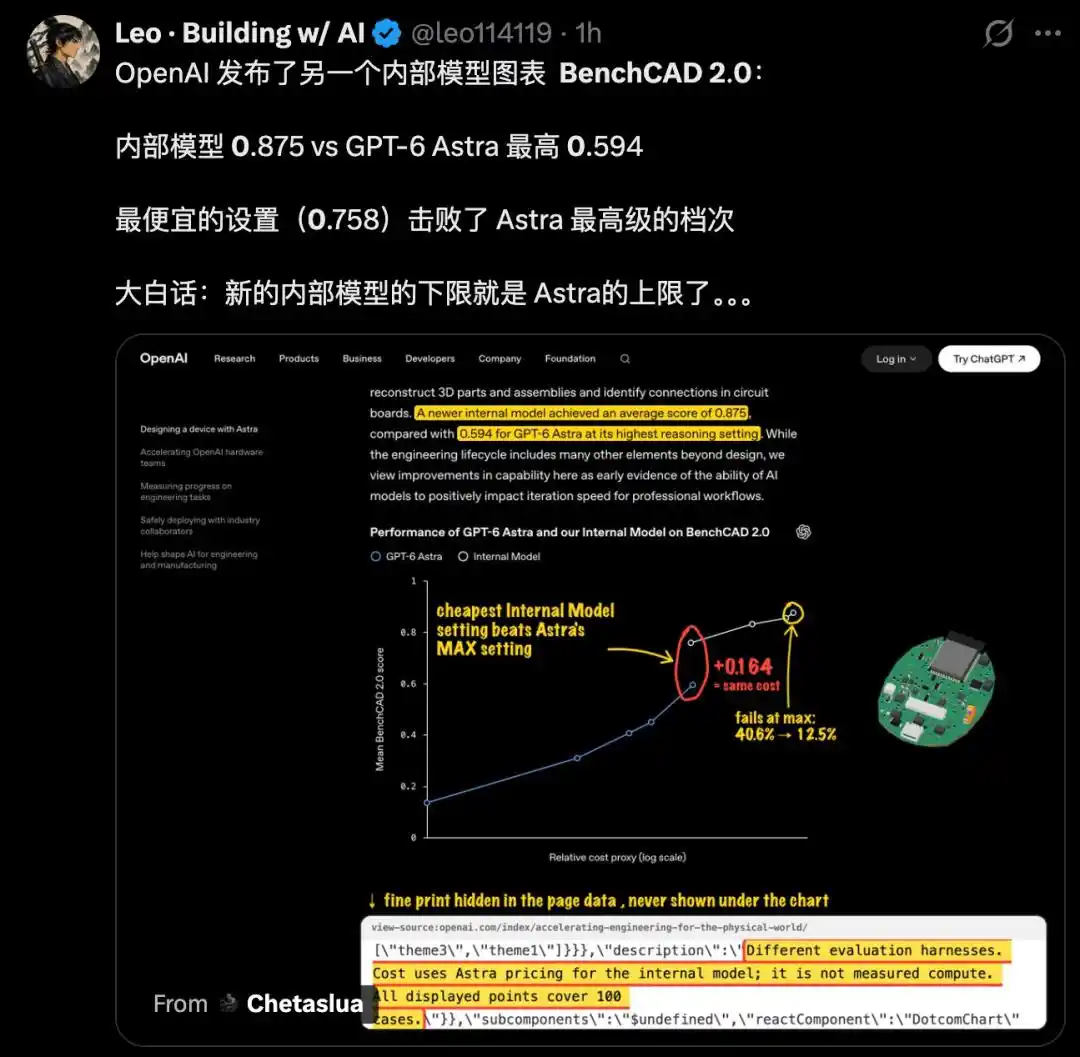
Another set of clues came from tests shared online under the GPT-6.2 Astra name. One long-sequence demo featuring a pelican riding a bicycle by the sea was described as highly detailed, with rendering quality compared against Fable 5.5.
The report also pointed to front-end code generation for animation. It said GPT-6.2 Astra completed the animation pipeline from scratch, though it still trailed Fable 5.5 in shot design and fine-grained detail. A matching animation shown by Token Gremlin was described as having been produced by GPT-6.2 Astra itself.
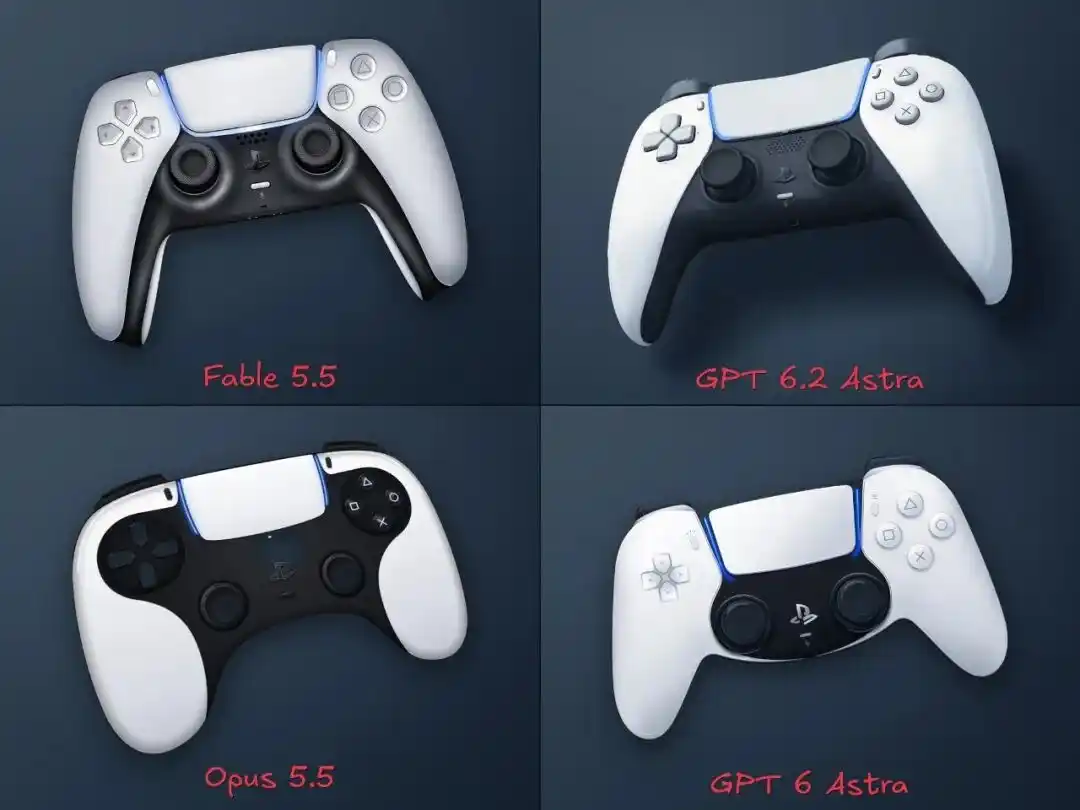
In another example, the model first generated an SVG version of classic Minecraft-style imagery and then turned it into animation. The SVG test also included a side-by-side comparison in which four large models drew a PS5 controller. The article said GPT-6.2 Astra and Fable 5.5 represented a new state of the art in that setup.

Codex log references added two more names
The report said another group of developers traced the story to two model names that surfaced in leaked Codex internal logs: gpt-6.2-astra and gpt-6.2-betelgeuse, with the latter shortened to Bel.
It said gpt-6.2-astra had already taken over close to 20% of Codex internal traffic. Bel, named after the red supergiant Betelgeuse, was described in the article as a massive parent model with 10 trillion to 12 trillion parameters, matching Tibo's "fat GPT" remark.
The article also referred to comments made by Sam Altman at an Abu Dhabi summit two days earlier. There, according to the report, Altman said the AI system that deployed 10,000 agents for 70 straight hours to solve the "NS equation" millennium problem was the upcoming "next-generation GPT." On that basis, the article argued that the two candidate versions briefly seen in the API may be the GPT-6.2 "twins" being prepared for release.
An OpenAI blog post showed an unnamed internal model
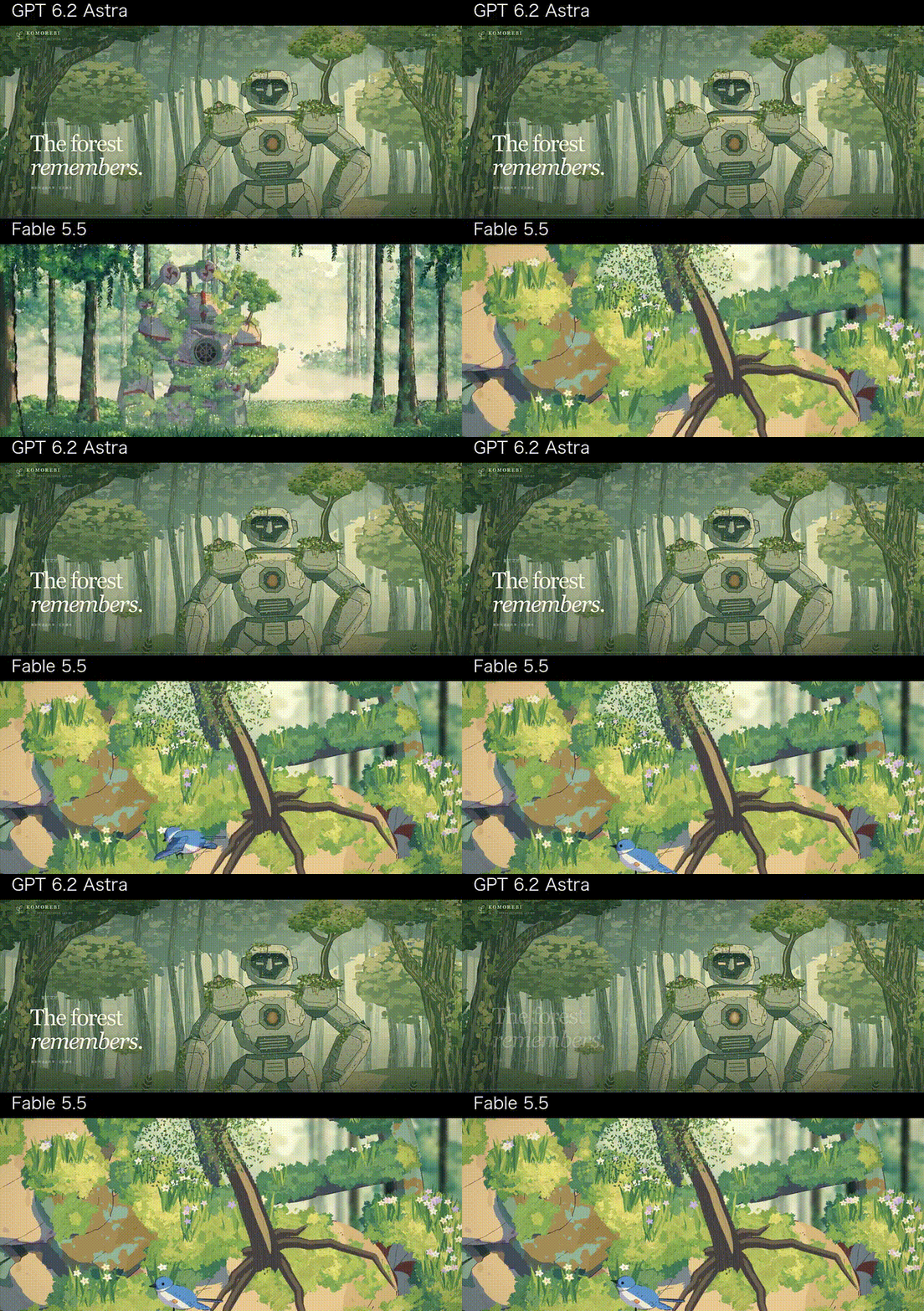
At almost the same moment as the API sighting, OpenAI published a blog post titled "Accelerating engineering R&D in the physical world." Benchmarking group LuminaBench focused on the first chart in the post, a BenchCAD 2.0 graphic that placed GPT-6 Astra and an unnamed "internal model" in the same table.
As described in the article, BenchCAD 2.0 covers 100 real engineering cases. Models are asked to write code, apply physical engineering knowledge, reconstruct 3D parts and assemblies, and identify connectivity on PCB boards.
Data extracted from the chart in the webpage showed a wide gap between the two systems. GPT-6 Astra, even when scaled from its lowest setting to its fifth and highest setting, topped out at 59.4%. The unnamed internal model started at 75.8%, already 16 percentage points above Astra's maximum. With more reasoning compute, it climbed to 87.5%, lifting the ceiling by 28.1 percentage points over Astra.
BenchCAD 2.0 first author Haozhe Zhang was quoted in the report as saying the jump from 0.594 to 0.875 was striking. Another user, Prinz, estimated the cost using Astra API pricing and said the internal model could reach its starting score for $11 per task, while deeper reasoning at $37 per task could produce near-industrial-grade output.
Several threads now point to a near-term release
The article tied together Tibo's "Le GPT Fat" post, the briefly exposed rc-ada dual-VM models in the API backend, the Codex log references to gpt-6.2-astra and gpt-6.2-betelgeuse, and the 87.5% score posted for the unnamed internal model in OpenAI's blog.
Its conclusion was that once a release candidate has appeared on the API gateway, the countdown to OpenAI's next major launch may be short. The reference link cited in the report points to a post by Pankaj Kumar on X. The original Chinese article was published by the WeChat account Xinzhiyuan, written by ASI Qishilu and edited by Moses and Taozi.



