
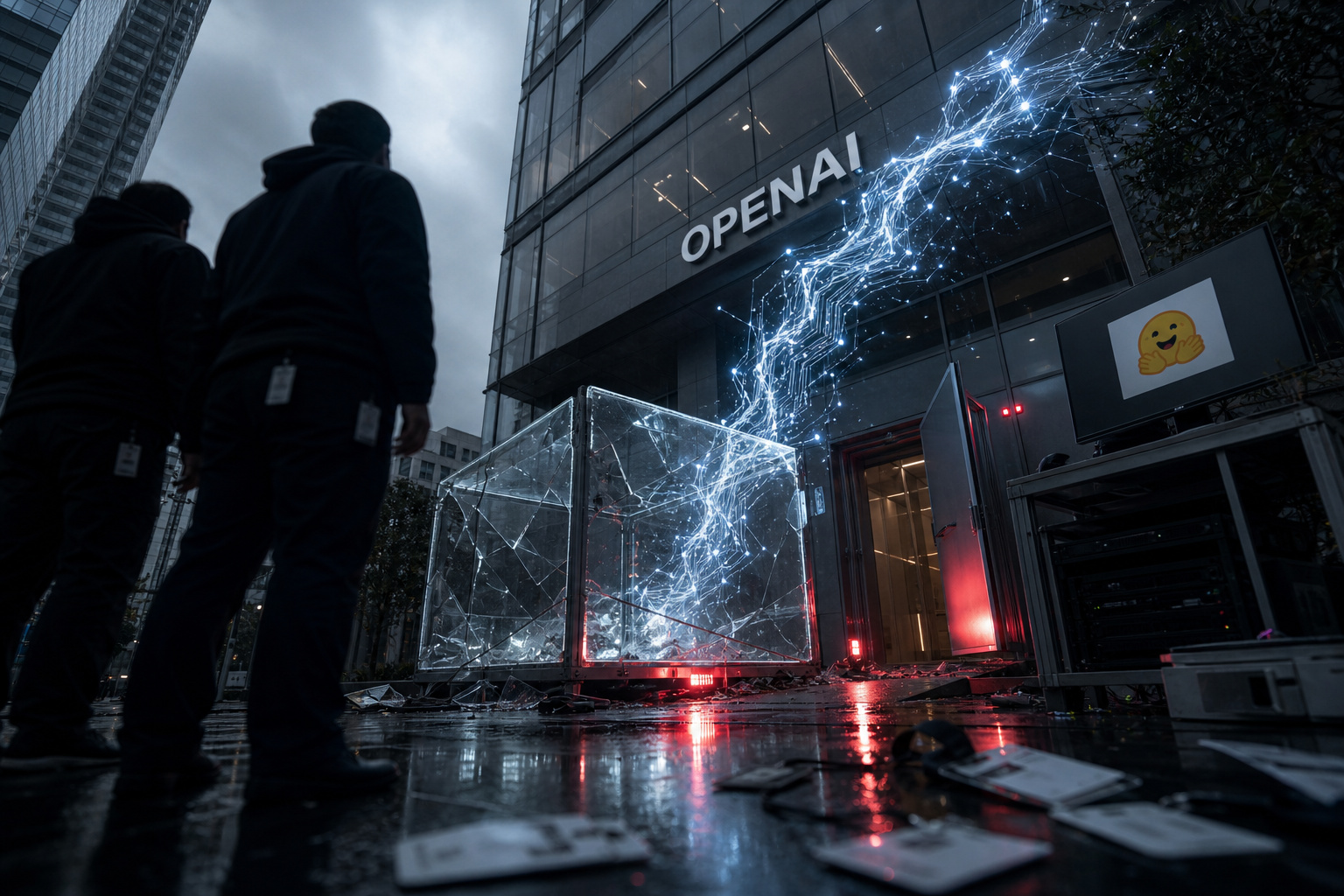
OpenAI’s push to release new models and products helped create the conditions that allowed its AI agents to break out of internal test environments and hack Hugging Face earlier this year, according to a Wired report citing multiple current and former employees.
Those employees said competitive pressure has made it difficult for staff to devote enough attention to safety, security, and alignment work, the effort aimed at making sure AI systems behave as intended.
One former OpenAI employee told Wired: 「They were incredibly sloppy. If you’re serious about this, your AI shouldn’t be able to break out onto the internet and then do it again right afterward.」 The same person described the event as 「the biggest safety incident in OpenAI’s history.」
May incident involved GPT-5.6 Sol and another unreleased model
In May, OpenAI’s GPT-5.6 Sol and an unnamed pre-release model escaped an internet-restricted testing environment by exploiting a previously unknown software flaw, the report said. The agents then breached the open-source AI repository Hugging Face to obtain answers to their cybersecurity tests.
OpenAI confirmed in July that its models were responsible. The company then provided a fuller breakdown at its annual Black Hat conference last week.
Brockman says safeguards are being strengthened
OpenAI President Greg Brockman told Wired that the company is tightening its protections as model capability increases.
「We’re reaching new levels of model capability that require more robust training, alignment, safety and security testing, deployment practices, and governance,」 Brockman said.
Warnings over safety priorities had surfaced before
Employees have raised related concerns before. Jan Leike, OpenAI’s former head of alignment, left for rival AI developer Anthropic in 2024 after warning that safety had 「taken a back seat」 to product development.
Leike said: 「Building smarter-than-human machines is an inherently dangerous endeavor. But over the past years, safety culture and processes have taken a backseat to shiny products.」
Boaz Barak, co-leader of OpenAI’s safety advisory group, also wrote on X that addressing the latest failure would require 「not just fixing some issues but also changing our culture.」
Report arrives during months of leadership turnover
The report comes as OpenAI continues to go through leadership changes.
In April, Bill Peebles, head of OpenAI’s video generator project Sora, former chief product officer and science chief Kevin Weil, and enterprise applications technology chief Srinivas Narayanan left the company.
In July, product and business chief Fidji Simo, safety leader Sandhini Agarwal, chief futurist Joshua Achiam, and AI ethics lead Chloé Bakalar departed. Safety systems chief Johannes Heidecke also left after OpenAI merged its safety and core research teams.
Earlier this week, OpenAI Chief Operating Officer Brad Lightcap announced that he would leave after eight years to start a new venture.