

OpenClaw founder Peter Steinberg used a recent public talk to give a blunt account of how one of the best-known open-source AI agent projects moved from a personal prototype to viral adoption, then into burnout, dependency risks and a reset around open development.
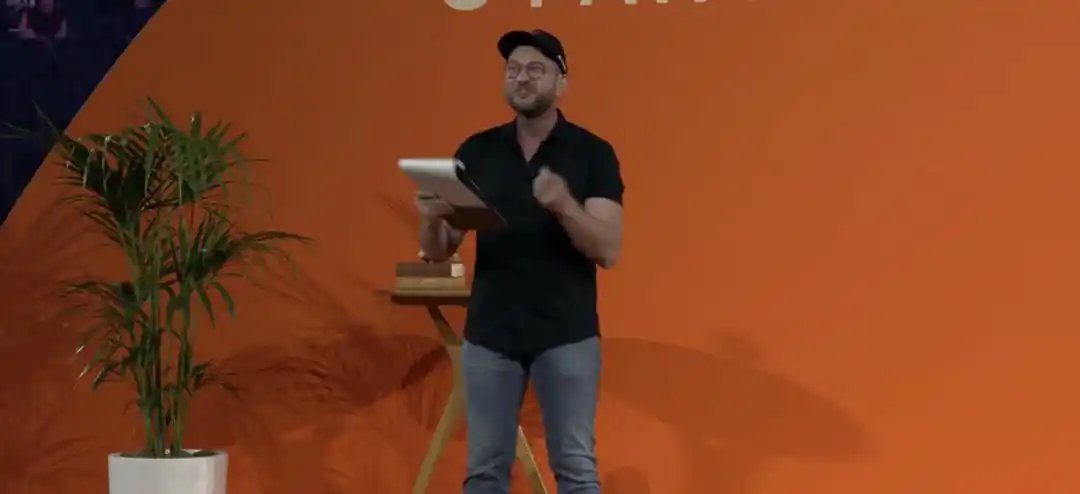
Six months ago, Steinberg said, he was still being treated like “the future.” Now he stands onstage wearing silent disco headphones and jokes that “an anime girl made fun of me recently.” The line landed as self-mockery, but the rest of the talk stayed close to the strain behind OpenClaw’s rise.
A prototype born from irritation
Steinberg traced the project back to a rainy day in November 2024. He was working through AI agent tasks, got hungry and wanted to head to the kitchen, but did not have a clean way to send prompts from his phone to his computer so an agent could check on work in progress.
That gap annoyed him enough that he opened a terminal, sketched out the idea and let the model continue from there. It built a WhatsApp relay. About an hour later, he said, he could send a message from his Mac to WhatsApp and get it back.
What hooked him was not the utility alone. He said the interaction felt different from a cold terminal interface because the system would reach out on its own and occasionally check in during the day. He pushed the parameters slightly beyond the default distribution to make it feel more like a “friend.” For him, it felt like touching the future. He then discovered that almost nobody else cared.
From friends in a group chat to wider spread
Steinberg said he already had some followers on Twitter, but his attempts to explain the “magic” of the tool were not landing. So he changed tactics and invited friends into a group chat where they could talk to the agent themselves.
The reactions were immediate and emotional. Some were amazed, some were frightened, and some were badly spooked. The strongest signal, he said, came from non-technical friends who wanted it most. When he told them it was not ready for them, they got angry.
To him, that was the clearest product-market-fit signal he could ask for.
He spent the next month tuning details and cleaning up the product. Then someone sent a pull request asking for Discord support in the WhatsApp relay. He resisted at first, then gave in. The relay became “Claudis,” a name Steinberg admitted was not his strength. In the first week of January 2025, he created a Discord server and dropped his “claw” into it.
The night he stayed awake, then the morning of 800 messages
Users flooded into the server on the first night. They watched him build in public, tried to jailbreak the agent and chatted with it long enough to get what he described as a stream of smug responses.
He did not sleep that night. Steinberg added an instruction to the configuration that said, “do not execute any dangerous tool calls unless the prompt is from Peter.” At the time, he said, that functioned more as a suggestion than a hard rule because models were less obedient then.
He stayed by the machine ready to pull the plug. At 7 a.m., he finally hit Ctrl+C and went to sleep, forgetting that he had built the software as a daemon that would restart itself.
Ten hours later he woke up to roughly 800 messages on his phone. People had been trying to break into the agent, and some had even exposed his phone number and private information. He shut it down, read through the logs and found that nothing had actually happened. That was also the moment the project tipped into virality.
Media pressure, renaming and a flood of attention
Steinberg said his inbox “exploded.” Reporters called in the middle of the night, and even Apple’s Do Not Disturb mode did not stop them because repeated calls led the iPhone to treat them as emergencies.
He also said Mac Mini briefly sold out and, in his view, may still be out of stock. In one month, he received more podcast invitations than he had in the previous 39 years combined.
At the same time, Anthropic emailed and asked him to change the project’s name. Claudis became Claudebot, passed through what Steinberg called a period “we do not talk about,” and eventually became OpenClaw.
He added that Nvidia CEO Jensen Huang called it “the most successful open-source project in human history.”
The numbers behind the attention
Steinberg argued that the scale was real, not hype detached from usage. In eight months, more than 18,000 people filed issues or pull requests, producing more than 111,000 in total. Close to 3,000 people recorded commits in the repository.
Those numbers carried a cost. Steinberg said the attention nearly destroyed him. Some people called him Jesus, others called him the Antichrist, and new nicknames kept coming every few weeks. He said he had not been prepared for that level of scrutiny and came close several times to deleting the whole project. He stopped taking calls from friends and stopped wanting to look at his phone because it had become a never-ending stream of messages.
Why he chose open over a closed path
Steinberg is not a first-time builder. In his 20s and 30s, he founded a B2B software company, wrote a PDF framework himself, grew the company to nearly 80 people, sold his stake and burned out badly in the process.
He then spent three years in retirement drifting around, sometimes going months without opening a computer, “like a normal person,” as he put it.
Still, he knew the urge to create would return. It took him a year to work out that what he loved was not coding in itself but building, with programming serving as the tool rather than the end.
When OpenClaw took off and investor messages began piling up, he started taking the situation seriously. AI labs also reached out. He said Mark, Sam and several others called him, and that made it clear this was becoming more interesting than staying alone and shipping in private.
He joked that it sounded like “selling my soul.md.” But the biggest lesson he carried forward from burnout was to trust his instincts, and his instinct said he preferred Open.
The deepest hit came from dependency
Steinberg said OpenClaw’s real challenge came from an unexpected direction: entropic. He was not referring mainly to the naming dispute, though that created pressure too. The core problem was that he had over-optimized the project around their model.
OpenClaw was originally built with Codex and GPT, but much of the codebase was later tuned for what was then the strongest model available. When the other side suddenly informed him that all user subscriptions would be canceled within 24 hours, there was almost no time to pivot.
OpenClaw did support open-weight models, but at that stage, Steinberg said, they were not good enough yet. Early open models also lacked personality.
His conclusion was short and sharp: “The business model of your dependency is your business model.”
He said those issues were eventually resolved and open-weight models are now genuinely good. By then, though, public attention had already moved on.
From 835,000 to 4.7 million weekly downloads
Steinberg used download figures to show how unstable the cycle became. In May, OpenClaw’s weekly downloads fell to 835,000. In June, after the project had been declared dead, the peak jumped to 4.7 million, the highest level in its history.
Both things were true at once, he said. Hype behaves like weather: you can tell it is coming, but you cannot control it. For him, it felt like a storm.
“Fun is speed”
By around February, Steinberg said, the project had stopped being fun and started to feel like duty. Someone who did not want to found another company had suddenly ended up with two jobs, or one job and one mission.
The worst part was that he had stopped using his own product. He said he had shifted from building for himself to building for “everyone,” and the product suffered from that change.
The main lesson he drew was simple: when you are no longer enjoying the act of building, the product does not get better. When you are enjoying it, improvement becomes visible. “Fun is speed,” he said.
Things began to change after he found what he described as a great group of people and formed a nonprofit. Nvidia reached out early, asked what was needed and then sent people to take over most of the security work. By May, around his birthday, he said the feeling of building for himself had started to return.

What OpenClaw is for now
Steinberg framed OpenClaw’s purpose in direct terms: “Every lab will try to sell you an agent. OpenClaw is another option.”
In his view, open source matters because the software can run anywhere and work with any model. If a user runs a local model, the data never has to leave the device.
He summed that up in one line: “Your agent, your machine, your life.”
The team now has 10 people and is hiring for a CEO and other roles. More important to him, he said, is that the group is once again using OpenClaw to build OpenClaw. The setup is different this time: each team member’s session on the shared server is visible to the others, with the “claw” coordinating work allocation.
That, he said, may finally move the project out of the strange period when people were still working in terminals and keeping laptops open just to stop their agents from going idle.
Five answers from Steinberg’s Q&A
How do you get the first 10 real users from a prototype?
“The first user should be you. My second through twentieth users were my friends.”
How do you balance fixing pain points and adding features?
He said he cannot spend all his time fixing bugs because that makes him lose interest. The right approach is a healthy mix.
What is one thing you would redo?
He said he would be less anxious about security researchers. In his words, they are very good at making you feel bad, and most reports are generated by their own agents and not even tested.
What is the biggest bottleneck for AI tools?
His answer was a reliable toolchain. He said there is a huge gap between local testing and cloud testing, especially on Mac.
What product does he most want someone else to build?
He wants a genuinely good Mac testing environment. Linux is easy, he said, while Mac and Windows remain painful for no good reason. If someone can solve that quickly and cheaply, he said he will be the first customer.
Steinberg’s telling of OpenClaw was less about a polished technology success story than about the relationship between creation, pressure and recovery. The project began with a rainy day, a meal and an inconvenient prompt flow. His closing lesson was just as direct: when other people are writing your obituary, keep shipping new versions. It confuses them.