
ORCA had already made most of its move before the merger headline hit the market.

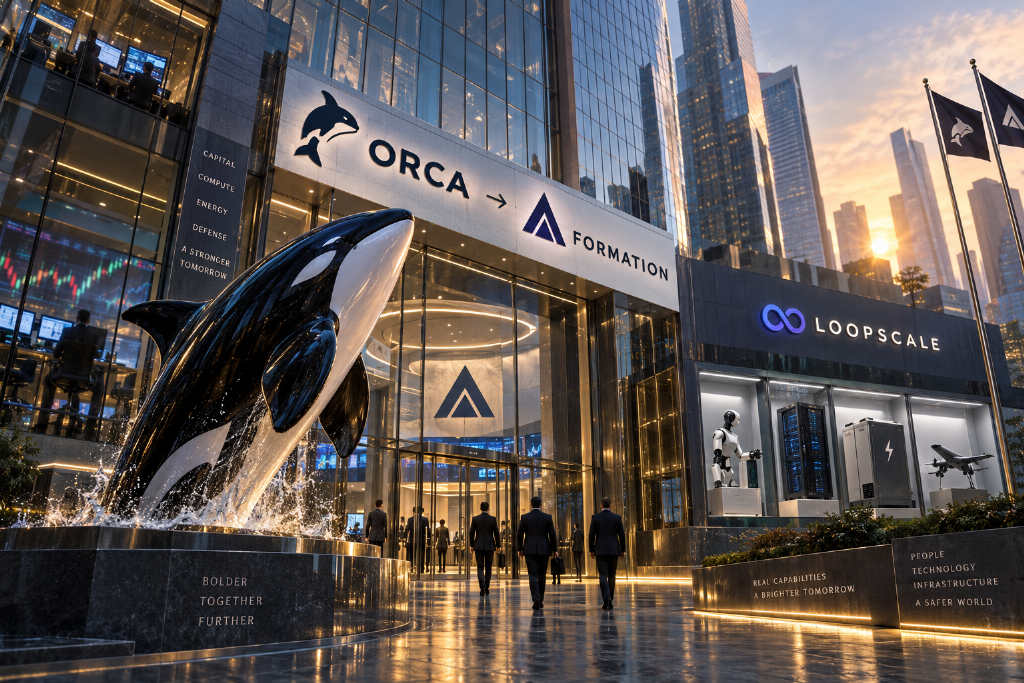
Early on Oct. 8 Beijing time, The Block reported that Orca had merged with lending platform Loopscale and that the combined team would operate under a new name, Formation. The deal puts trading and lending under one roof and ties the business to a broader financing push aimed at AI, robotics, energy, and defense.
Token pricing had moved well ahead of that report. Based on CoinGecko daily closes, ORCA was at $1.65 on Sept. 30 and reached $3.21 on Oct. 6, a gain of about 94.5%. The daily closes for Oct. 4, Oct. 5, and Oct. 6 were $2.01, $2.42, and $3.21, respectively. At the time of publication on Oct. 8, ORCA was trading around $3.07, down about 3.5% over 24 hours but still up about 73.4% over seven days. In other words, the strongest part of the rally had already happened before the merger news became public.
The acquisition trail was visible before the formal announcement
The price action did not begin with the Oct. 8 report alone.
On Sept. 29, a new proposal appeared on Orca’s governance forum. The team said it had already agreed terms to acquire a Solana DeFi protocol in order to add lending and yield products. On Oct. 5, that proposal moved into onchain voting. By the time buying accelerated, the market already had access to a clear signal that Orca was preparing to expand beyond its existing setup.
A week later, the merger announcement supplied the missing name: Loopscale. According to the announcement, Loopscale offers lending and investment vaults, reports more than $150 million in deposits, and has facilitated more than $2 billion in cumulative loans. Orca remains responsible for trading and liquidity. Press materials from both sides said the two protocols would continue to form the basis of the ORCA and xORCA token network.
Formation’s plan goes beyond combining a DEX with a lending product. The announcement said the merged business wants to help new assets secure financing first and then develop tradable markets around them. Over the next 12 months, Formation plans to launch issuance tools and investment strategies while also exploring regulated capital markets in the United States. For Orca, lending adds another revenue stream and reduces reliance on spot trading volume alone.
That helps explain why the market was willing to revisit a mature Solana token. Still, attributing the entire rally to the merger headline misses two things that were already public: the acquisition plan and the proposed change in revenue allocation.
Buybacks are real, but the proposal would cut the automatic share
One reason ORCA had been easy to frame as a catch-up trade is that Orca already generates revenue and already buys back its own token.
As of Oct. 8, DefiLlama data showed roughly $8 billion in trading volume over the past 30 days on Orca. Traders paid about $10.72 million in fees during that period. Of that, about $1.39 million was retained as protocol revenue, while token holders received about $514,000. Liquidity providers took most of the trading fees, and the protocol then redistributed the portion it kept.
ORCA holders access that flow through xORCA. After staking, users receive xORCA, which represents a share of the ORCA held in the pool. The protocol buys ORCA on the market and deposits those tokens into the pool, increasing the amount of ORCA backing each unit of xORCA. In January, the governance council had already raised the share of protocol revenue allocated to automatic buybacks from 20% to 40%, and that change was confirmed for implementation.
The buybacks have shown up in reported figures as well. DefiLlama’s quarterly table lists xORCA buyback amounts separately: about $686,000 in the third quarter and about $91,000 so far in the fourth quarter. Those numbers gave the "real revenue, real buybacks" argument a concrete basis.
The new proposal shifts more revenue and assets to the team
After the merger with Loopscale, however, Orca is asking token holders to approve a different allocation model.
Under the proposal, the share of protocol revenue used for automatic ORCA purchases that flow into xORCA would fall from 40% to 10%. Another 10% would go to team-directed market buybacks, with repurchased tokens available for burns, reward top-ups, or contributor grants. The remaining 80% would be reserved for operations and growth.
Orca’s reasoning was direct. The team said the current revenue split does not leave enough operating capital to support expansion. Lending and investment products require staff, development budget, and acquisition funding.
The proposal also reaches beyond revenue allocation. It would place about 14.2 million ORCA into a team-controlled strategic account for acquisitions and transfer a fee treasury of about 70,000 SOL to team management. The governance council is expected to be dissolved, while token holders would retain voting rights over any future token issuance. If approved, both operating resources and decision-making power would move closer to the team.
Viewed together with the acquisition plan that was already public, ORCA’s rally looks more like a market bet on future business expansion than a simple reaction to a single news event. At the same time, existing stakers would be giving up part of the current revenue stream to fund that expansion. Buying the token for merger upside and staking it for buyback income are no longer the same trade.
At current revenue levels, the fixed buyback budget would shrink sharply
Using current revenue as a simple reference point, a monthly protocol revenue figure of $1.39 million implies about $556,000 for automatic buybacks under the existing 40% rule. If that share falls to 10%, the automatic buyback pool drops to about $139,000. To preserve the old automatic buyback budget of roughly $556,000, monthly protocol revenue would need to rise to about $5.56 million. Team-directed buybacks are separate and are not part of that fixed allocation.
That sets a higher bar for the new business than simply adding one lending protocol. With ORCA already close to doubling and the automatic distribution under the proposal set to fall by three quarters, protocol revenue would need to reach roughly four times its current level to restore the previous reward budget.
Based on the information disclosed so far, Orca is trying to move from a standalone DEX into a broader model that combines trading, lending, and onchain financing. For ORCA holders, the decision now is less about the old buyback structure and more about whether the team can turn that expansion plan into actual revenue.
