
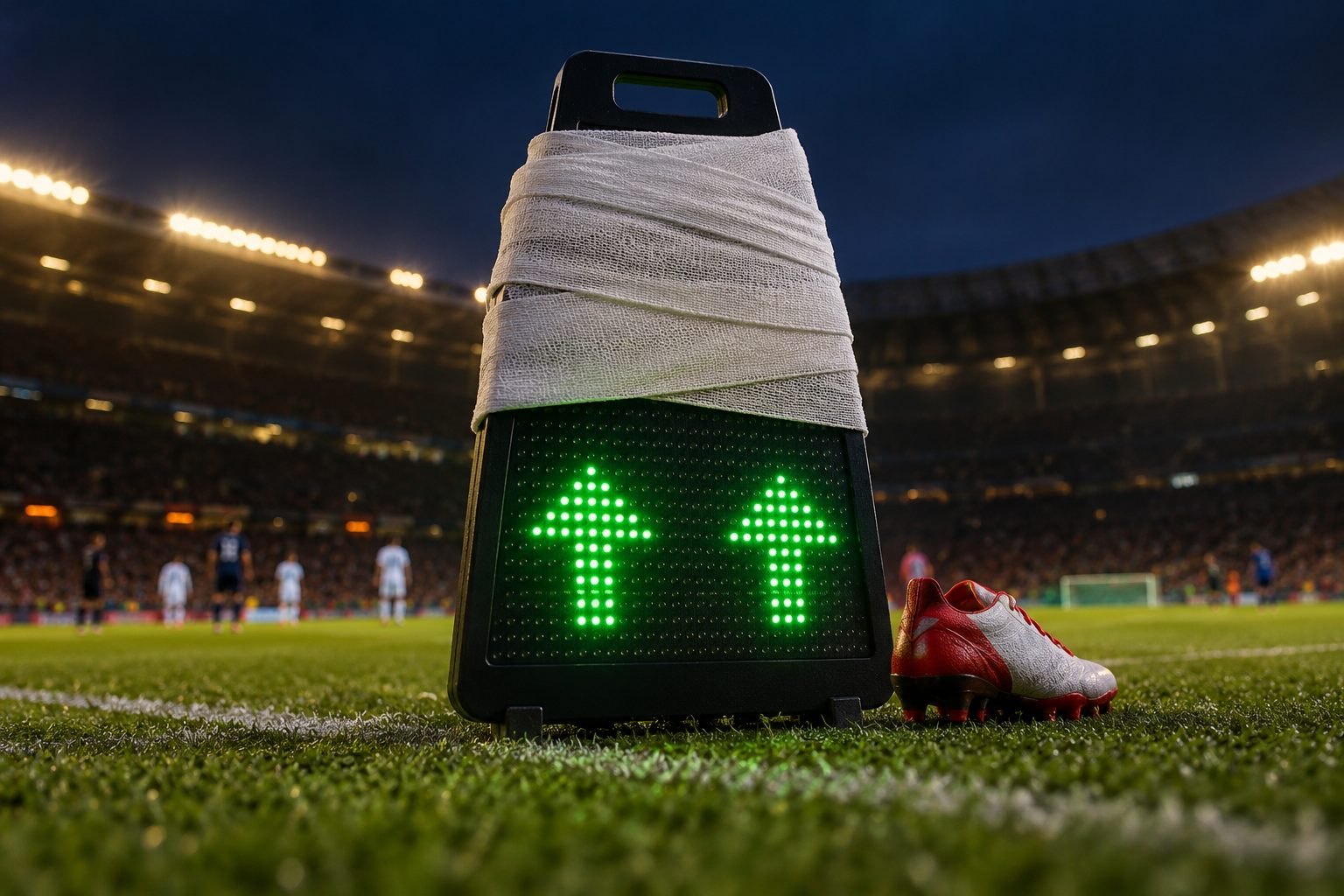
A concussion substitute replaces a player with an actual or suspected concussion, and that player takes no further part in the match, including penalties. It does not count as one of the normal substitutions. Each team can use up to one, and the opposing team then has the option of an additional substitute for any reason.
Key rules at a glance
Here are the main points.
| Point | Rule |
|---|---|
| Concussion substitutes per team | A maximum of one in a match |
| Counts as a normal substitution? | No, and it may be made regardless of the number of substitutes already used |
| The opposing team | Has the option of an additional substitute, for any reason, with an additional substitution opportunity |
| A normal substitution made at the same time | Counts as one of the team's normal substitution opportunities |
| The player replaced | Takes no further part in the match, including penalties (penalty shoot-out) |
| In the Premier League | One concussion substitute and/or one additional substitute (as appropriate), in addition to five substitutions |
How the protocol works
Following approval at the IFAB Annual General Meeting on 2 March 2024, the Laws of the Game allow competitions to permit additional permanent concussion substitutions. If a competition adopts them, one single protocol must be used in full.
A concussion substitution can be made in three different situations. It can happen immediately after a concussion occurs or is suspected, after an on-field assessment and/or an off-field assessment, or at any other time when a concussion occurs or is suspected, including after a player was assessed and returned to the field.
The change sits outside the normal substitution count, and it may be made regardless of how many substitutes have already been used. In competitions where the number of named substitutes is the same as the maximum number of normal substitutes allowed, the concussion substitute can be a player who has already been substituted.
Procedure and the role of match officials
These are the main procedural steps.
| Stage | Requirement |
|---|---|
| Notification | If a team decides to make a concussion substitution, the referee or fourth official is informed, ideally by using a substitution card or form of a different colour |
| Player leaving the match | The player takes no further part, including penalties (penalty shoot-out); where possible, the player should be accompanied to the dressing room and/or a medical facility |
| What the other team receives | It is told that it has the option of an additional substitute and an additional substitution opportunity; these may be used at the same time as the concussion substitution or at any time after it, except where the Laws of the Game provide otherwise |
| Referee and other match officials | They are not part of the team's decision, must not decide whether an actual or suspected injury qualifies for a concussion substitute, and must inform the appropriate authorities if there are concerns that a concussion substitution has been made inappropriately |
The referee and other match officials, especially the fourth official, should also give appropriate support where a player has an actual or suspected injury, including by informing the team captain, coach and/or medical staff if the officials suspect that a player needs to be assessed and/or treated. They should support a decision by the team captain, coach and/or medical staff that an injured player cannot continue playing, which may require the referee to delay the restart until after the player has left the field of play.
Substitution opportunities and the Premier League rule
A concussion substitution is separate from the limit on normal substitution opportunities. If a team makes a normal substitution at the same time, that normal change still uses one of its normal opportunities. Once all normal opportunities are gone, a team cannot use a concussion substitution to make a normal one.
The opposing team's extra opportunity is restricted as well. It can be used only for the additional substitute and not for a normal substitute.
In the Premier League, a club may name up to nine substitutes and no more than five of them may take part under the normal rule. On top of those five substitutions, each club may use one concussion substitute and/or one additional substitute (as appropriate) from the substitutes listed on the team sheet, strictly in accordance with the IFAB protocol, the Head Injury Protocol and league guidance. The IFAB protocol was introduced in Premier League matches in 2024/25. After a concussion substitution, the home club must ensure that an announcement is made in the stadium in this form: Concussion Substitute for [Club] – [Number/Player], replaced by [Number/Player].
FAQ
How many concussion subs are allowed in the Premier League?
Each team may use a maximum of one concussion substitute in a match. That sits in addition to the five normal substitutions.
Does a concussion substitute count as a substitution?
It does not count as one of the normal substitutions. If a normal substitution is made at the same time, that separate normal change still counts against the team's normal substitution opportunities.
Can a concussed player come back on?
No. A player replaced by a concussion substitute takes no further part in the match, including penalties.
Does the other team get an extra sub for concussion only?
No. The opposing team has the option of an additional substitute for any reason, together with an additional substitution opportunity.