
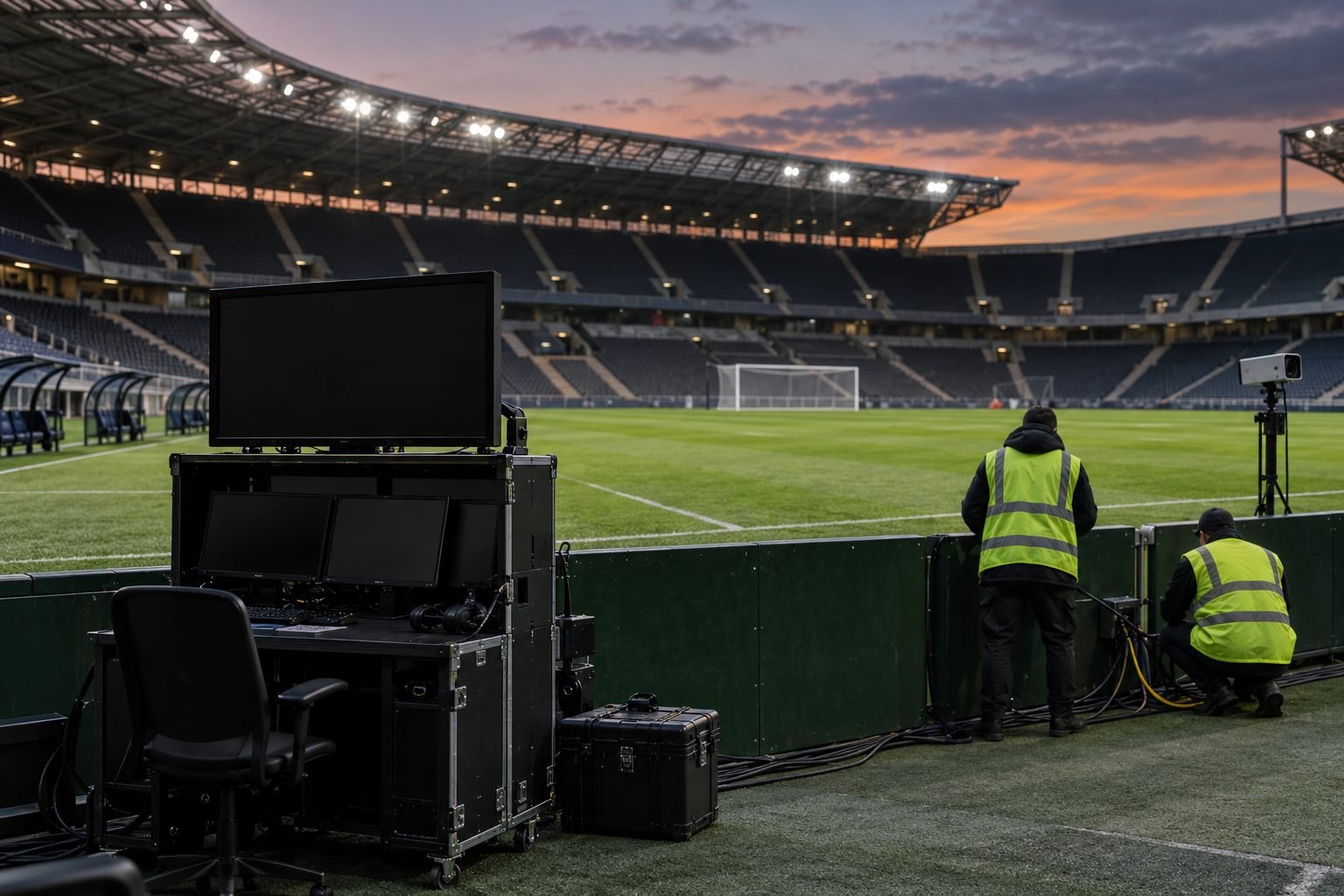
In principle, a VAR breakdown does not leave a match invalidated. The referee must always make an initial decision as if there were no VAR, and if no qualified replacement can be found for the VAR, the match must be played or continue without VAR.
What does not, in principle, invalidate a match
Here are the situations that do not, in principle, invalidate a match.
| Situation | Is the match invalidated? |
|---|---|
| A malfunction of the VAR technology | No, in principle |
| A wrong decision involving the VAR | No, in principle |
| A decision not to review an incident | No, in principle |
| A review of a non-reviewable situation or decision | No, in principle |
What the referee must do first
The referee and the other match officials must always make an initial decision, including disciplinary action, as if there were no VAR, except for a missed incident. They are not permitted to give 'no decision', as this will lead to weak or indecisive officiating, too many reviews and significant problems if there is a technology failure.
What happens if a VAR, AVAR or replay operator cannot continue
Here is what happens when a VAR, AVAR or replay operator cannot start or continue.
| Situation | What happens |
|---|---|
| The VAR or replay operator cannot start or continue and no qualified replacement can be found | The match is played or continues without VARs |
| The AVAR cannot start or continue and no qualified replacement can be found | The match is played or continues without VARs, unless in exceptional circumstances both teams agree in writing to continue with only the VAR and replay operator |
| There is more than one AVAR or replay operator | The two rules above do not apply |
Two extra rules sit behind those outcomes. Competition rules must make clear who replaces a match official who cannot start or continue, along with any related changes. In matches using VAR, that same requirement also covers replay operators.
A VAR, AVAR, or replay operator may be replaced solely by someone qualified for that role.
Goal-line technology and the Premier League requirement
Goal-line technology applies solely to the goal line and is used only to decide whether a goal has been scored.
Where goal-line technology is used, the referee must test its functionality before the match in line with the Testing Manual. If it does not function in accordance with the Testing Manual, the referee must not use it and must report that.
In the Premier League, each club must keep an alternative and uninterrupted power source so that goal-line technology, semi-automated offside technology, and VAR can continue to operate if the primary power source fails. Each club must also ensure that the systems installed at its stadium are properly maintained, insofar as that maintenance is the club's responsibility and not that of any person appointed by the League; give all necessary cooperation to the person the League appoints to supply, install, maintain and operate them; and use them only as specified by the Board.
FAQ
Does a VAR mistake invalidate the match?
A wrong decision involving the VAR does not, in principle, invalidate the match, as the VAR is a match official.
Can a match be played without VAR?
Yes. If no qualified replacement can be found for the VAR or replay operator, the match must be played or continue without VAR.
What happens if goal-line technology fails?
The referee must test it before the match where it is used. If it does not function in accordance with the Testing Manual, the referee must not use it and must report the issue.
Can any competition use VAR?
No. VAR may be used only when the organiser has met all implementation requirements in the VAR Handbook and has written permission from FIFA.