
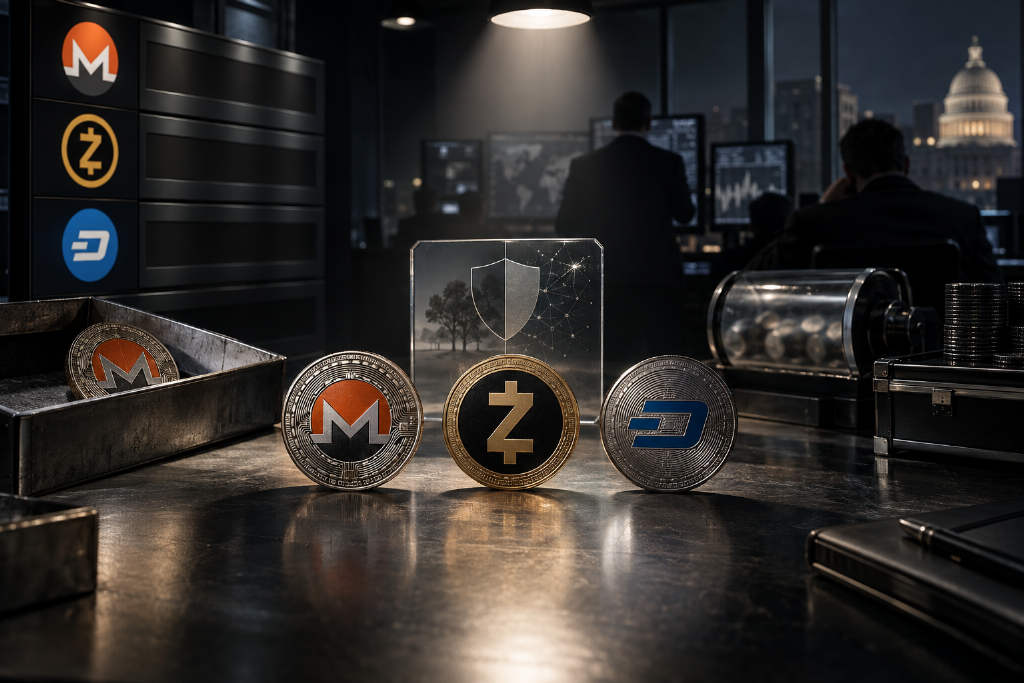
MarsBit on Sept. 9 published a market analysis by 0xTodd arguing that privacy-coin price moves are not primarily driven by technology.

The author said that when first entering crypto nine years ago, he was deeply focused on privacy mechanisms themselves, including Dash’s coin-mixing model, Monero’s ring signatures, and ZCash’s zero-knowledge proofs. He also described spending time debating which privacy model was more thorough, how shielded and transparent addresses mapped to each other, and how much entropy gain each system delivered.
Looking back, 0xTodd wrote that technology accounts for only a small part of price action, saying it makes up "at most 10%," while non-technical factors account for "90%."
Listings and delistings were presented as a more direct market driver
The article asks why ZEC could rally while XMR did not, even though both are associated with strong privacy. The answer given is that Monero has been delisted by Binance and Coinbase.
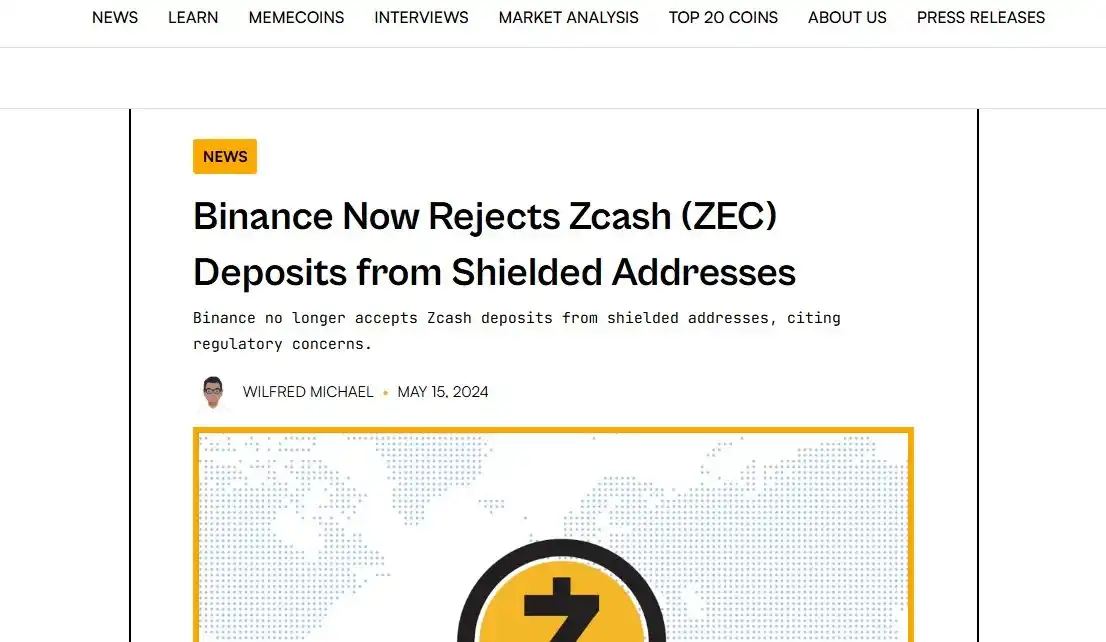
According to the piece, if major exchanges do not provide a trading venue, even a higher pushed price leaves a practical question of who the asset can be sold to. In that framing, exchange access matters more for near-term price action than the privacy model itself.
The ZEC versus DASH comparison was tied to holdings
The author then turns to another comparison: if both ZEC and DASH are available on large exchanges, why did ZEC rally while DASH did not.
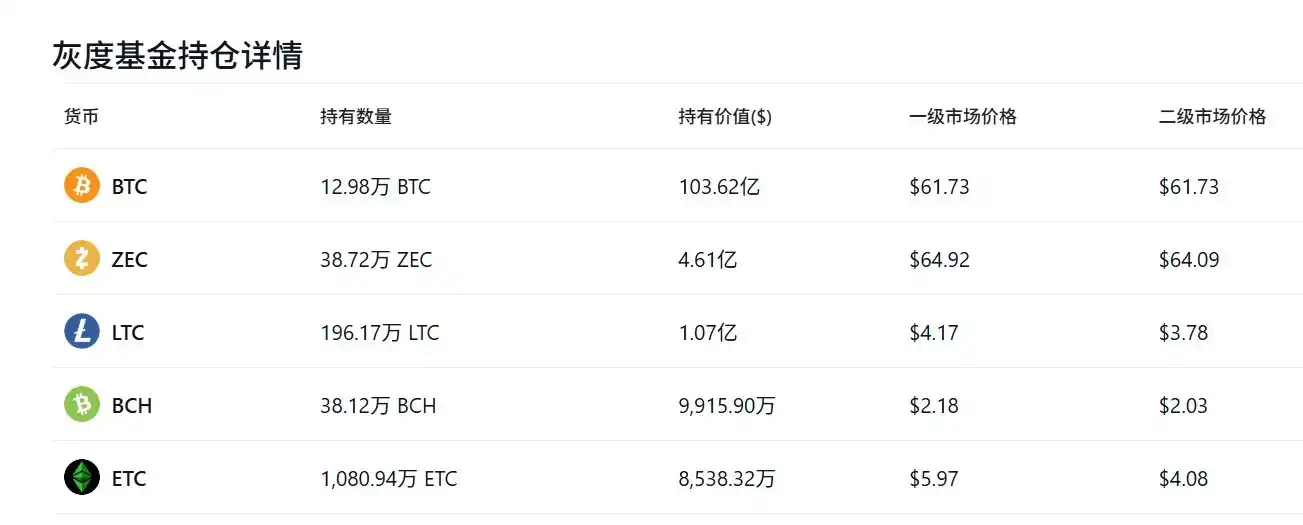
The explanation in the article is that Digital Currency Group, or DCG, holds ZEC and does not hold DASH. The piece adds that ZEC is among Grayscale’s larger positions and says the supporting data is shown in the accompanying image.
The author links XMR delistings partly to Monero’s mandatory privacy design
0xTodd describes this as one of the few areas where technology has some connection to market treatment. In the article’s telling, Monero enforces privacy, while ZEC allows both transparent and private ledgers.
The author also says Coinbase and Binance only support withdrawals to transparent addresses and do not interact with shielded addresses. On that basis, the article argues that large exchanges chose to delist XMR to avoid regulatory or compliance trouble.
Even a future rally would not settle the technology debate, the piece says
Later in the article, the author writes that illicit actors "basically only use Tron USDT and BTC" and are not focused on privacy. He adds that the groups that care more about privacy, in his description, have tended to favor mixers rather than privacy coins.
0xTodd ends by saying that even if XMR or DASH rallies again at some point, that would not prove that ring signatures or mixing mechanisms had beaten zero-knowledge proofs. In the author’s view, it would only prove that a new operator had replaced an old one.