

PANews published a piece compiled and translated by BitpushNews from commentary by Tulip King, who argues that the rise of retail trading should not be read only as a symptom of economic despair. His case is broader: retail participation may be approaching the inflection point of a 20-year supertrend.
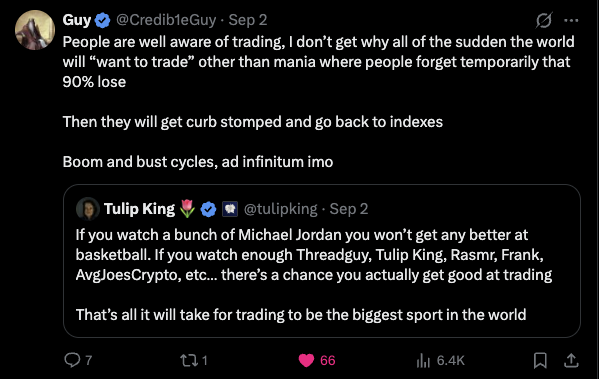
More than a story about desperation
The article opens with a deliberately exaggerated picture of the moment. Even the pope has supposedly downloaded FOMO to trade meme stocks. Everyone wants to become a streamer. Prediction markets are everywhere. The standard explanation for all this, Tulip King says, is grim: younger people cannot afford homes, wages lag asset inflation, and the economy has split into those who own appreciating assets and those who do not. If a lifetime of work still leaves people behind, many decide to take a shot at gambling their way up the K-shaped curve.
He does not dismiss that reading outright. If lottery-like speculation has become the only route people can imagine for upward mobility, then a trip to the casino is not hard to understand. Still, he rejects the idea that this is the full explanation. His question is whether the market is actually entering the turning point of a much larger retail trading supertrend that could last two decades.
Why the article begins with YouTube
To explain the framework, Tulip King starts with media. YouTube, he notes, used to be a default app on the iPhone. From the first iPhone in 2007 until iOS 6 in 2012, the app came preinstalled on every device, and in that period users could not even delete default apps.
He treats that decision as meaningful because Steve Jobs was a key force behind it. The article describes Jobs as unusually farsighted, intensely controlling about the iPhone experience, and deeply committed to content, movies and storytelling. It also points back to Pixar and Toy Story during Jobs' years away from Apple.
In Tulip King's telling, Jobs understood early that YouTube would become central to the future of media. He personally highlighted the native YouTube app during the original iPhone launch. Google, the article says, even re-encoded YouTube's video library from Flash to H.264 at Apple's request so the experience could work natively on the device.
That call, he argues, proved right. The article cites industry estimates that roughly 5% to 10% of global content consumption now happens on YouTube. From there, it makes a sweeping point: the platform's scale has become large enough to overshadow the combined weight of television, social media, movies, livestreaming, rival video apps and porn sites.
How creator platforms changed several industries at once
The piece then walks through the spillover effects.
News
It says YouTube-native news channels such as Breaking Points draw about 3x the viewership of Fox and CNN, shifting how news is produced and distributed. For people under 35, the article argues, what they hear on shows like The Tim Dillon Show often carries more weight than what appears on cable news.
Consumer brands
In consumer packaged goods, MrBeast and Logan Paul are presented as examples of a new model. By controlling distribution directly through their audiences, they helped build brands such as Feastables and Prime. Tulip King also notes that both are active venture investors. Because they command unusual channel power and reach, he argues, they may be among the most value-additive investors a startup can have on its cap table. The article links that dynamic to why a16z is so eager to stay close to new media.

Film and Hollywood
The article says YouTubers are now competing directly with Hollywood. It cites Markiplier's Iron Lung, Curry Barker's Obsession and Kane Pixels' Backrooms as projects that are setting new records for box-office profitability. It also says Markiplier has become one of GoPro's largest individual shareholders. The broader point is that creators are pushing into every part of the chain, from cameras and production to directing, performance and distribution.
That is why the article calls the current moment a real and unstoppable retail content supercycle.
From viral clips to full institutions
Tulip King traces a rough development path for creator media. It began with accidental viral clips such as Charlie bit my finger. It moved into more organized, native studios such as Smosh, which built repeatable production systems and full operating teams. Then came superstar creators such as PewDiePie, who reached 100 million subscribers.
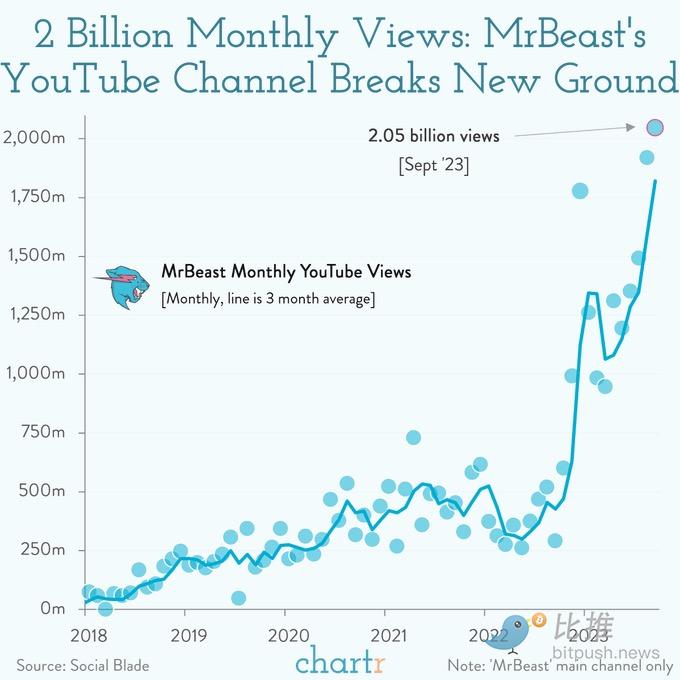
At the top end today, someone like MrBeast is hard to describe as an ordinary retail creator because of the scale of his business empire. Yet the article stresses that he started the same way everyone else did: with no audience and a camera.
Its conclusion from that history is straightforward. The new institutions of media are simply what retail creators become once they mature. Those creators are now moving into television, news, Hollywood, consumer goods and venture capital. Betting against them, the author says, is the naive position.
The structure of the platform matters just as much as the people on it. YouTube is described as a permissionless, 24/7 global content platform where the marginal cost of participation is close to zero and users do not have to fund the underlying network. Tulip King calls it, in a familiar metaphor, a blockchain for content. In that environment, top creators rise, the platform grows and content work moves into the mainstream. Editing, producing, co-hosting or running operations for creators has become a normal career path. Knowing someone with tens of thousands of followers who occasionally monetizes through sponsorships is no longer unusual.
Crypto as the YouTube of trading and finance
That media argument leads to the market argument. Tulip King says crypto stands in relation to trading and finance much the way YouTube stands in relation to content and media.
His reasoning is structural. Crypto is also permissionless, global, always on and cheap to access. Like YouTube, it started on the margins, then began challenging legacy institutions. In his view, the challenge has already produced tangible wins.
Money is being rebuilt
The article says crypto has already opened the path toward future monetary forms, whether the eventual winner is Bitcoin, Zcash, stablecoins or some combination of them. Tulip King treats that alone as a historic achievement.
Public blockchains are rewriting market rails
On infrastructure, the piece names Ethereum, Solana and Hyperliquid as emerging foundations. Traditional finance, it argues, has not simply borrowed crypto's open-source technology. It has been forced to issue stablecoins and real-world assets on crypto networks, wrap crypto protocols and even become rollups on top of distributed consensus systems. The article frames that as a reversal of the usual narrative: crypto is not being absorbed by TradFi; TradFi is being pulled onto crypto's terrain.
New financial primitives keep appearing
Tulip King also points to prediction markets, perpetual futures and flash loans as examples of products native to crypto. Prediction markets are described as a new kind of truth market, even if low-quality wagers come with them. Perpetual futures are presented as a homegrown crypto product. Flash loans are characterized as atomic lending with zero duration, zero risk and unlimited size, something the author says traditional finance never had. He acknowledges the amount of noise, bubbles and emptiness in the sector, but still calls the experimentation valuable.
Social and trading are converging
Most important, he says, crypto may be creating the first genuinely new form of social application since TikTok in 2017: social trading.
A market shifting away from institutional gatekeeping
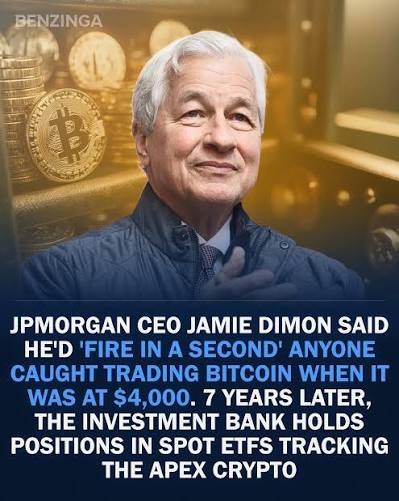
The article presents all of this as a bottom-up revolution. It points back to crypto's earliest use cases in buying drugs and fake IDs online, then argues that one function after another followed. In that telling, crypto did not become important because Wall Street finally respected it. Wall Street had to acknowledge it because crypto grew too large to ignore.
This supertrend, Tulip King writes, is turning markets away from products filtered by institutional gatekeepers and toward a playground built for retail users. He runs through examples to make the point:
- If you want to trade meme coins, you can.
- If you want to bet on the weather, a war with Iran or what Tom Brady will say while calling a football game, you can.
- If you trade perpetuals, open the VPN and do it.
- If trading cards and JPEGs is your thing, that market exists too.
The breadth matters. The article argues that this "everything market" quality is exactly why the trend keeps strengthening. Yes, many participants lose money and many should probably have stopped earlier. But open networks also keep surfacing unusually capable people.
The types of talent the article says crypto produces
Tulip King then names people he sees as examples of what open markets refine over time.
- For market design: Jeff, Shoku, Shayne Coplan and Cobie.
- For content and distribution instinct: Threadguy, Rasmr and Orangie.
- For philosophical insight: Ryan Watkins and Based16z.
- For product understanding: Brandon Millman, Alon, Se & Paul, and Alex Atallah.
His broader claim is that crypto will keep drawing people in. As homegrown crypto talent matures and more of the best-matched people from traditional finance move over, the pull of participating in crypto markets will only get stronger. People will want to trade like the creators they watch and build like the founders they admire. In the article, that direction of travel is treated as irreversible.
Open systems win
The piece returns several times to the same underlying belief: open systems win, open content wins, open software wins and open markets win. Tulip King presents that as a basic fact about capitalism.
When marginal costs fall toward zero and distribution becomes global, he writes, remarkable things happen. That can be true in centralized systems such as YouTube or software platforms, and it can also be true in decentralized systems such as crypto. Lower the barrier to entry far enough and the market will do the sorting, pushing exceptional talent to the surface and expanding the whole pie.
What comes next, in the author's view
The final section sketches out a future market structure in three parts.
1. Influencer traders become bigger cultural figures
The article says readers should prepare for the era of influencer traders. Personalities such as Threadguy and Rasmr will grow more prominent as trading turns into something closer to a spectator sport. As crypto products become easier and more polished, their audiences could expand sharply with new users entering the market.
- Normies will join streams to learn how to make money.
- Traditional finance traders will watch to understand a 24/7 market filled with perpetuals, tokenized stocks and meme culture tied to equities.
- Developers will monitor streams to catch changes in culture and consumer demand.
- Venture capitalists will feel pressure to watch as well, partly to appear current and partly to see where capital formation is moving.
Social trading apps are expected to add momentum. Viewers, he says, will naturally trust creators with verifiable records, even if track record is not the only thing that matters. The article uses chess content as an analogy, arguing that GothamChess and the Botez sisters are not the strongest chess players, but they are the best at telling stories about chess. Tulip King says the same pattern holds across esports content more broadly.
2. Capital allocation changes
He also expects a different logic for hiring and asset allocation.
- Trading firms will prioritize people with publicly visible onchain records over unproven newcomers.
- Family offices and foundations will gradually move away from passive index funds and opaque traditional managers, and toward vaults that disclose onchain activity and can show returns at scale.
- Venture firms that cannot provide strong narrative force for portfolio companies inside the new media environment will be pushed to the edge and then out of the best deals.
3. Losses do not disappear
The article does not soften the downside. People will still lose money. Most active traders, it says plainly, will end up in the red, and wealth will continue to move from impulsive participants to more disciplined ones. That is simply how markets work.
But Tulip King's claim is not that everyone becomes a trader or that everyone profits. His narrower argument is that this will become a new market form, one that gradually absorbs traditional markets as globalization and social participation expand together.
The 90% and 10% thought experiment
To illustrate the shift, the article offers a hypothetical, not a forecast. If today's financial markets are 90% institutional by trading volume, and if 90% of profits accrue to the top 10% of institutions, then the future may look different on the volume side but similar on the profit side. In his scenario, 90% of volume would come from what is currently labeled retail money, while 90% of profits would still end up with the top 10% of capital.
He adds a more provocative analogy: just as MrBeast's live-action Squid Game video could outperform Netflix's original in views, a future market-making firm founded by MrBeast could, in theory, make more money than Citadel.
The closing advice
Tulip King ends with a warning against condescension. Stop looking down on public token issuance, meme coin trading and younger creator cultures, he says. Whether people like this shift or not, they still have to recognize it for what it is. The wave of retail trading is coming, and the better choice is to understand it rather than drown in old assumptions.