HYPE Hits New Highs as Solana’s Flag-Bearer Attacks
Over the past weekend, as the Hyperliquid token HYPE continued to set record highs, a heated debate over “HYPE vs SOL” erupted on crypto Twitter. The offensive was led by one of the Solana community’s most iconic figures—Kyle Samani, former co-founder and managing partner of Multicoin Capital. In just two days, Samani published a flurry of posts systematically lambasting Hyperliquid, questioning its architectural decentralization and warning of severe regulatory and legal risks. It was a full-throated “publicity assault.”
In the early hours of May 30, Samani struck first, writing bluntly: “Hyperliquid is essentially just a Binance 2.0 without a marketing team. It has made thousands of architectural decisions that only work in a centralized setting and are not suitable for a permissionless, decentralized environment. Now they are many steps behind on that path. Moreover, no genuine US company will work with them in the future.” With those words, he branded Hyperliquid as a “Binance-like” entity wearing a decentralized cloak.
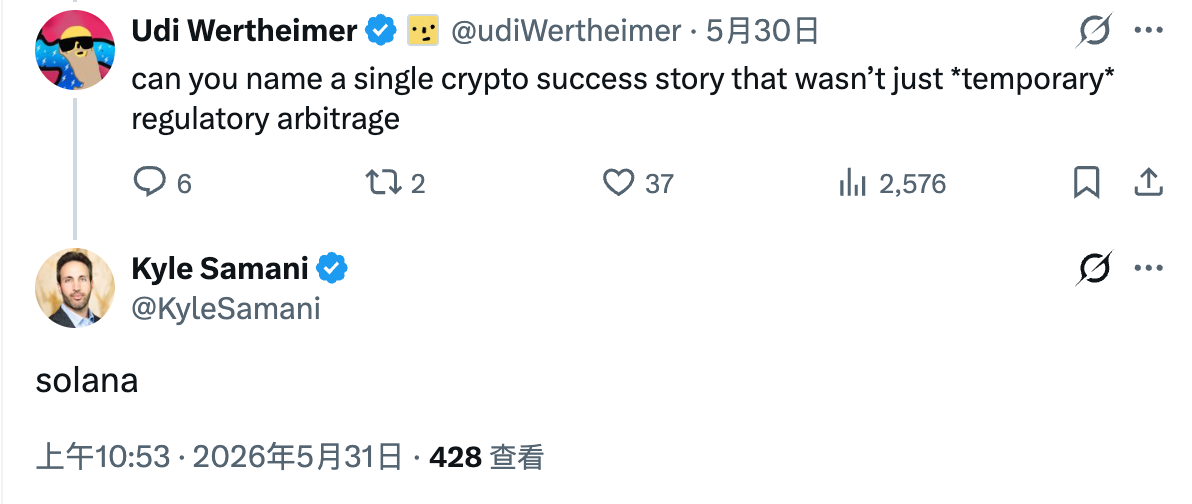
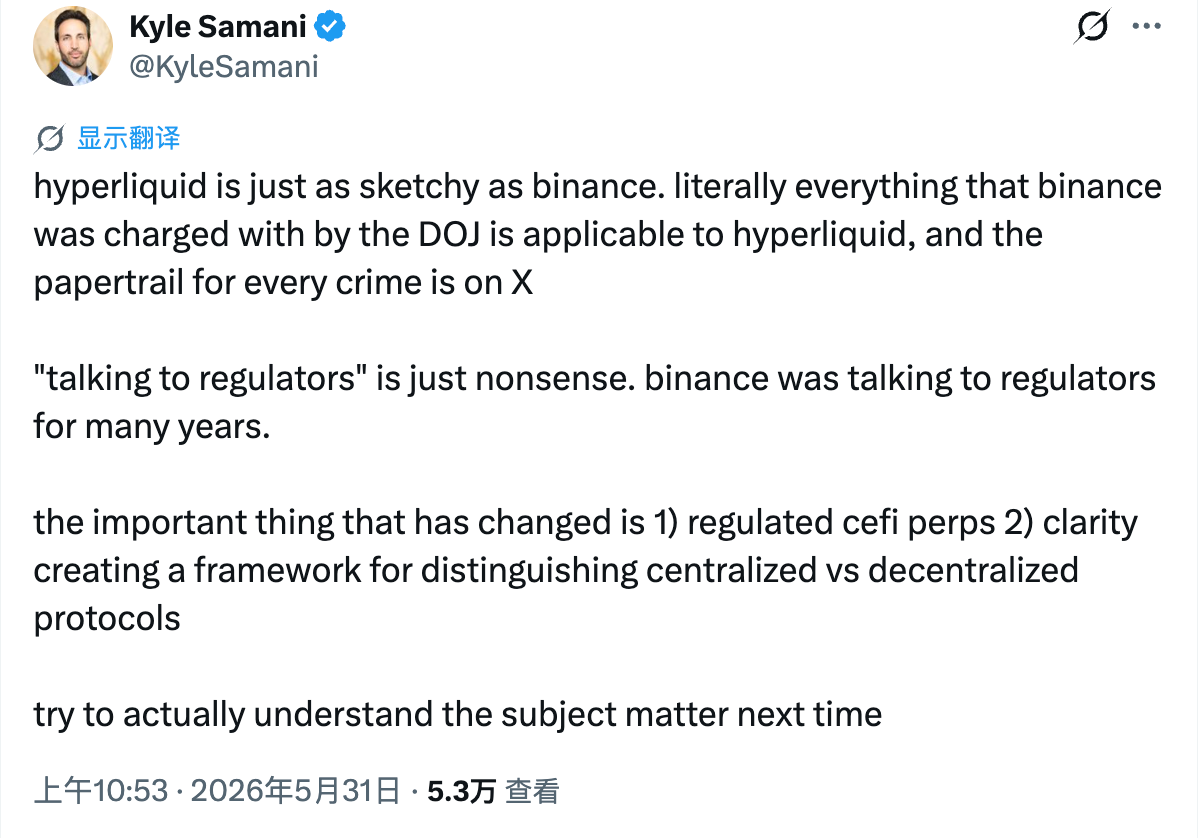
On May 31, Samani escalated his criticism. He again lumped Hyperliquid with the world’s largest exchange, Binance, stating: “Hyperliquid is just as suspicious as Binance. All the charges the US Department of Justice has made against Binance apply to Hyperliquid, and the evidence for each crime is documented. The so-called ‘communication with regulators’ is pure nonsense; Binance has been communicating with regulators for years too…” While hammering Hyperliquid, Samani also took a swipe at his old foe Ethereum, calling it “credibly neutral but technically deficient,” essentially “useless.” When asked which token could be deemed a success, Samani predictably gave one answer—Solana.

Hayes’ Counterstrike: From Taunt to Six-Figure Wager
Samani’s broadside did not go unanswered. The community rallied quickly, with BitMEX co-founder Arthur Hayes taking the most prominent role. On May 31, Hayes fired back with a sarcastic jab: “Before this cycle ends, HYPE should at least surpass SOL.” The statement instantly galvanized Hyperliquid supporters. This morning, Hayes doubled down: he not only launched a content contest with a 100 HYPE prize pool, calling for “humorous and offensive” responses to Samani, but also directly challenged Samani to a $100,000 bet that HYPE would outperform the top ten cryptocurrencies over the remaining seven months of the year. This provocative move elevated the war of words from social media sparring into a high-stakes wager.

The Irony of Role Reversal on the “Efficiency First” Road
Over the past several years, Solana’s greatest success has been building a high-speed, low-cost on-chain financial infrastructure that attracted everything from meme coins and DeFi to AI agents. Its core narrative was that “liquidity flows to the most efficient market.” Hyperliquid, however, took this logic one step further. Instead of building infrastructure and waiting for applications to grow organically, Hyperliquid directly targeted the crypto industry’s most essential need—perpetual futures trading—accumulating users, fee revenue, and liquidity, before expanding into spot, equities, prediction markets, and beyond. This created an exceptionally rare positive flywheel: more traders generate more fee income; more income funds HYPE buybacks and ecosystem incentives; a rising HYPE price attracts more capital; more capital deepens platform liquidity and trading depth. The real cash-flow power generated by this flywheel has already surpassed that of many layer-1 ecosystems, including Solana itself.

There is further irony here. Back when the Ethereum community criticized Solana’s centralization, Solana’s classic retort was that “users don’t care about decentralization—they want speed, low fees, and a great product.” Now, as Hyperliquid captures market mindshare with superior product execution and revenue, Samani suddenly hoists the banner of “decentralization,” accusing Hyperliquid of being too centralized and lacking censorship resistance. This role reversal suggests that in Samani’s eyes, Solana represents the elusive sweet spot between decentralization and efficiency—Ethereum is decentralized but clumsy, Hyperliquid is ultra-smooth but essentially a CEX, while Solana sits right in the middle, the handsome, honest face of the industry.

The Age-Old Question Finds a New Battlefield
At its core, this clash is not merely a rivalry between the HYPE and SOL tokens. It is the same decades-old question that has haunted the crypto industry: should the priority be decentralization principles first, or product and growth? Ethereum and Solana argued over this for years; now Solana and Hyperliquid find themselves in the same match-up. Only this time, facing a more aggressive and arguably more “centralized” challenger, it is Solana’s faithful who are raising the “decentralization” flag. Regardless of the outcome, this verbal skirmish demonstrates once again that every successful chain must eventually find its place on the same philosophical scale.