
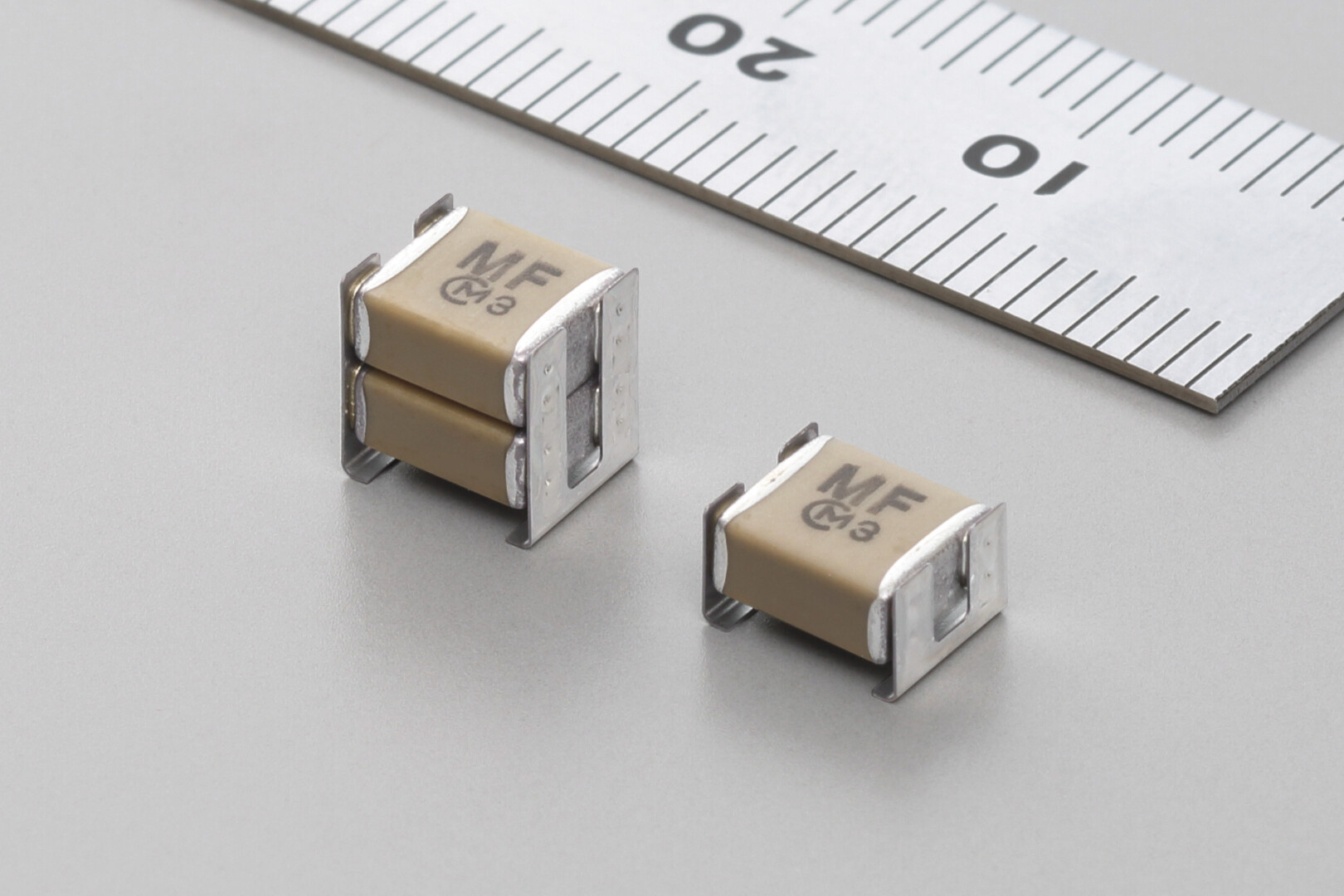
Samsung Electro-Mechanics is pushing its AI server MLCC business toward longer-term supply agreements.
On July 23, the company disclosed a 295.12 billion won supply contract for multilayer ceramic capacitors, or MLCCs, with a major global technology company. The deal is worth about $204 million, and deliveries will run through the full year of 2027. The customer was not identified under a confidentiality agreement.
The agreement follows another large AI server MLCC order announced in June, worth about 450 billion won, making this the second straight month in which Samsung Electro-Mechanics has disclosed a major contract in the segment. The company’s publicly announced AI server MLCC contracts this year now total 750 billion won, or about $510 million. Including a long-term silicon capacitor supply agreement worth about 1.5 trillion won signed in May, its disclosed AI server component supply deals for the year top 2.25 trillion won, or roughly $1.5 billion.
President Chang Duck-hyun said, “This large-scale contract is the result of Samsung Electro-Mechanics’ MLCC technology being fully recognized as a core component of AI infrastructure. Based on deep trust from customers, we will accelerate the development of next-generation advanced products, build a stable supply chain, and lead the AI component market.”
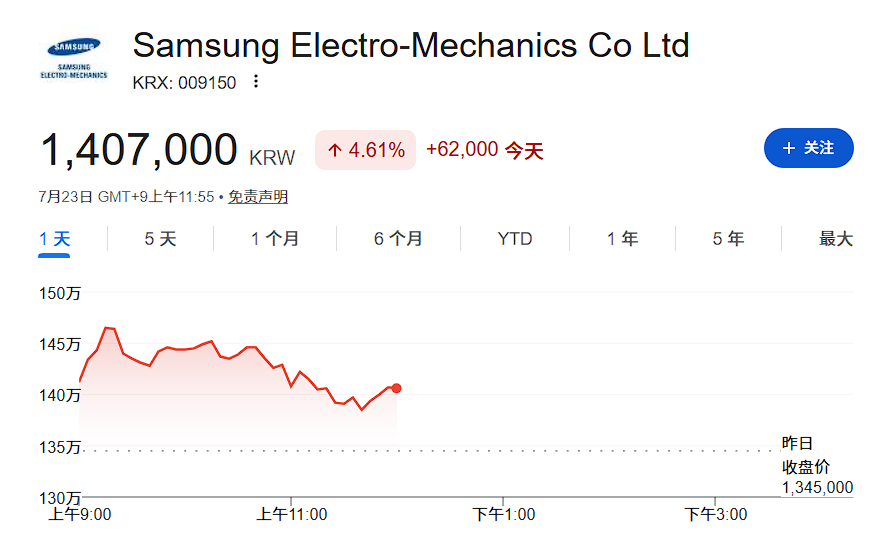
After the announcement, Samsung Electro-Mechanics shares rose more than 8% intraday and touched 1.475 million won. Among KOSPI constituents, the stock outpaced heavyweight names including Samsung Electronics and SK Hynix.
AI server component orders have accelerated this year
The latest contract amounts to about 2.6% of Samsung Electro-Mechanics’ consolidated revenue of 11.3145 trillion won last year. The products covered are large-volume, high-performance MLCCs used in the customer’s AI servers and data center systems.
The company’s order flow for AI server components has picked up visibly this year. In May, it signed a long-term silicon capacitor supply contract worth about 1.5 trillion won with a global customer. In June, it followed with an AI server MLCC supply agreement worth about 450 billion won with another major global technology company. The newly disclosed July contract pushes the total value of publicly announced AI server MLCC agreements this year to 750 billion won.
According to the report, industry observers said such a dense run of large long-term MLCC supply contracts is unusual in the sector. It points to a shift in MLCCs, traditionally sold on shorter order cycles, toward longer-term agreements as AI infrastructure demand rises.
AI servers are driving stricter MLCC and silicon capacitor requirements
MLCCs are often described as the “rice of the electronics industry” because they stabilize current and control voltage fluctuations in electronic circuits. In AI servers, that role becomes more important.
Compared with standard servers, AI servers require more than 10 times as many MLCCs. A single server rack can hold as many as 600,000 MLCC units.
Specifications are also far stricter. MLCCs used in AI servers must meet requirements for ultra-small size, ultra-large capacity, high-temperature resistance, high-voltage resistance, and resistance to board warpage. The technical threshold is high, and the number of companies able to supply at scale remains limited.
As for silicon capacitors, the report said those components are installed inside AI chip packages, including GPUs and high-bandwidth memory, or HBM, to help stabilize power delivery. Their resistance is about 1% of that of conventional MLCCs.
Company says it is discussing more mid- to long-term MLCC plans
Samsung Electro-Mechanics holds a leading position in the global AI server MLCC market, with a share above 40%, according to the report. That position has been seen as a key reason it continues to win orders from large customers, and as an important driver behind the sharp share-price gain that followed disclosure of the silicon capacitor long-term agreement in May.
The company said it is in further talks with multiple global customers on mid- to long-term MLCC supply plans. It also plans to expand long-term supply contracts while strengthening stable demand for AI server MLCCs and speeding up a shift toward a higher-value product mix centered on industrial, automotive electronics, and AI server applications.