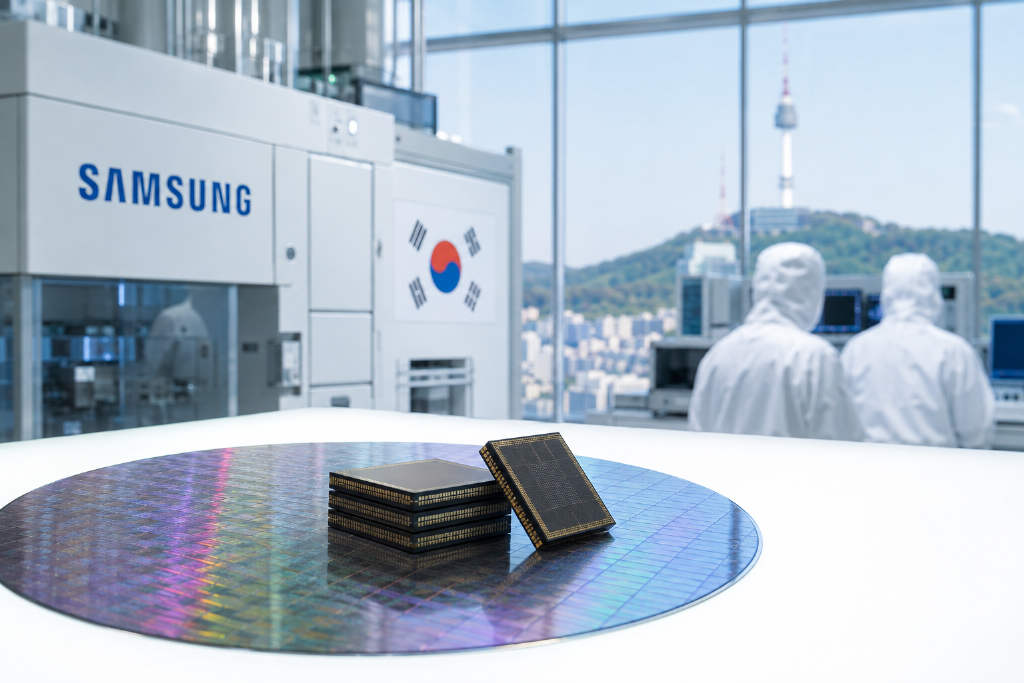
Mirae Asset Securities analyst Kim Young-gun said Samsung Electronics' expansion of HBM shipments for AI applications will offset the slowdown in general memory chip growth next year. The firm forecasts HBM shipment volume and average selling price to surge 57% and 49% respectively in 2027, outpacing the expected 16% and 20% growth for general memory chips. While a stronger South Korean won against the U.S. dollar may weigh on earnings, overall profitability remains robust. Mirae Asset cut its 2026 operating profit forecast for Samsung by 5.7% to 370.057 trillion won and its 2027 forecast by 4.2% to 535.682 trillion won.
Mirae Asset Securities analyst Kim Young-gun said Samsung Electronics' HBM (High Bandwidth Memory) shipment expansion for AI applications is expected to offset the impact of slowing general memory chip growth in 2027. The firm projects Samsung's HBM shipment capacity and average selling price will surge 57% and 49% respectively in 2027, far exceeding the anticipated 16% and 20% growth for its general memory chips.
While a stronger South Korean won against the U.S. dollar could drag on earnings, Mirae Asset expects overall profitability to remain stable. The brokerage lowered its 2026 operating profit estimate for Samsung by 5.7% to 370.057 trillion won, and its 2027 forecast by 4.2% to 535.682 trillion won.
This article was originally published by Bit.Fan. For more cryptocurrency news and market insights, visit www.bit.fan. Disclaimer:
The market information, project data, and third-party content displayed on this platform are for industry information sharing only and do not constitute any form of investment advice or return commitment.
Cryptocurrency trading carries high risks. Users should fully assess their risk tolerance and make independent decisions. All profits, losses, and legal responsibilities are borne by the users themselves.