
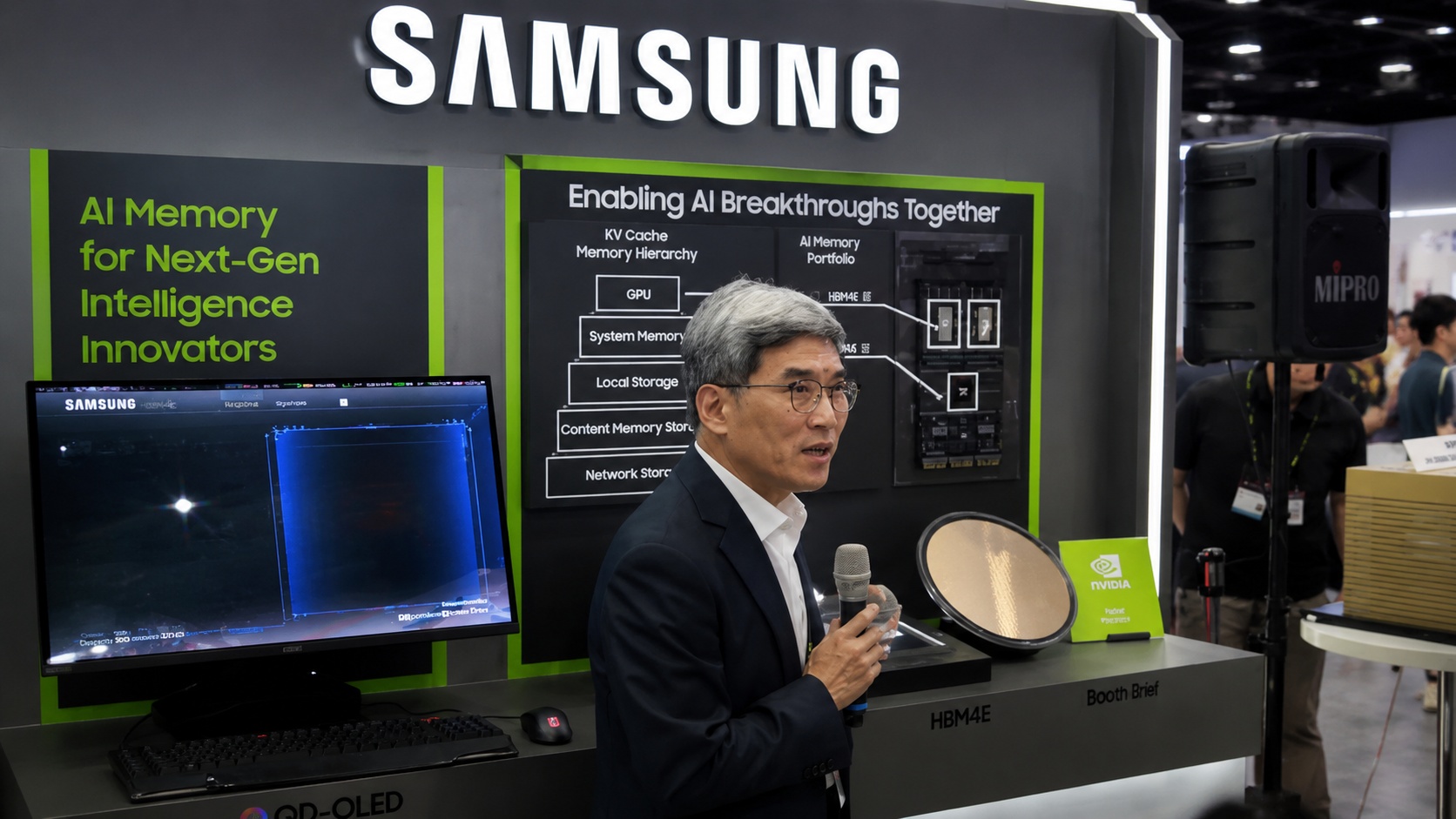
Samsung Electronics said the reliability-test yield for its seventh-generation high-bandwidth memory, HBM4E, has moved above 70%. The figure was shared by DS division CTO Song Jae-hyuk at an internal management briefing on June 30, putting the product closer to the 80% threshold that the industry often treats as a mature level.
According to a report by Korea’s Financial News, Song also said Samsung’s next-generation D1d DRAM process, described as the 10nm-class seventh generation, holds an advantage over rivals. That matters because Samsung is still in catch-up mode in the HBM market, and yield progress affects qualification, volume output, and customer confidence. One point stands out: the company is trying to narrow the distance quickly.
HBM4 sales passed $1.2 billion shortly after mass production began
Samsung started mass production of sixth-generation HBM4 in February. By late May, it had disclosed specifications for a 12-layer HBM4E product and shipped samples to major customers. The report said Samsung was the first company in the industry to send out HBM4E samples, and by the end of that month, HBM4 sales had exceeded $1.2 billion.
The sequence shows how fast the company has been moving in recent months. HBM4 entered production, HBM4E samples followed soon after, and the manufacturing base for later products is already being prepared. Samsung expects its D1d process to pass production readiness approval in November, with the node set to be used for HBM5 and later products.
SK Hynix still leads in Nvidia-linked HBM supply
HBM sits next to AI accelerators and handles the high-speed data flow needed by GPUs, making it one of the most valuable components in the current AI hardware cycle. Samsung’s push to publicize yield gains and shipping progress comes as SK Hynix still holds the stronger position in supply tied to Nvidia.
The report said SK Hynix once controlled about 70% of Nvidia’s HBM3E supply. For HBM4, which is expected to pair with Nvidia’s next-generation AI accelerator Vera Rubin, supply-chain estimates cited in the report put SK Hynix at roughly 60% to 70%, Samsung at about 25% to 30%, with the rest going to Micron. Samsung’s higher HBM4E yield and growing HBM4 sales point to the same target: winning a larger share of premium customer orders.