
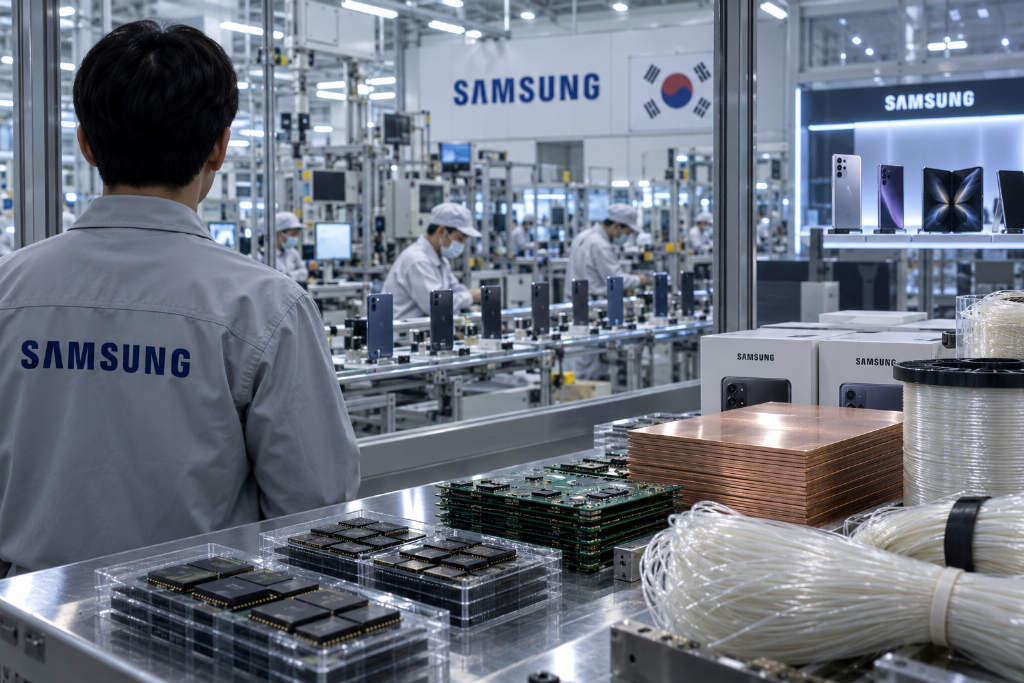
Samsung Electronics has recently lowered its fourth-quarter production plan for low- to mid-range smartphones, Korean tech outlet ZDNet reported on Oct. 15. The move came as memory chip costs surged and Japan’s Nittobo reduced output of E-glass fiber used in printed circuit boards for mobile phones.
Memory and glass fiber costs hit Samsung’s entry-level phone business
According to the report, Samsung’s revised Q4 plan for low- and mid-tier smartphones was driven not only by a jump in memory prices, but also by supply issues affecting glass fiber used in copper clad laminates, or CCL, a key PCB material.
Memory prices have risen sharply since the second half of last year. Prices for glass fiber used in CCL production have also moved higher, leaving Samsung in a position where larger shipment volumes could translate into weaker profitability.
Industry sources said Samsung’s basic low- and mid-range smartphone models released this year were priced more than KRW 100,000 above the previous generation. Even so, higher raw material and component costs have made it difficult for the company to significantly expand output of lower-margin models such as the Galaxy A series.
Nittobo shifts capacity toward T-glass for AI chips
The report said glass fiber yarn used in CCL is mainly produced by Nittobo in Japan. Recently, the company has concentrated production on higher-margin T-glass for AI semiconductors, squeezing output of E-glass used in smartphone PCBs.
In smartphones, E-glass is mainly used in rigid board motherboards and prepreg materials for rigid-flex boards. One industry source said E-glass is now in tight supply and prices have already been raised. With memory costs climbing at the same time, Samsung has cut purchase orders for components that use E-glass.
Q4 component orders reduced by 20% to 30%
Samsung has recently lowered its fourth-quarter order forecast for component suppliers. The revised figure is based on annual smartphone shipments of about 230 million units, below the 240 million units previously expected across the supply chain.
ZDNet reported that the newly notified Q4 component order volume was 20% to 30% lower than the forecast presented before Korea’s Chuseok holiday from Sept. 24 to 27.
For monthly output, Samsung’s mid-September forecast for the fourth quarter stood at 14.3 million units in October, 9.5 million in November, and 7.6 million in December, for a total of 31.4 million units. After an update in early October, those figures were revised down to 9.9 million units in October, 7.6 million in November, and 6.7 million in December, or 24.2 million units in total. That was about 23% below the mid-September estimate.
MX division faces losses while Samsung protects premium models
The report said Samsung’s MX (Mobile eXperience) and Networks division posted a second-quarter loss of KRW 735 billion. Brokerages estimated a full-year loss of about KRW 400 billion.
Industry sources said the MX division would need to improve handset profitability if it wants to pay performance bonuses. Given the shipment mix, aggressively pushing the lower-end Galaxy A lineup would make that harder.
By contrast, shipment plans for premium models, including the Galaxy S27 series due early next year, were said to remain at a relatively high level because higher-priced devices can absorb part of the increase in memory costs. Samsung is also expected to increase foldable smartphone shipments next year, and some suppliers have already expanded related component capacity in advance.
Suppliers still waiting for next year’s smartphone plan
Beyond the Q4 order cuts, Samsung has not yet explained next year’s smartphone business plan to partner companies, according to the report. One component supplier said Samsung would normally have shared the following year’s plan by this point, but nothing has arrived yet this year, leaving suppliers unable to set their own plans.
The report added that memory prices are widely expected to keep rising next year, putting more attention on how Samsung’s smartphone business will balance cost pressure and profitability.