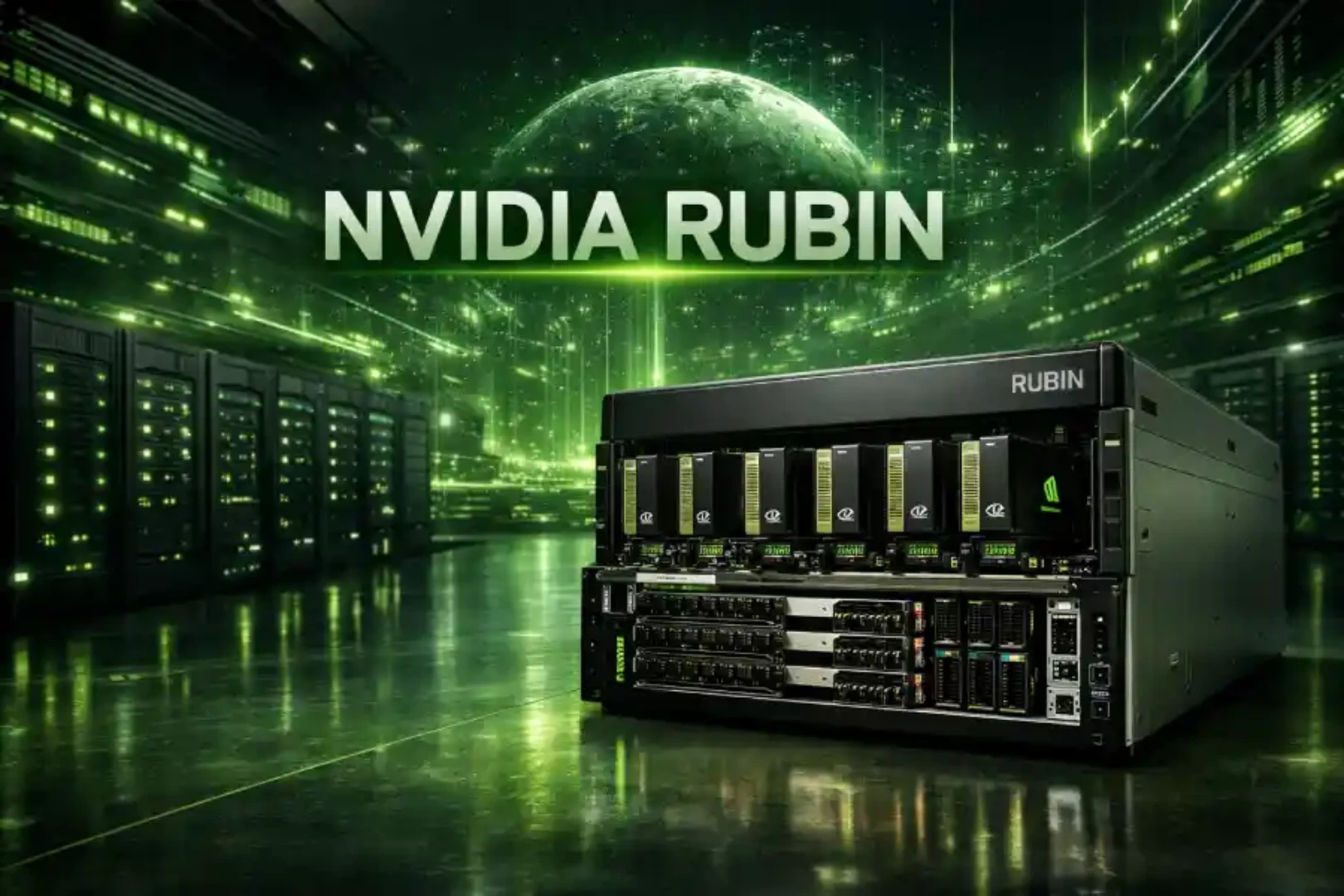
Optimistic Revenue Forecast: HBM4 Bottleneck Resolved, Rubin Platform Ramping Up
SemiAnalysis released its latest forecast on June 30, based on its Accelerator Model, predicting that Nvidia's data center computing revenue for the second half of fiscal 2027 will be approximately 20% higher than Wall Street consensus. The core support for this optimistic outlook lies in the resolution of HBM4 memory supply issues that previously constrained Rubin platform mass shipments, along with sufficient front-end wafer capacity reserves, clearing significant obstacles for a second-half revenue surge.
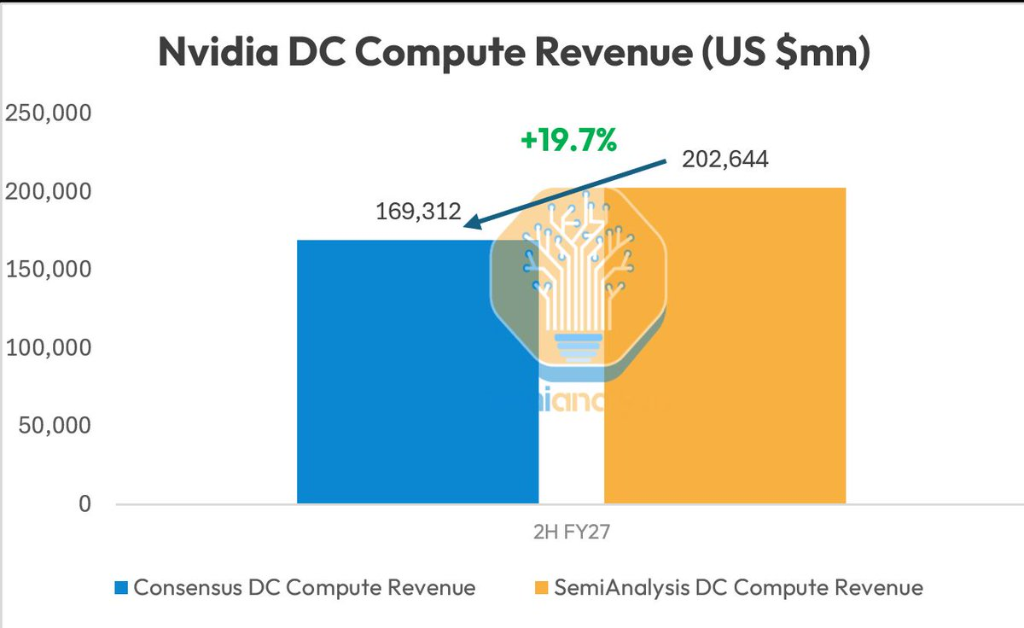
Unlike Wall Street's traditionally conservative earnings estimates, SemiAnalysis' conclusions are built on first-hand industrial chain research, with data covering materials suppliers, wafer fabrication, key components, server OEMs, and actual procurement and deployment by hyperscale cloud providers and frontier AI labs, enabling multi-dimensional cross-validation of supply-demand dynamics. The model also tracks AI chipmakers such as Broadcom, AMD, MediaTek, and Marvell, continuously monitoring the evolution of the AI computing chain through its HBM Model.

Flagship Product Downgrade: Original Rubin Ultra Design Canceled, Performance Halved
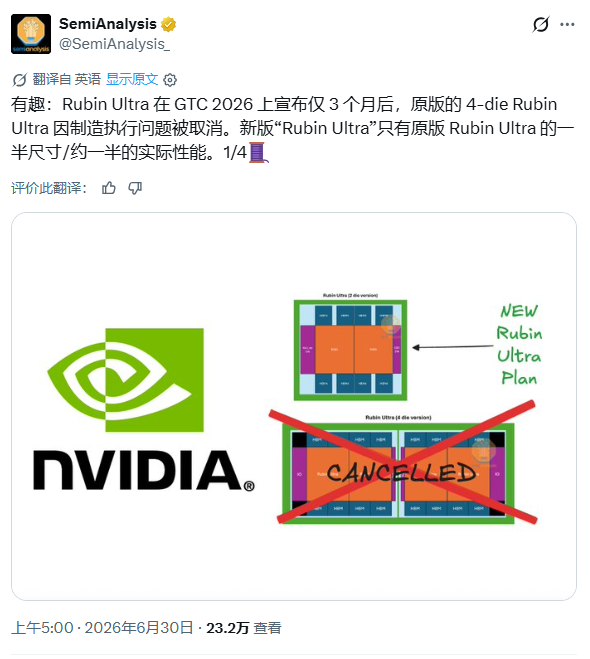
However, earlier the same day, SemiAnalysis disclosed a bearish piece of news: Nvidia's original Rubin Ultra, designed with four computing chips, was canceled about three months after its debut at GTC 2026. The new “Rubin Ultra” has been scaled down to half the size of the original design, resulting in half the actual performance. The adjustment is attributed to difficulties in advanced packaging manufacturing.

This change represents a significant setback in Nvidia's technological roadmap for flagship AI chips, raising market doubts about the competitiveness and delivery timeline of its next-generation products.

CUDA Moat Under Erosion: Alternative Platforms Gaining Traction
SemiAnalysis also noted that Anthropic has established a multi-platform computing architecture combining Google TPUs, Amazon Trainium, and Nvidia GPUs. A significant portion of Claude model training runs on TPUs, while Claude Code inference is increasingly deployed on Trainium, leaving Nvidia GPUs mainly for general-purpose computing and cutting-edge research. The report emphasized that the growth of TPU and Trainium to their current scale would have been unimaginable a year ago, yet now the CUDA moat is being slowly eroded.

In summary, SemiAnalysis' two divergent assessments anchor contrasting narratives for Nvidia across two dimensions: short-term revenue upside from resolved supply constraints versus long-term technological advantage facing dual pressures from alternative platforms and its own product downsizing.