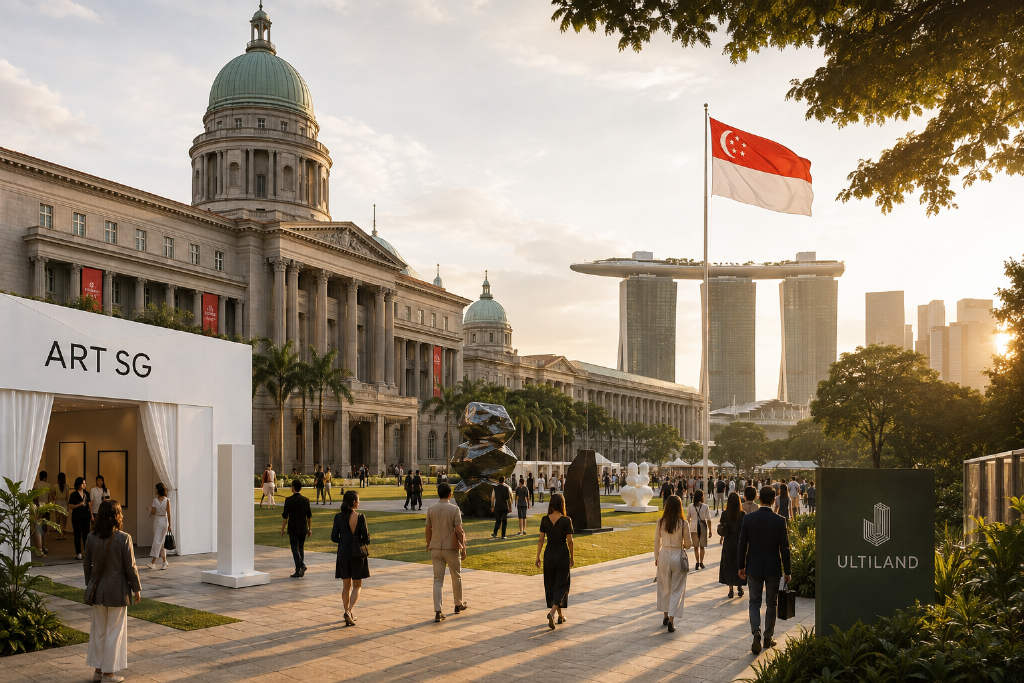
Singapore is often introduced as a financial hub, a garden city, and a major trading port. In the art world, though, the city-state is drawing increasing attention for a different reason: it is turning into a key link between Southeast Asia and the wider international market. From Singapore Art Week and ART SG to the institutional weight of National Gallery Singapore and the steady reshaping of its art spaces, the country is building an art ecosystem around geography, capital, and international reach.
The following account is based on a past ULTILAND AMA discussion featuring a host, ULTILAND art project lead Hannah, and co-founder Tangtang. Their conversation moved through Singapore’s regional position, major art events, market structure, institutional ambitions, and the environment facing artists.
Why Singapore has drawn growing attention from the art world
Hannah said Singapore stands out because it understands its own strengths with unusual clarity. It does not have a vast domestic population, it does not have a local art consumption market on the scale of Tokyo, and it does not carry the long continuous art traditions associated with countries such as China, Japan, or France. What it does have, she said, are three core advantages.
The first is geography. Singapore sits at the center of Southeast Asia and connects China, India, and multiple Southeast Asian countries, while also serving as a major aviation, financial, and trade node. The second is internationalization. For years, the city has attracted people from different parts of the world, and international corporations, financial institutions, multinationals, and private wealth management firms have all established a presence there. The third is capital. Its mature wealth management system creates natural conditions for art collecting.
Tangtang agreed, but added a market-based point. Singapore’s strength, she said, has never been a large domestic art market. In fact, its local market is not large enough on its own to sustain a global art center. That limitation pushed it toward a different model: instead of trying to become the biggest market, it has tried to become an important access point into Southeast Asia.
For European galleries, entering Southeast Asia means dealing with different languages, regulatory structures, market systems, and cultural contexts across countries such as Indonesia, Thailand, the Philippines, Vietnam, and Malaysia. Singapore, in this reading, offers a more standardized regional platform.
Hannah said that “node” function matters. International galleries are not mainly asking how many people live in a city. They are asking whether collectors are there, whether institutions are there, whether art advisers, logistics services, financial services, and international clients are there. Put together, those elements amount to market infrastructure. Singapore’s real strength, she argued, is not that it suddenly produced a surge of artists, but that it has been building an entire art ecosystem in a systematic way.
Singapore Art Week turns the city into an art season
When the discussion shifted to one of Singapore’s key annual art events, Tangtang said she particularly likes Singapore Art Week because it does not function like a conventional single-site exhibition. It feels more like the whole city entering an art season.
According to the discussion, the 2026 edition of Singapore Art Week is scheduled for Jan. 22 to Jan. 31. It is not centered on one venue. Instead, it stretches across museums, galleries, art spaces, public sites, heritage buildings, and even urban districts.
Hannah said that point is important because a city’s art ecosystem cannot rely on a few museums alone. Art has to enter everyday urban life. Someone might go out for a meal over the weekend and stop by an exhibition on the way. A younger visitor may head to a café and find an art space next door. A traveler arriving in Singapore may happen to encounter Art Week during the trip. In her view, art only becomes part of a city’s way of life when it enters those ordinary settings.
Tangtang noted that Singapore Art Week in 2025 included more than 130 art projects. For her, that number says something by itself: art is no longer operating as an isolated sector and is now tied into tourism, dining, hospitality, retail, and design.
Hannah added that the measure of an art city is not simply whether it has a world-class museum. A more useful test is whether ordinary people have developed habits around art consumption: going to exhibitions on weekends, buying art books, taking children to museums, attending art events, or traveling to a city because of a particular artist. Those behaviors, she said, are what determine whether art can become part of urban culture.
ART SG and the search for a Southeast Asia identity
On the market side, the conversation turned to ART SG. Tangtang called it one of the clearest cases for understanding Singapore’s art market.
She said the 2025 edition featured 105 galleries from 30 countries and territories and drew about 41,000 visitors over four days. That scale, she said, is not yet comparable with Art Basel Hong Kong. But she argued that size is not the central issue. What matters is that ART SG is working to define its own identity.
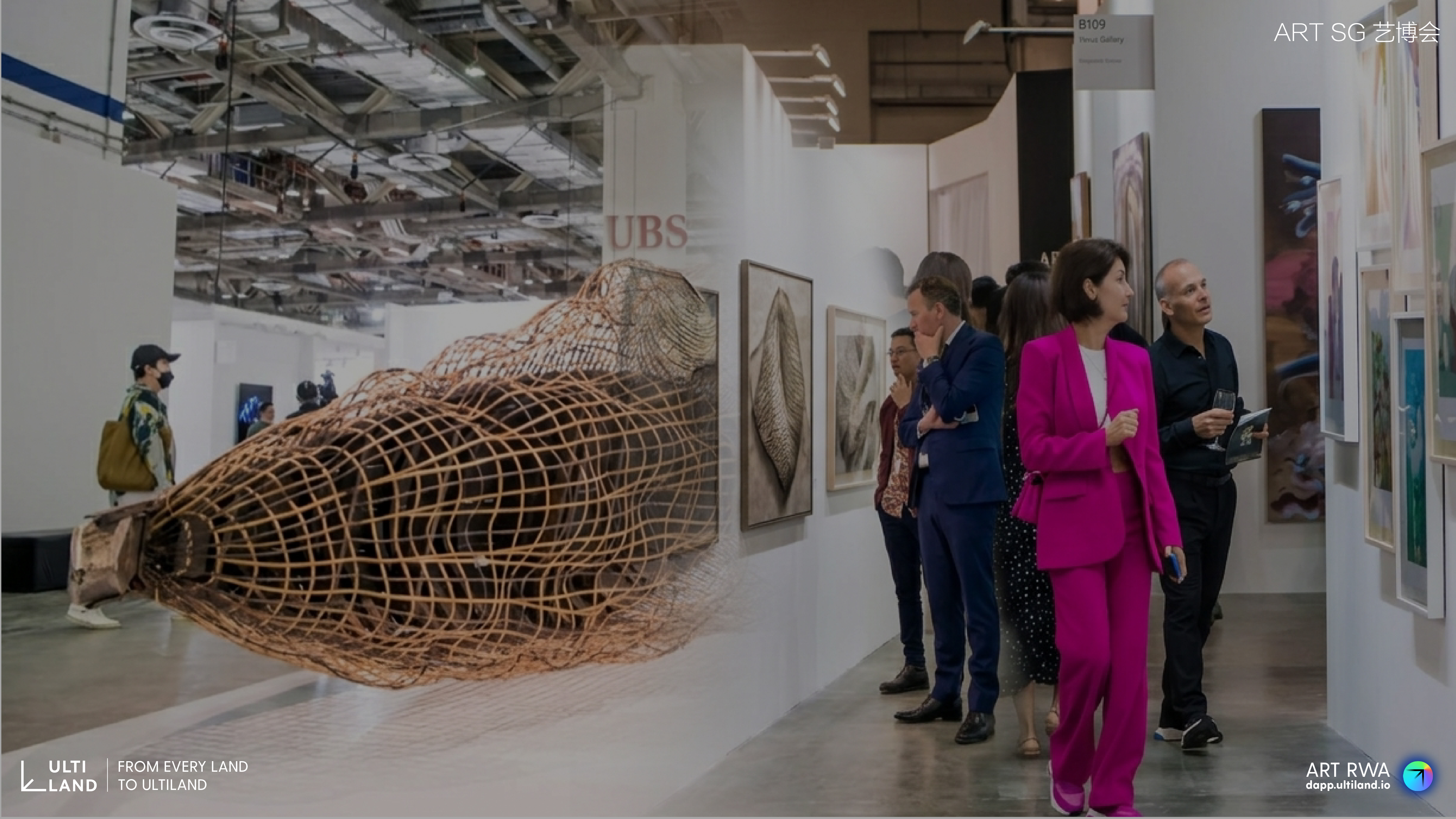
When Hannah asked what that identity means in practical terms, Tangtang said ART SG cannot simply be “an international art fair that also happens to be in Singapore.” If that is all it is, people will always ask why they should not just go to Hong Kong instead. So the fair has to answer a different question: why come to Singapore for Southeast Asian art?
That, in her view, is ART SG’s biggest opening. It can position itself as an important gateway to the Southeast Asian art market. She pointed to a recent shift in emphasis, saying ART SG has increasingly highlighted its Southeast Asian orientation, and that S.E.A. Focus, which had been staged independently, is set to move under the ART SG framework in 2026. She described that as a clear signal. Singapore is not merely importing global art into the city; it is trying to become a window through which Southeast Asian art can be understood.
Hannah agreed. She said Singapore’s competitive edge does not come from copying Hong Kong. Hong Kong already has mature international galleries, auction houses, collectors, and art fairs, so duplicating that model would not make sense for Singapore.
She also stressed that Southeast Asian art has long received less attention in global art history than its cultural complexity would justify. The region carries rich colonial histories, religious traditions, migration experiences, ethnic cultures, modernization processes, and rapid urbanization. All of those, she said, are major contemporary art themes.
National Gallery Singapore and a deeper cultural ambition
If ART SG represents the market, then National Gallery Singapore points to something deeper. Tangtang said the institution reflects Singapore’s broader cultural ambition.
Hannah agreed and said the gallery’s collection is centered on Singaporean and Southeast Asian modern and contemporary art. According to public information cited in the discussion, the institution holds more than 8,000 Southeast Asian artworks. She said that scale matters because it shows Singapore is not just talking about developing Southeast Asian art. It is collecting, researching, and helping construct the region’s art history.
Tangtang also highlighted the building itself. National Gallery Singapore was created out of the former City Hall and the former Supreme Court. Walking through it, she said, visitors encounter both the architectural memory of the colonial period and the exhibitions of the present. For her, that mirrors Singapore itself: a highly modern city that is still working through its own history.
Hannah said the institution serves another role as well. It signals to the world that Southeast Asia should not be treated as marginal to art history. For a long time, narratives of modern art naturally moved first to Paris, New York, and London, with Asia entering much later. Today, more institutions are reexamining Southeast Asia, East Asia, and South Asia, and Singapore wants to be part of that rewriting.
Artists, media, and the wider Southeast Asian field
The discussion then shifted away from institutions and markets to artists. Tangtang first named Ho Tzu Nyen. What she values in his work, she said, is that he does not simply talk about “Singapore.” He often uses history, cinema, myth, colonialism, and identity to address a larger question: how should history be understood?
Hannah added that Ho works across a wide range of media, including video, installation, performance, theater, artificial intelligence, and digital technology. That range, she said, reflects one of the key traits of Singapore’s art ecosystem: it is interdisciplinary.
For that reason, she said younger artists should pay attention to Singapore. The local ecosystem does not demand that artists work in a narrowly traditional mode. It increasingly encourages crossings between art and technology, art and design, art and society, and art and history.
Tangtang also mentioned Shubigi Rao, describing her as an artist who has long focused on books, archives, knowledge, memory, civilization, and the ways knowledge is preserved or disappears. For Tangtang, her work pushes on questions that feel acutely contemporary: who owns knowledge, and who decides what deserves preservation?
Hannah said the maturity of an art ecosystem should not be judged by whether it has a few star artists. A better standard is whether artists are able to keep raising questions that are genuinely their own.
From there, Tangtang widened the frame to Southeast Asia as a whole. Talking about “Singapore art” in isolation misses the point, she said, because Singapore’s real significance lies in the Southeast Asian network behind it. Indonesia has a large community of artists and a complex art history. Artists in the Philippines have powerful ways of addressing colonialism, identity, and globalization. Thailand, Vietnam, and Malaysia also have energetic younger art scenes.
Hannah responded from the market side, saying this is where a major opportunity appears. Many Southeast Asian artists are already important in their home countries, but international collectors do not necessarily know them. What they sometimes lack is not artistic ability but access to international market connections. Singapore’s value, she said, is that it can become a meeting point for artists, collectors, galleries, and institutions.
Capital, family offices, and the need for a full ecosystem
When the conversation turned to capital and to why collectors and family offices watch Singapore, Tangtang’s answer was straightforward: wealth management. One of Singapore’s biggest advantages, she said, is its mature system of private banking, wealth management, and family offices. Art collecting is part of wealth management for high-net-worth individuals, and Singapore allows a collector to manage family assets, live, invest, and build an art collection in the same place.
Hannah, however, said that money on its own does not amount to an art ecosystem.
Tangtang stressed the same point. A place with collectors and capital but without artists, galleries, museums, and curators is only a site for art transactions. It is not an art city.
Hannah described the structure of a mature art city as a loop: capital flows to artists, artists connect to institutions, institutions reach the public, the public supports the market, and the market returns resources to artists. In her view, that full cycle has to exist.
That is why Singapore is interesting right now, she said. Capital and cultural infrastructure are moving closer together. ART SG, Singapore Art Week, and National Gallery Singapore make more sense when seen together than when viewed as isolated events or venues.
From Gillman Barracks to Tanjong Pagar Distripark
On physical art spaces, the discussion focused on two sites often mentioned in Singapore: Gillman Barracks and Tanjong Pagar Distripark.
Tangtang said Gillman Barracks is a case worth examining closely. It began as a colonial-era military barracks and was later turned into a cluster of galleries and cultural spaces. It once hosted a number of international galleries and played an important role in bringing international art into Singapore.
Hannah said it also reveals something else: art districts are never fixed once and for all. Art spaces are always exposed to practical pressures such as land use, rent, and city planning. She said the Singapore government has already announced that Gillman Barracks is intended for long-term residential use, and discussions are under way with existing art institutions on relocation and replacement space.
Tangtang said the issue deserves attention. Calls for governments to support art cannot stop at building visually attractive cultural zones. The deeper question is whether artists have stable space in which to work. Art ecosystems need time, she said. A gallery may need 10 years to build itself. An artist may need 20 years to mature. If spaces keep changing, the ecosystem struggles to take shape.
That shift helps explain why Tanjong Pagar Distripark has become a new point of focus. Hannah said the site was originally used for logistics and storage and is now gradually hosting galleries, art institutions, artist studios, and cultural projects.
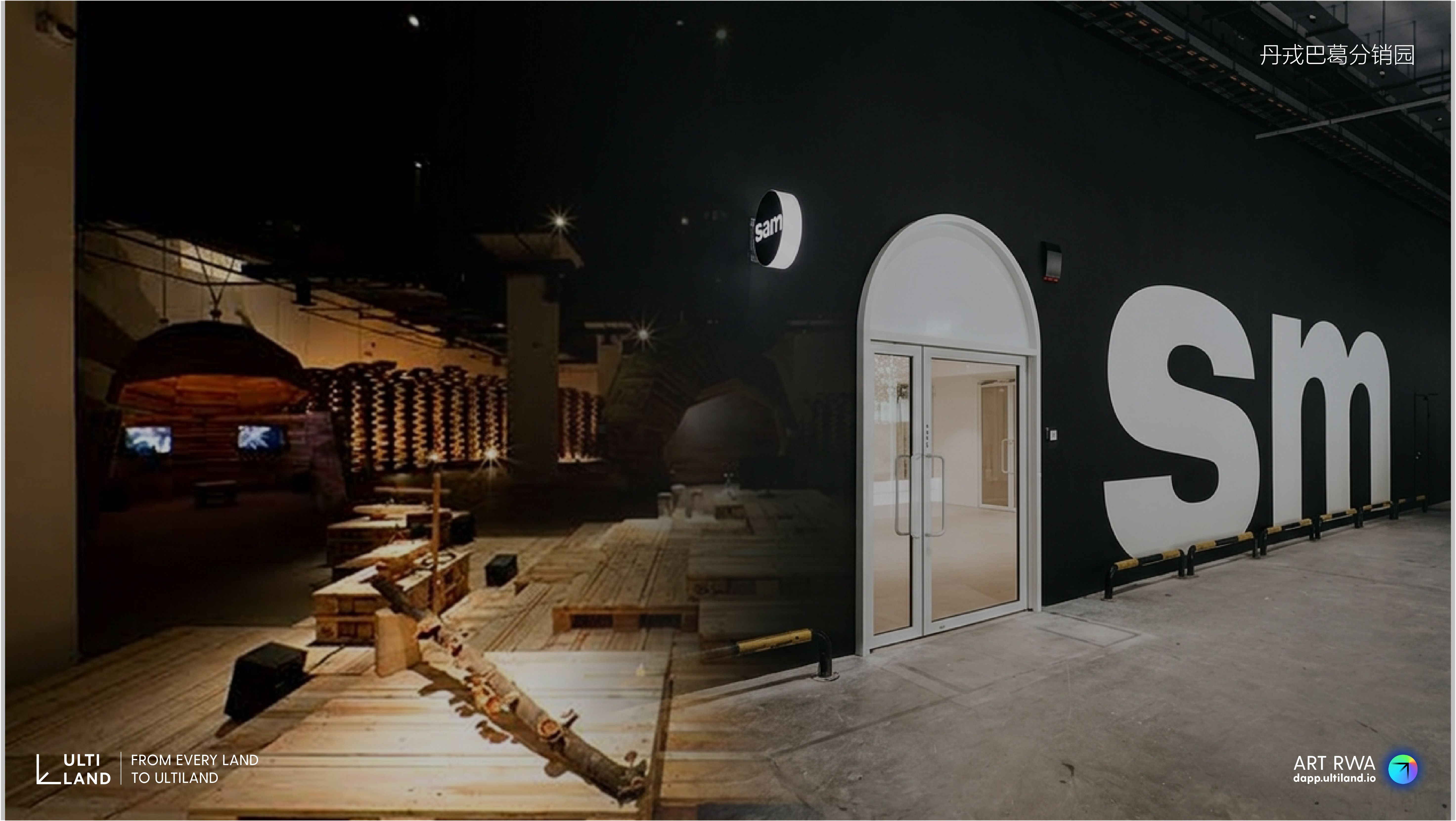
Tangtang said she likes the character of the space because it lacks the formal feel of a traditional museum and instead carries the atmosphere of industrial architecture meeting contemporary art. She also noted that the Singapore Art Museum has a major presence there, which suggests that Singapore is trying to move art out of the conventional white cube and into industrial urban space.
Hannah said this also changes how younger audiences approach art. People may not set out saying they want to study Southeast Asian modern art, but they may walk into a space because it looks compelling and only then begin to engage with the work. One of the biggest changes in art communication today, she said, is that interest can come before knowledge, rather than the other way around.
Why younger Asian artists may want Singapore in their network
When asked what they would say to a younger Asian artist wondering why Singapore matters, Tangtang answered that its value is not limited to sales. Its greatest value is connection.
An artist might meet a Singapore-based collector, she said, then get introduced through that person to an Indonesian gallery, then meet a Philippine curator through the gallery, and then join a Southeast Asian exhibition. That is the network effect she sees in the city.
Hannah added that Singapore is especially suited to artists who already work with cross-cultural perspectives. Themes such as identity, the city, migration, technology, environment, and globalization all find social context there. For that reason, she said, Singapore is not only for Singaporean artists. Artists from across Asia can find points of connection in the city.
Comparing Singapore with Hong Kong, Seoul, and Tokyo
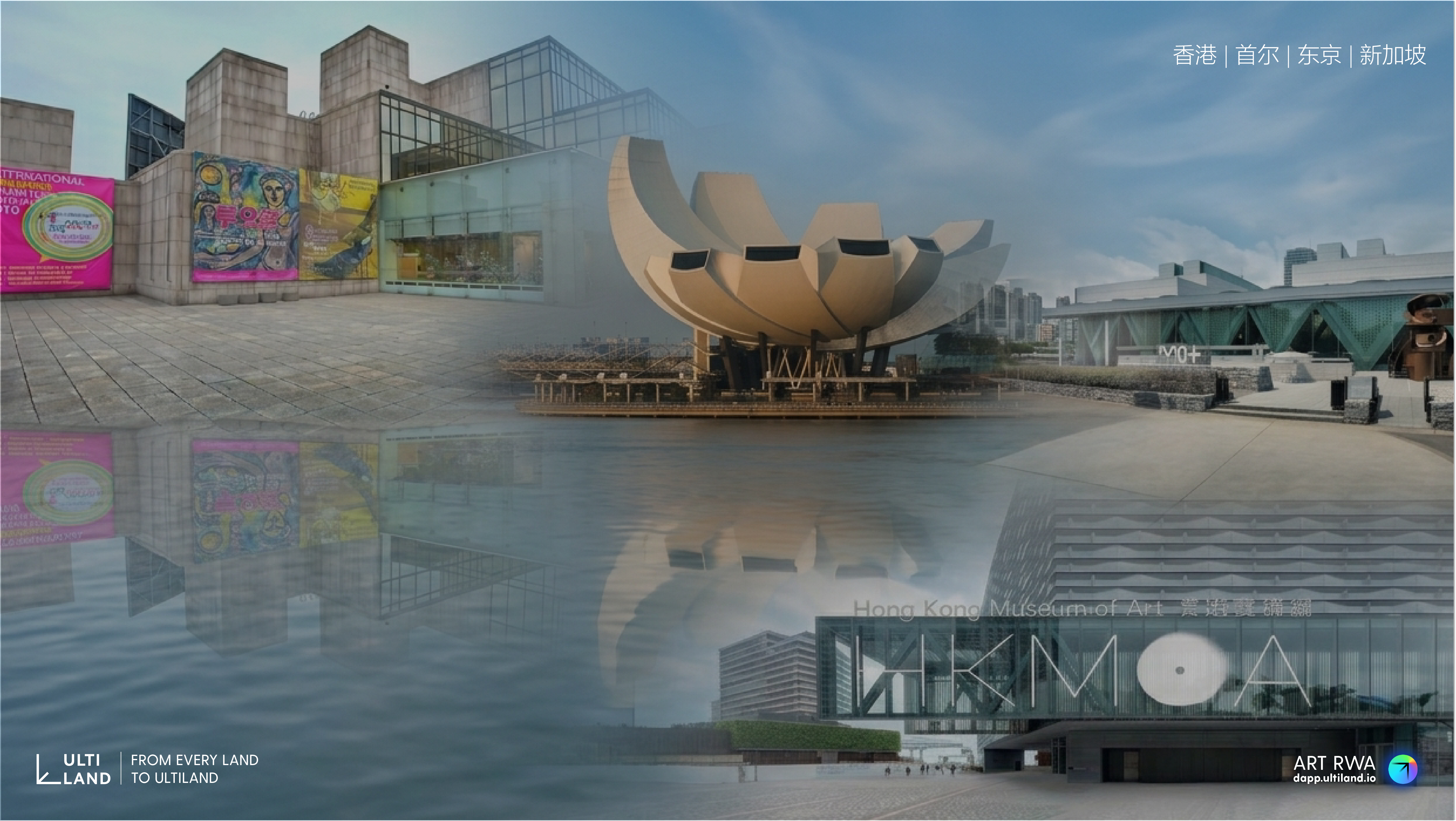
The speakers also placed Singapore alongside Hong Kong, Seoul, and Tokyo, after having produced art maps of all four cities.
Tangtang summarized the contrast this way: Hong Kong represents art and the international market; Seoul represents art and youth culture; Tokyo represents art, design, and subculture; Singapore represents art, Southeast Asia, capital, and urban strategy.
Hannah said that description felt accurate. She also said the cities should not be read only as rivals. They increasingly look like parts of a broader Asian art network. A younger artist, in her example, could create work in Tokyo, pursue cross-disciplinary collaboration in Seoul, meet international collectors in Hong Kong, and then use Singapore as a route into Southeast Asia.
Tangtang said the future art market may be shaped less by the question of which city is the single most important and more by whether meaningful links can be built between cities.
Why ULTILAND keeps tracking cities like Singapore
In the final part of the discussion, the host asked why ULTILAND keeps producing these city-based art maps.
Hannah said the core interest is not which place is hottest at the moment, but where art ecosystems are heading. Hong Kong shows how the international art market entered Asia. Korea shows how youth culture can reshape art. Tokyo shows how art can merge with design, fashion, and subculture. Singapore, she said, shows how a city can use cultural policy, capital, and infrastructure to actively build a regional art center.
Tangtang said the lesson for ULTILAND is that supporting younger artists cannot stop at giving them an online platform. They also need access to a real art ecosystem that includes exhibitions, art weeks, galleries, collectors, institutions, and communities inside cities. Artists, she said, do not simply need to be uploaded to a platform. They need to be seen, understood, and connected.
Hannah said that is why these art maps are also maps for younger artists. They are not only studies of what exhibitions a city has. They are attempts to identify where a younger artist might go next.
The discussion’s conclusion was direct. Singapore’s importance does not come from how many museums it has, nor from reproducing an existing art center. It does not need to become another Hong Kong or a second Tokyo. Its role is to serve as a gateway for Southeast Asian art and a hub linking the region with the world, capital with creation, and history with the future.