As Hyperliquid’s HYPE token continues to notch new all‑time highs, a heated debate has erupted on X between supporters of HYPE and SOL. At the center of the storm is Solana’s long‑time evangelist and Multicoin Capital co‑founder Kyle Samani, while on the other side stand Hyperliquid’s most ardent backers, led by BitMEX co‑founder Arthur Hayes.
Samani’s Relentless Barrage
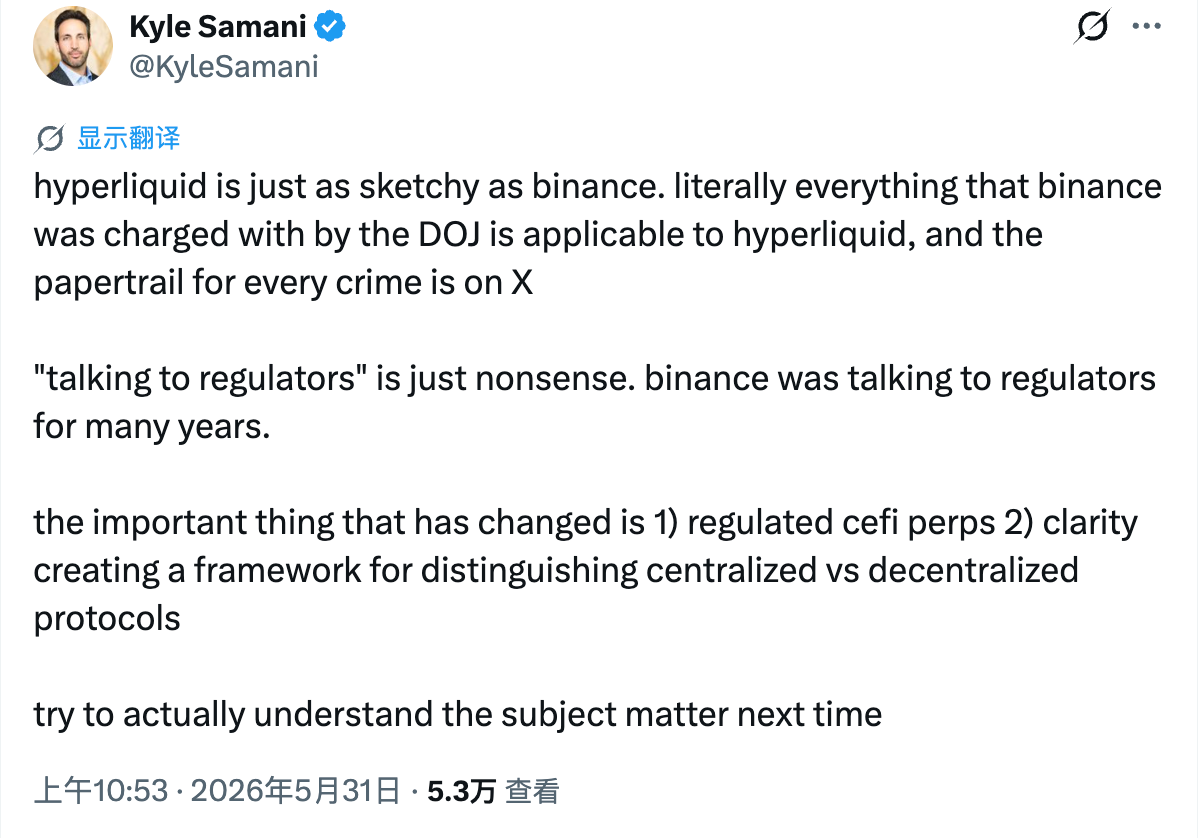
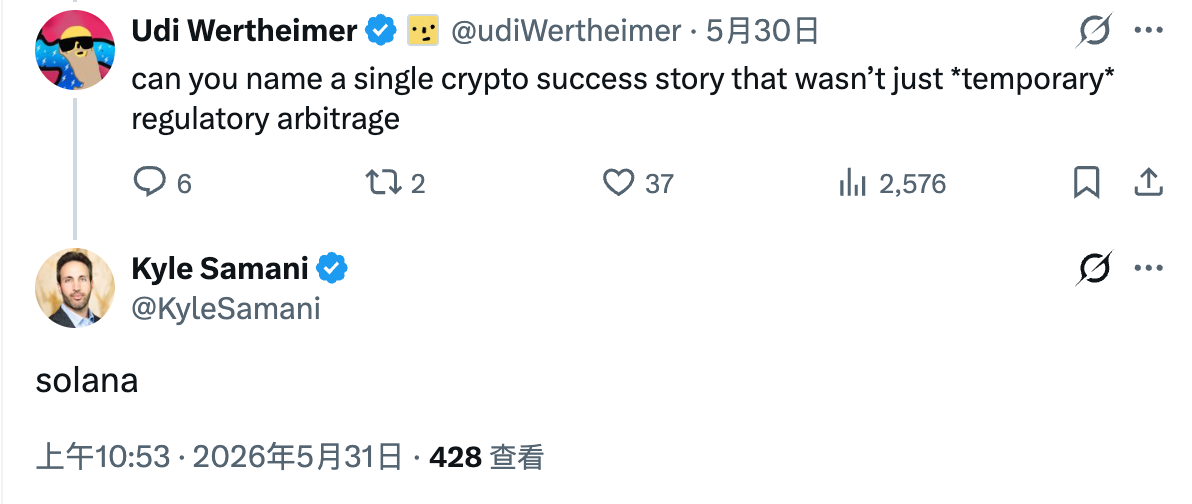
On May 30, Samani opened fire, calling Hyperliquid “Binance 2.0 without a marketing team.” He argued that Hyperliquid’s architecture embeds thousands of design choices that only make sense in a centralized context, not in a permissionless, decentralized environment, and warned that no real US‑based company would ever work with the project. The next day, he escalated the regulatory angle, stating that all charges the US Department of Justice once brought against Binance equally apply to Hyperliquid, with evidence for each offense already on the record. Samani dismissed the project’s claims of “engaging with regulators” as nonsense, adding that Ethereum, despite its “credibly neutral” narrative, was technologically deficient and “basically useless.” When asked to name a successful token, he answered without hesitation: Solana.

Hayes Fires Back with a $100,000 Bet
The community reacted swiftly, with Arthur Hayes leading the counterattack. On May 31, Hayes posted a sarcastic reply to Samani, stating that “HYPE should at least surpass SOL before this cycle ends.” He later launched a 100‑HYPE bounty for a content contest that demanded humorous and offensive rebuttals to Samani, while directly challenging Samani to a $100,000 bet that HYPE would outperform any top‑ten cryptocurrency over the remaining seven months of the year. Developers like Udi Wertheimer and traders like Ansem also joined the fray, adding fuel to the fire.

Solana’s Efficiency Logic vs. Hyperliquid’s Flywheel
Solana’s greatest achievement in recent years has been building a high‑speed, low‑cost on‑chain financial infrastructure where memecoins, DeFi, AI agents and more thrive. The core thesis is that liquidity will always flow to the most efficient market. Hyperliquid, however, has taken this logic to the next level. Rather than building infrastructure and waiting for applications to emerge, Hyperliquid attacked crypto’s most fundamental need—trading—head‑on. By bootstrapping a perpetual contract exchange, it accumulated users, fee income and liquidity, then expanded into spot, stock proxies and prediction markets. This created a remarkable positive flywheel: more traders → more fees → more HYPE buybacks and ecosystem incentives → higher HYPE price → more capital → deeper liquidity. The resulting cash‑flow generation has already surpassed that of many Layer‑1 ecosystems, including Solana. Solana once branded itself the “internet capital market,” but as users, assets and pricing power migrate to Hyperliquid, the latter now fits that narrative even better. In a sense, Hyperliquid has become what Solana always aspired to be.

History Repeats: From Accused to Accuser
A striking irony underpins Samani’s attacks. For years, Ethereum maximalists leveled the same accusations against Solana: high validator hardware requirements, frequent outages and reliance on a handful of core entities made it insufficiently decentralized. Solana’s retort was always that users don’t care—they want fast confirmations, low fees and good products, not node‑distribution reports. Solana’s rise was a victory for the “efficiency‑first” approach. Now, with Hyperliquid threatening its dominance, Samani waves the same flag of decentralization, regulatory safety and censorship resistance that Ethereum advocates once used. The charges sound eerily familiar, only the defendant has changed. This may appear hypocritical, but to Samani, Solana likely represents the optimal trade‑off—less clunky than Ethereum, more trustworthy than a CEX‑like Hyperliquid. Beneath the surface, the debate is not really about HYPE versus SOL. It resurrects crypto’s oldest dilemma: should the industry prioritize decentralization or product growth? This time, Solana’s faithful have found themselves on the side of decentralization, defending that very banner against a more aggressive challenger.