As HYPE continued to hit fresh all‑time highs, the X timeline erupted with a heated debate around "HYPE vs SOL." At the center stood Kyle Samani, former co‑founder and managing partner of Multicoin Capital and the banner‑bearer of the Solana community. Surrounding him were ardent Hyperliquid believers led by BitMEX co‑founder Arthur Hayes.
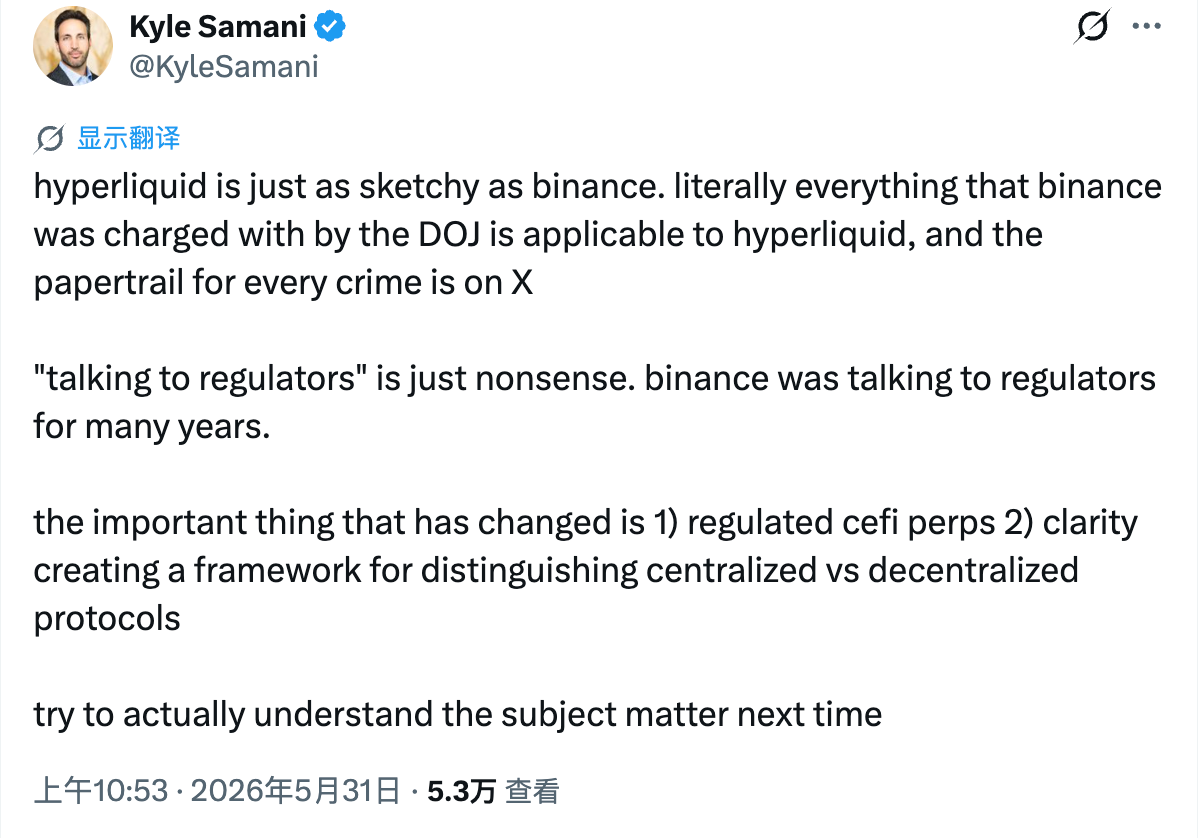
Samani Unleashes: Accusing Hyperliquid of Centralization, Labeling It Binance 2.0
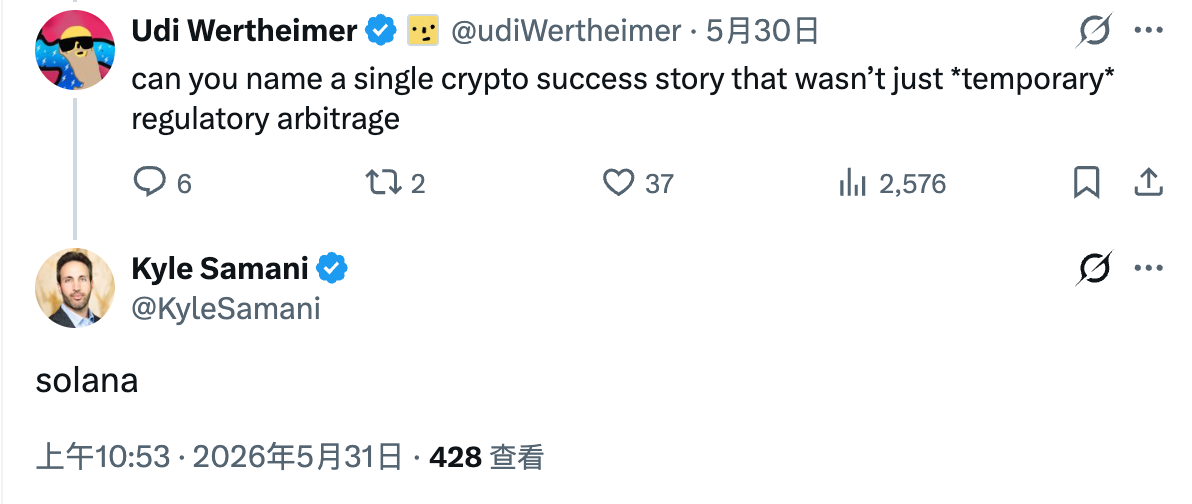
On May 30, Samani fired the opening salvo, stating outright that Hyperliquid is essentially "a Binance 2.0 without a marketing team." He argued the project has made thousands of technical decisions that only work in centralized setups and are completely unsuited for a permissionless, decentralized environment. The next day, he doubled down, claiming all the charges the U.S. Department of Justice leveled against Binance also apply to Hyperliquid, with on‑chain evidence to back each crime, and that the project's talk of "engaging with regulators" was nonsense. While attacking Hyperliquid, Samani also took a swipe at his perennial rival ETH, calling it "trust‑neutral but technically deficient"—essentially useless. When asked to name a successful token, he gave the obvious answer: Solana.
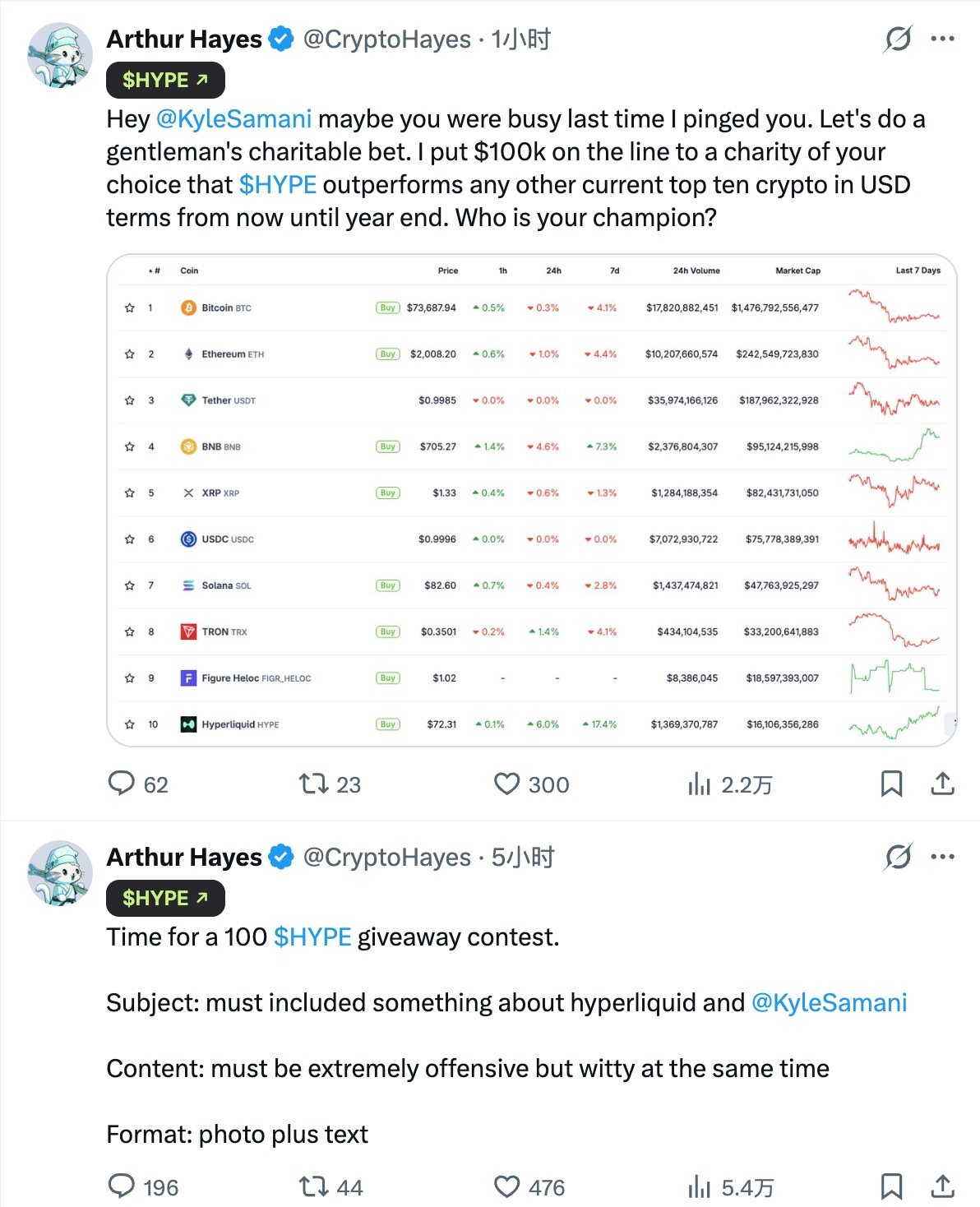
The remarks immediately set the crypto community ablaze. Hayes quickly shot back, saying, "HYPE should at least pass SOL by the end of this cycle." He then raised the stakes by announcing a 100 HYPE prize pool for a content contest where participants would humorously and offensively roast Samani. Hayes went further by directly challenging Samani to a $100,000 wager that HYPE would outperform any of the top‑ten cryptocurrencies during the remaining seven months of the year.
Shifting Efficiency Narrative: Hyperliquid's Flywheel Eats Into Solana's Edge
For years, Solana's biggest success has been building a high‑speed, low‑cost on‑chain financial infrastructure that attracted a flood of memecoins, DeFi protocols, and AI agents. Its core thesis was that liquidity migrates to the most efficient market. Hyperliquid, however, takes that logic a step further. Instead of providing infrastructure and waiting for applications and liquidity to grow organically, it dives straight into the industry's most fundamental need—trading—accumulating users, fee revenue, and liquidity through perpetual contracts, then expanding into spot, equities, prediction markets, and beyond.

The result is a powerful flywheel: more traders generate higher fees, which feed HYPE buybacks and ecosystem incentives; rising HYPE prices attract more capital, which in turn deepens liquidity and trading depth. The cash‑flow engine this flywheel has created now surpasses even that of Solana and other Layer‑1 ecosystems. Solana's long‑standing pitch was that it would become the "capital market of the internet," but as users, assets, liquidity, and price discovery increasingly shift to Hyperliquid, the latter now looks far more faithful to that vision. In other words, Hyperliquid has become the very thing Solana aspired to be, and that is precisely what Samani cannot stomach.

History Repeats: Solana Believers Now Wave the "Decentralization" Banner
What makes this spat especially ironic is that Samani's attacks on Hyperliquid echo almost verbatim the arguments Ethereum supporters once hurled at Solana. Back then, the Ethereum camp constantly questioned Solana's validator entry barriers, hardware requirements, network outages, and heavy dependence on a handful of core institutions, accusing it of trading decentralization for performance. Solana's defenders famously replied that users don't care about any of that—they want speed, low fees, and better products. In a sense, Solana's rise was a triumph of the "efficiency first" philosophy. Yet now, facing a rival that is capturing market attention, Samani has picked up the very flag the Ethereum camp used to wave: centralization, regulatory risk, and lack of censorship resistance.

This twist exposes the decade‑long question still haunting crypto: should we prioritize decentralization or product and growth? Ethereum and Solana once clashed over this. Now Solana and Hyperliquid find themselves in the same position. Only this time, facing a more aggressive competitor, Solana's believers have become the ones championing the cause of decentralization.