
As HYPE, the native token of the Hyperliquid ecosystem, continues to print new all-time highs, a heated debate over 'HYPE vs SOL' has erupted across crypto Twitter. At the center of the quarrel stand two prominent figures: Kyle Samani, former co-founder of Multicoin Capital and a longtime flag-bearer for the Solana community, and Arthur Hayes, co-founder of BitMEX and a vocal advocate for Hyperliquid.
Samani's Onslaught: Hyperliquid Is a Centralized Binance 2.0
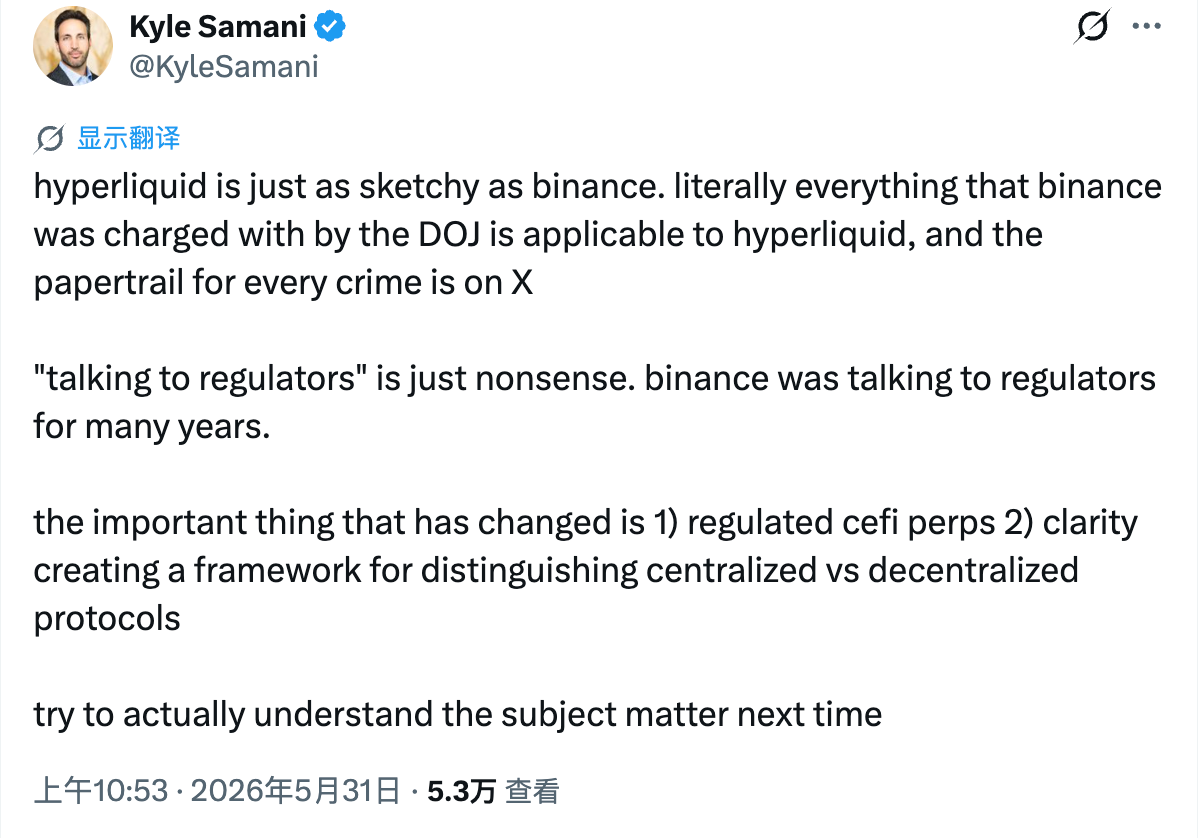
Over the past weekend, Samani posted a flurry of tweets attacking Hyperliquid with unusual intensity. He claimed that Hyperliquid is essentially 'Binance 2.0 without a marketing team,' making thousands of technical decisions that only work in centralized environments and are ill-suited for a permissionless, decentralized setting. He warned that no real American company would ever partner with them. On May 31, Samani escalated his criticism by directly comparing Hyperliquid to Binance, stating that all charges the U.S. Department of Justice has laid against Binance also apply to Hyperliquid, with evidence of every alleged crime recorded on-chain. He dismissed claims of 'communicating with regulators' as nonsense.
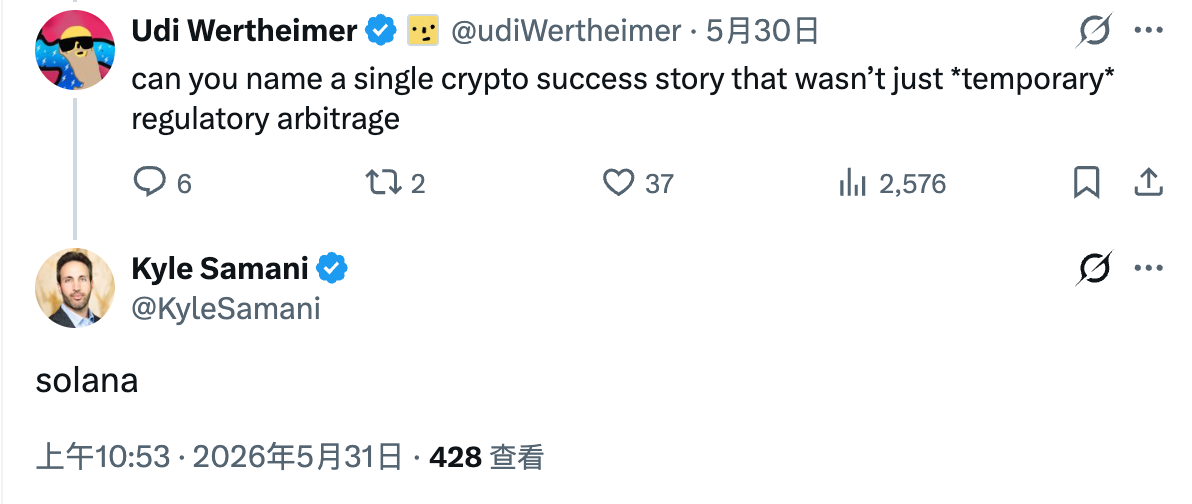
Interestingly, even as Samani pounded Hyperliquid, he took time to kick his old rival Ethereum, calling it 'credibly neutral but technically deficient, essentially useless.' When asked by prominent Bitcoin developer Udi Wertheimer which token he considered a success, Samani answered without hesitation: Solana.

Hayes Strikes Back: HYPE Will Surpass SOL, and a $100,000 Wager
Samani's aggressive remarks naturally provoked strong pushback from the Hyperliquid camp, with Arthur Hayes delivering the sharpest response. On May 31, Hayes posted a thinly veiled jab at Samani, declaring that before this market cycle ends, HYPE should at least surpass SOL. The following morning, Hayes announced plans to launch a 100-HYPE prize content contest, asking participants to create humorous and offensive rebuttals to Samani's attacks. At the same time, he directly challenged Samani, offering a $100,000 bet that HYPE would outperform the top ten cryptocurrencies by market cap over the remainder of 2023.
From Infrastructure to Trading Flywheel: How Hyperliquid Replicates and Surpasses Solana's Path
In recent years, Solana's greatest success has been building a high-speed, low-cost on-chain financial infrastructure that attracted memecoins, DeFi, and AI agent projects. Its core narrative was that liquidity flows to the most efficient markets. Hyperliquid, however, takes this logic a step further. Rather than building infrastructure and waiting for applications to grow organically, Hyperliquid started directly from the core demand of crypto—trading. It accumulated users, fee revenue, and liquidity through perpetual contracts, then gradually expanded into spot trading, tokenized equities, prediction markets, and other financial products.

This approach has created a rare positive flywheel: more traders generate more fees; fees fund HYPE buybacks and ecosystem incentives; a rising HYPE price attracts more capital; and additional capital deepens liquidity and trading depth. The cash flow generated by this flywheel has even surpassed that of most layer-1 ecosystems, including Solana.

For years, Solana's loudest rallying cry has been 'the internet capital market.' Yet as users, assets, liquidity, and price discovery steadily migrate to Hyperliquid, the latter now seems far more aligned with that narrative. Samani clearly does not want to see this unfold.
Role Reversal: Solana Believers Now Wave the Decentralization Flag
A closer look at Samani's attacks reveals a dramatic role reversal. During the perennial Ethereum vs. Solana debates, Ethereum's camp most often attacked Solana's degree of decentralization—high validator hardware requirements, frequent network outages, and an ecosystem overly dependent on a few core entities. Solana's response was always simple: users don't care. They want speed, low fees, and a good product experience, not a report on node distribution. In a sense, Solana's rise was a victory for the 'efficiency-first' path.

Now, however, with Hyperliquid stealing the market's attention, Samani is raising the same banner that Ethereum supporters once wielded. Accusations of centralization, regulatory risk, and limited censorship resistance sound strikingly familiar—except that Solana was the defendant then, and Hyperliquid is the target now.

At its core, this debate is not really about whether HYPE or SOL will rank higher. It is the same question that has echoed through the crypto industry for over a decade: should we prioritize decentralization, or should we prioritize product and growth? Ethereum and Solana argued endlessly over this. Now Solana and Hyperliquid stand on the same battleground, only this time, facing a more aggressive rival, Solana's believers have become the ones hoisting the 'decentralization' banner.