
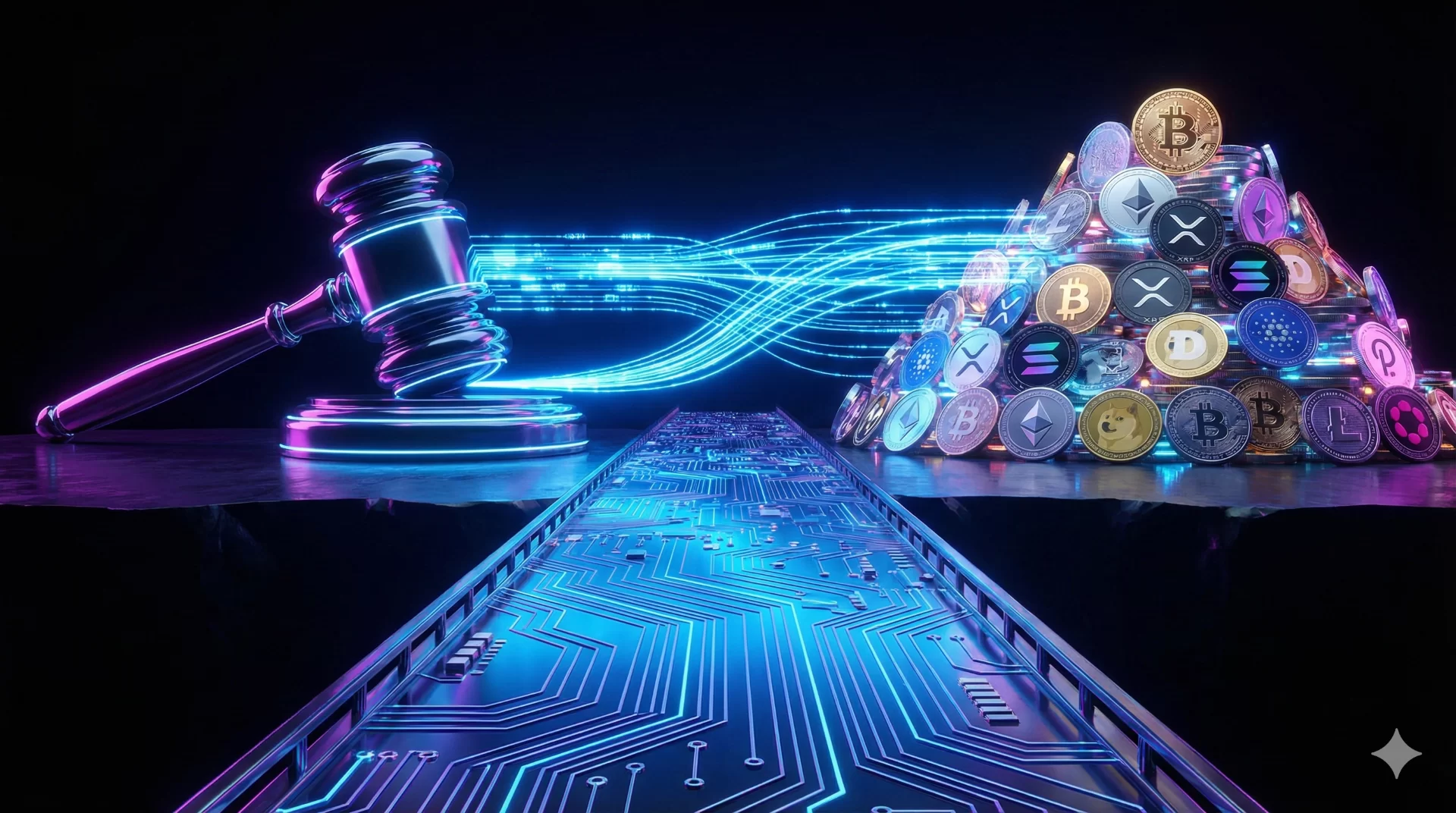
South Korea released the long-awaited Digital Asset Framework Act draft on April 8, marking the country's most comprehensive attempt to regulate digital assets. The bill categorizes digital assets as key instruments bridging the real economy and financial markets. Tokens backed by physical commodities or fiat currencies must be separated into a distinct class and require prior authorization from competent authorities, along with reserve obligations and repayment guarantees.
Core Framework: From Classification to Full-Chain Licensing
Issuers of asset-backed digital tokens must pass a formal review process covering minimum capital adequacy and operational capacity. All entities offering trading, brokerage, custody, or advisory services must obtain licenses and register with regulators, subjecting them to rigorous reporting protocols. This essentially creates a permissioned ecosystem for every digital asset service provider.
Compromise on Inter-Agency Disputes: An Independent Digital Asset Committee
The draft emerged after months of deadlock between regulatory bodies. The Bank of Korea had argued that only majority state-owned banks should issue won-pegged stablecoins to safeguard financial stability. The Financial Services Commission countered that exclusive bank privileges would stifle innovation. The latest draft proposes an independent Digital Asset Committee tasked with policy formulation and national development strategy, wielding broad authority to direct the sector's evolution — a compromise designed to bridge the two camps.
New Exchange Guidelines Issued Same Day: Uniform Withdrawal Delays
On the same day, the Financial Services Commission and the Financial Supervisory Service jointly published new operational guidelines for domestic cryptocurrency exchanges. All digital asset exchanges must implement a uniform system to delay withdrawal transactions, targeting fast-moving online fraud schemes, particularly the surge in phone-based scams. Officials said the measure strengthens investor protection by extending the withdrawal window to allow intervention.
Stakeholder Reactions: Balancing Innovation and Security
Industry observers note the regulations will raise compliance costs but could bolster public trust in digital assets. Some stakeholders worry that excessive restrictions may dampen the local fintech ecosystem's dynamism. Others contend South Korea's move aligns with global standards and may attract international capital. The draft remains open for public feedback, with lawmakers planning extensive consultations with tech firms, financial institutions, and consumer groups before a parliamentary vote.