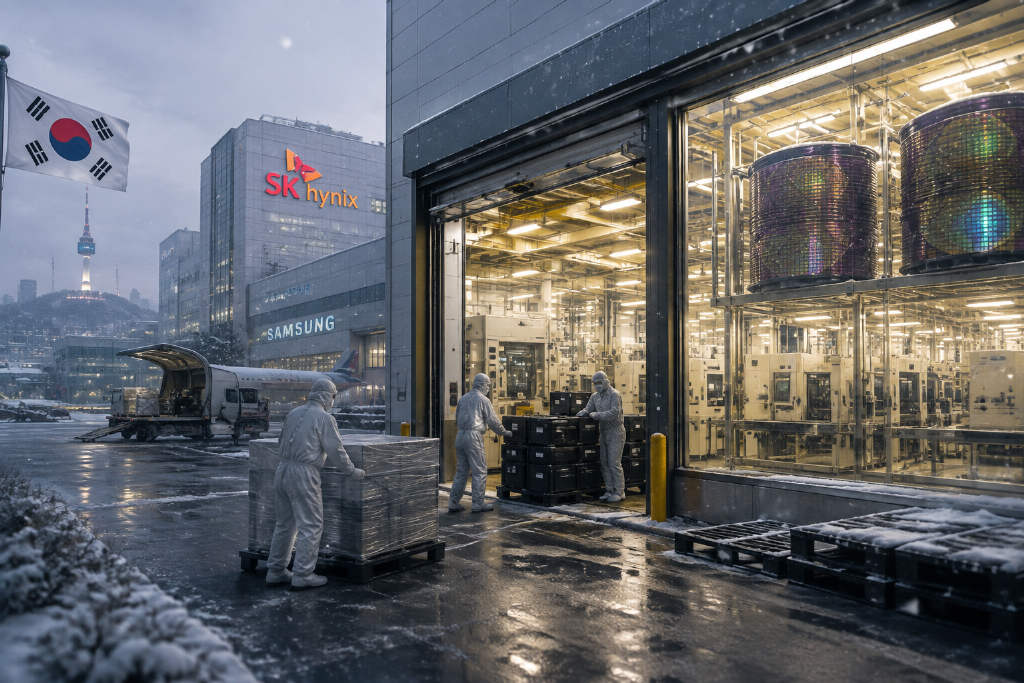
South Korea’s DRAM export prices are climbing sharply as AI-driven memory demand redirects manufacturing capacity toward high-bandwidth memory, or HBM. According to a report cited by ChainCatcher from South Korea’s Chosun Ilbo, the country’s average DRAM export price from the 1st to the 20th of this month reached $92,183 per kilogram, up 401% from a year earlier and about 12.5 times higher than the low seen in January 2023.
Goldman Sachs said the DRAM supply gap is expected to widen from 5.0% this year to 5.9% next year. The bank said HBM used in AI servers, along with high-capacity server DRAM, is consuming limited production capacity and tightening supply for conventional DRAM. It added that the shortage could last through 2028.
TrendForce expects wafer input dedicated to HBM production at Samsung, SK hynix, and Micron to account for 30% of total DRAM wafer input by the end of next year. Even so, HBM is projected to represent only about 13% of actual DRAM bit supply. Memory makers have also warned that AI-led tightness in DRAM and NAND supply may continue beyond 2027, while SK hynix said 2027 could become the worst shortage year in the industry’s history from the supply side.
South Korea’s DRAM export prices are rising fast, with AI-led HBM production taking up capacity and squeezing supply for conventional memory, according to a Chosun Ilbo report cited by ChainCatcher.
Data showed that from the 1st to the 20th of this month, South Korea’s DRAM export unit price reached $92,183 per kilogram. That was up 401% year over year and about 12.5 times higher than the low recorded in January 2023.
Goldman Sachs sees a wider supply gap next year
Goldman Sachs expects the DRAM supply gap to widen from 5.0% this year to 5.9% next year. The bank said HBM used in AI servers and high-capacity server DRAM are absorbing limited manufacturing capacity, which is tightening supply for standard DRAM. It said the shortage could continue through 2028.
TrendForce projects higher HBM wafer allocation
TrendForce said that by the end of next year, wafer input for HBM production at Samsung, SK hynix, and Micron is expected to account for 30% of total DRAM wafer input. Even with that increase, HBM is expected to make up only about 13% of actual DRAM bit supply.
Memory makers warn tight conditions may last beyond 2027
Memory manufacturers have warned that AI-driven tightness in DRAM and NAND supply may continue beyond 2027. SK hynix said that from the supply side, 2027 could become the worst shortage year in the history of the memory industry.
This article was originally published by Bit.Fan. For more cryptocurrency news and market insights, visit www.bit.fan. Disclaimer:
The market information, project data, and third-party content displayed on this platform are for industry information sharing only and do not constitute any form of investment advice or return commitment.
Cryptocurrency trading carries high risks. Users should fully assess their risk tolerance and make independent decisions. All profits, losses, and legal responsibilities are borne by the users themselves.