
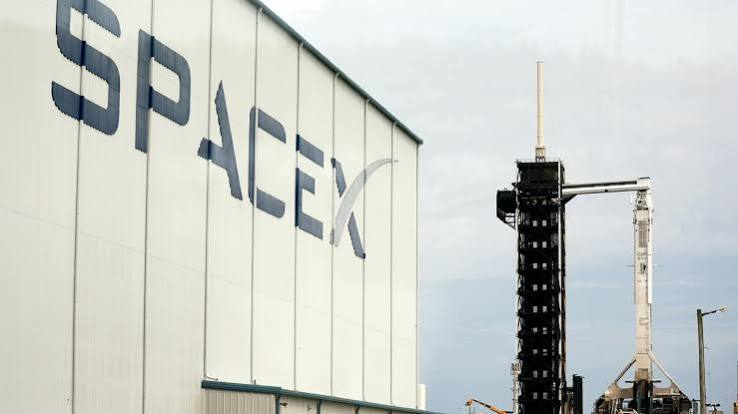
SpaceX officially joined the Nasdaq-100 on July 7, becoming one of the fastest large-cap IPO additions in the index’s history. Based on a methodology that values the company at roughly three times its original $75 billion float-adjusted market capitalization, SpaceX entered with an estimated 1.3% weighting. That immediately forced index-tracking funds to make room for the stock, putting passive demand at the center of the story. Even so, Wall Street remains sharply divided on how much buying is truly left and whether that demand can materially support the share price.
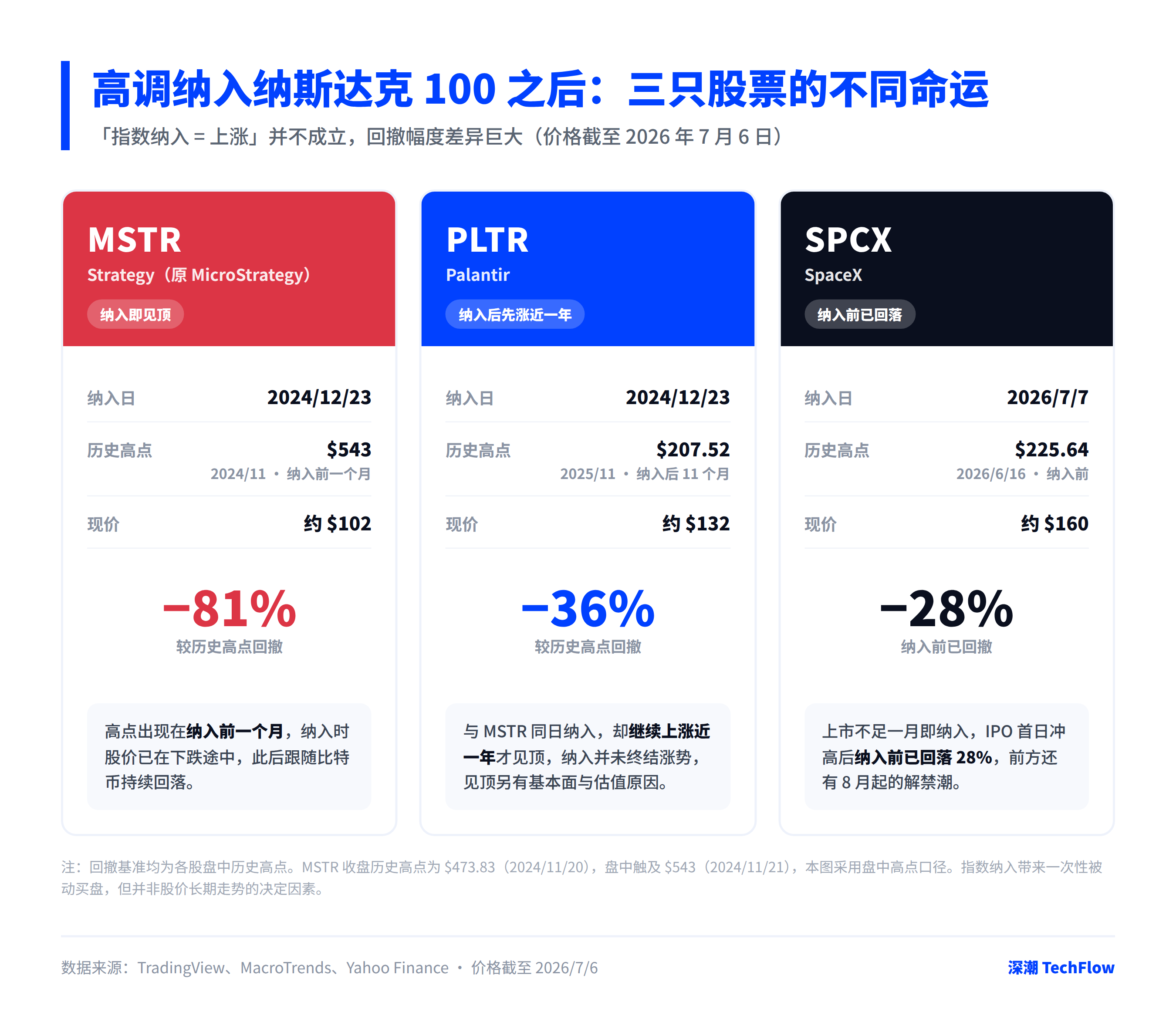
More than $800 billion tied to the index must rebalance, but buy estimates vary widely
SpaceX qualified for inclusion just 15 trading days after its IPO because Nasdaq created a special fast-track pathway for large new listings. That stands in contrast to the S&P 500, where S&P Dow Jones has refused to adopt a similar accelerated process. As a result, SpaceX remains outside the S&P 500, still blocked by that index’s separate profitability and seasoning requirements. For the Nasdaq-100, however, the rule-based admission means funds benchmarked to the index had little choice but to reposition.
That benchmark-linked pool is large. Market commentary cited more than $800 billion tracking the Nasdaq-100 in one form or another. Some estimates suggest passive investors may need to buy up to $4.3 billion of SpaceX tied to Nasdaq-100 inclusion alone, with another roughly $3 billion potentially coming from Russell-related rebalancing. Broader calculations that combine Nasdaq-100 and Russell tracking products place total mechanical demand in a $22 billion to $27 billion range. Those are meaningful figures, but they are not universally accepted as market-moving in the way retail traders often assume.
Several analysts argue that the practical impact has been overstated. At roughly 1.3% of the index, SpaceX lands around the middle tier of Nasdaq-100 constituents rather than among the dominant weights. That matters because passive flows are distributed according to formula, and the formula is public. In other words, index inclusion is not a surprise catalyst but a transparent event that sophisticated investors can front-run, hedge, or offset through derivatives. For positioning purposes, that weakens the case for treating passive inflows as a standalone driver of a new sustained leg higher.
Tight float may magnify price action instead of smoothing it
The more unusual feature of the SpaceX setup is the extremely small tradable float. Only about 4% of total shares were available for trading around the IPO, even though the retail allocation was higher than average. In a stock with such limited supply, passive demand does not necessarily create orderly support. It can just as easily amplify short-term dislocations, especially when ETFs, mutual funds, and active traders all compete for a limited pool of stock.
That dynamic can become self-reinforcing on the way up and especially fragile on the way down. If demand surges into a thin float, price appreciation can overshoot fundamentals in a short period. But if sentiment turns, the same structure can accelerate declines because there is not enough depth to absorb aggressive selling. Market participants have already started to frame the stock in those terms rather than as a conventional index-add trade.
Exchange executives have warned investors to prepare for swings of about $20 over the next 11 days. That is a notable warning for a stock that has already seen outsized post-IPO moves. For short-term traders, this environment makes position sizing and risk control more important than predicting the exact direction of the next move. For longer-term holders, it means index inclusion may coincide with sharper daily volatility than many would normally expect from a large-cap name.
History does not support a simple “index inclusion equals top” narrative
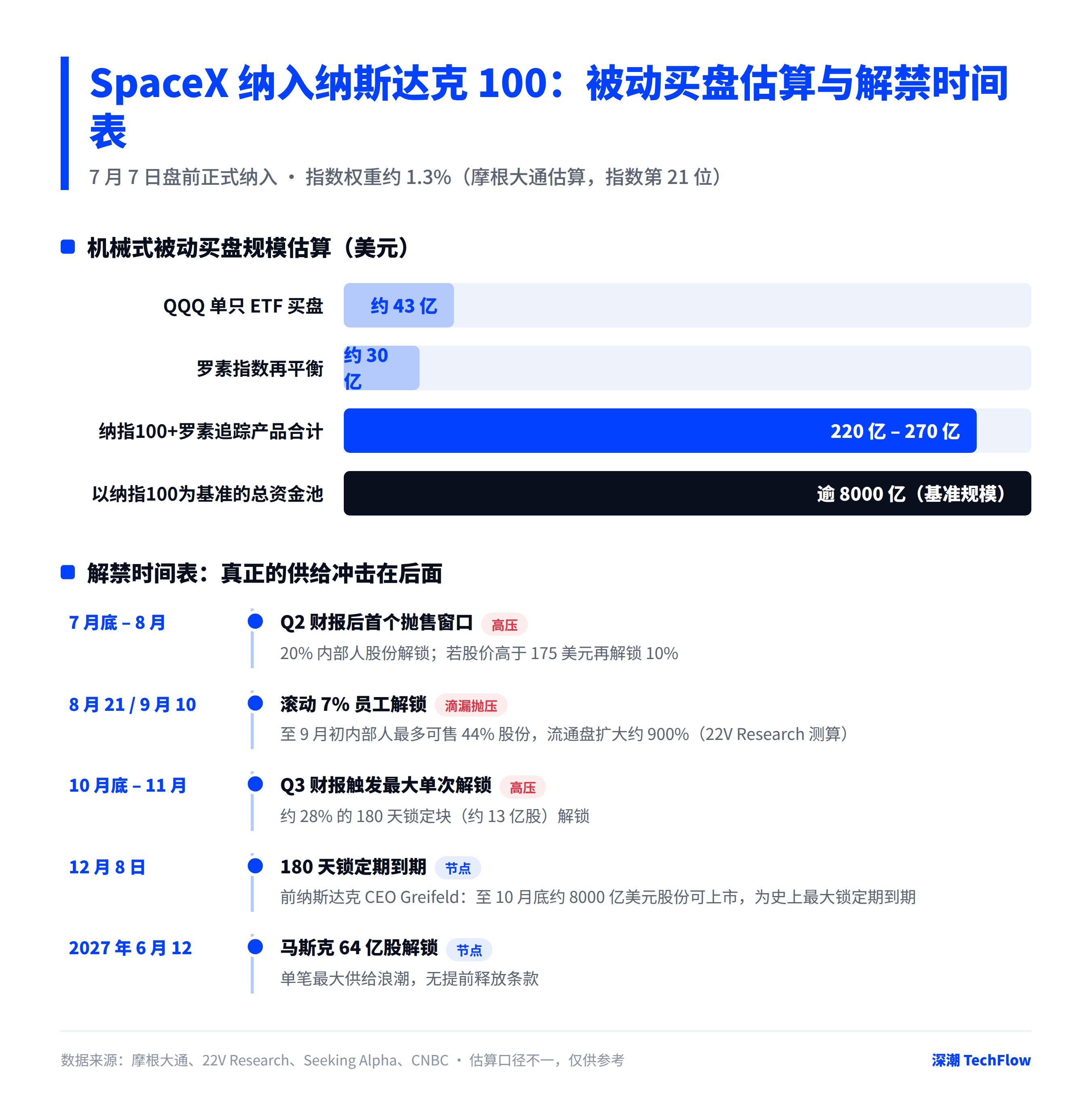
Although passive buying is usually framed as a short-term positive, the historical analogs most often cited by the market do not point to a single outcome. The clearest example of “inclusion near the top” is Strategy, formerly MicroStrategy. The stock joined the Nasdaq-100 on December 23, 2024, but its intraday peak of $543 had already been recorded a month earlier in November. By the time it entered the index, the shares were already declining and later continued to track Bitcoin lower. They now trade near $102, roughly 81% below the peak.
Palantir, which entered the index on the same day as Strategy, followed the opposite path. It did not top out on inclusion. Instead, the stock continued climbing and only reached its all-time high of $207.52 on November 3, 2025, nearly 11 months after joining the index. It has since fallen back to around $132, or about 36% below that high. In Palantir’s case, the eventual peak was tied more to valuation and underlying business expectations than to the technical event of index inclusion itself.
SpaceX sits somewhere between those examples. After surging 50% on its first day of trading, the stock reached an all-time high of $225.64 on June 16. Before entering the Nasdaq-100, it had already fallen about 28% from that peak. That means the stock is not being added at the very beginning of an uptrend, nor exactly at a fresh high. It is being added during a pullback, which makes simplistic historical comparisons less useful than they first appear.
The bigger overhang may be insider unlocks starting in August
For many institutional observers, the more important variable is not the index event but the supply schedule ahead. SpaceX’s formal 180-day lockup expires on December 8, 2026, while Elon Musk’s 6.4 billion shares remain locked until June 12, 2027. However, the first meaningful selling window opens much earlier, after the company reports Q2 results. That is why the market is increasingly focused on the late-July to August period rather than on inclusion day itself.
The unlock process is staged rather than one-time. Around the early- to mid-August earnings window, 20% of insider shares are set to unlock. If the stock remains more than 30% above the IPO price, or above $175, another 10% can unlock. Additional 7% tranches are expected around August 21 and September 10. By early September, insiders could have up to 44% of shares eligible for sale, expanding the effective float by roughly 900% versus the current tradable base.
That is why some veteran market participants have described the upcoming release schedule as one of the most significant lockup events ever seen in U.S. equity markets. SpaceX may be a newly listed company, but it is not a newly built business. After more than two decades of operations, it carries a large stock base accumulated long before the IPO. In practical terms, that means a vast amount of previously unavailable paper could gradually come to market over a short period.

There is, however, a balancing argument. A larger float would likely increase selling pressure, but it may also reduce the stock’s extreme day-to-day volatility over time. The same thin-float structure that can intensify upside moves is also what makes the stock vulnerable to abrupt drawdowns. More supply could therefore hurt near-term price performance while improving market depth and reducing instability later on.
Attention now shifts to earnings, cash flow, and the ability to absorb supply
Put together, the emerging consensus is that Nasdaq-100 membership is better understood as a liquidity and credibility event than as a decisive valuation catalyst. Inclusion can deepen ownership and broaden the shareholder base, but it does not guarantee future upside. What matters more from here is whether SpaceX can continue delivering on operations and whether the market is willing to absorb the additional supply coming from insiders over the next several months.
Fundamentally, Starlink remains the core of the company’s revenue story. Public figures cited in the market indicate SpaceX generated about $18 billion in revenue last year, with $11.4 billion coming from Starlink. Subscriber count reportedly climbed from 2.3 million three years ago to more than 10 million now. Beyond that, investors continue to focus on the company’s launch-cost advantage and its longer-term optionality tied to AI-related space data center initiatives.
In the near term, four forces are colliding at once: passive buying support, volatility amplified by the small float, mixed historical precedents, and the overhang of upcoming insider unlocks. Macro conditions also matter. If Treasury yields move materially higher, high-duration growth stocks may face valuation pressure, and SpaceX would not be immune. That broader risk appetite channel may also matter beyond equities, as major technology-led fund flows can spill over into the tone of the digital asset market, influencing sentiment around Bitcoin and Ether.
Ultimately, the market’s verdict on SpaceX is unlikely to be settled by the index addition itself. The more consequential tests will come with Q2 earnings in August and the unlock windows that follow. Those events will determine whether the company’s fundamentals are strong enough to withstand a much larger supply shock than the one implied by passive index demand.