
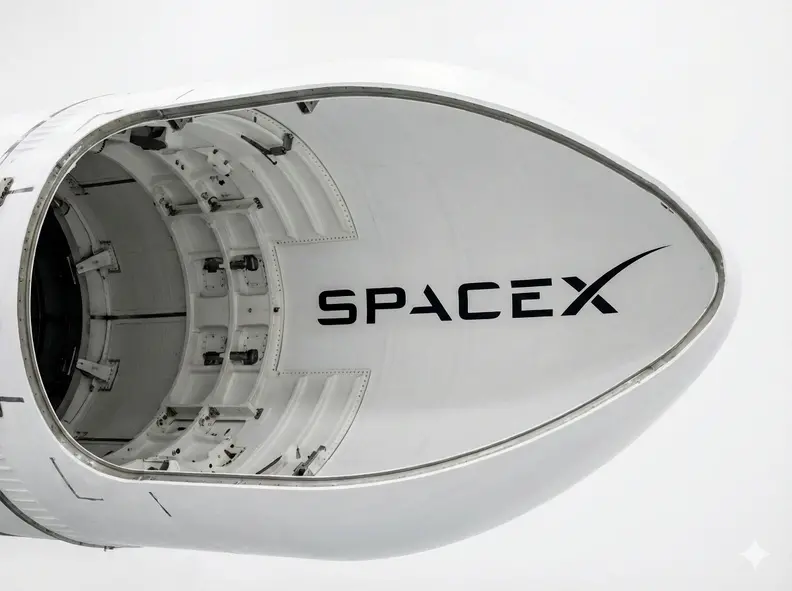
SpaceX is already trading below its IPO price only a month after listing, with most of the stock’s early momentum now gone. The setup leaves the company facing a familiar post-IPO test of investor confidence, and the coming lockup expirations add another source of downside pressure.
On Wednesday, SpaceX shares fell as much as 2.9% to $132.15, dropping below the $135 offer price from last month’s record $86 billion IPO. The stock later closed at $136.08, slightly above the issue price.
The trading pattern has looked like a typical volatile new listing. In its first three trading days, the stock surged nearly 50%. Over the next three sessions, it gave back nearly a quarter of those gains.
Bond market sends a warning too
Equity weakness is only part of the picture. SpaceX’s newly issued $25 billion bond, due in 2056, has also drawn attention. Since the bond started trading on June 24, its price has kept falling, pushing the yield up to 7.5%, a level described as comparable to junk debt.
Dec Mullarkey, managing director at SLC Management, said: "Investors are increasingly recognizing that the SpaceX story is in large part about its xAI ambitions. As the market grows more cautious about the cost and payoff of large-scale infrastructure buildouts, SpaceX’s plans sound too far away."
Lockup expirations could add selling pressure
In SpaceX’s $75 billion IPO financing in June, about 20% of the shares went to retail investors, an unusually high proportion for a large-cap offering. A break below the IPO price cuts into the listing narrative shaped by the company and its underwriters, and it can make it harder for a newly public company to regain investor confidence.
More pressure may still lie ahead. Over the next few weeks, SpaceX is set to release its first quarterly results as a public company, and the first batch of early investors will also begin reaching the end of their lockup periods. If those holders start selling once the restrictions lift, the stock could face heavier supply in the market.
The timing matters because post-IPO earnings disclosures often become a window for early investors to realize gains. Even after a sharp pullback from recent highs, earlier backers may still be sitting on sizable paper profits, leaving the incentive to trim positions intact.
Index inclusion helped fuel the early rally
Part of SpaceX’s early share-price strength may have come from forced buying by passive funds.
After Nasdaq changed its rules, newly listed large-cap companies became eligible for inclusion in the Nasdaq-100 as soon as 15 trading days after listing, much sooner than the previous minimum of three months. Under that framework, SpaceX joined the index in July, and it was added to the Russell 1000 about two weeks after its late-June IPO.
According to Bloomberg, Bloomberg Intelligence analyst Rob Du Boff estimated that SpaceX’s addition to the Nasdaq-100 and FTSE Russell-related indexes would trigger at least $5.4 billion in purchases by index funds. That scale of passive demand helped support the stock soon after listing, but technical buying of that kind is usually hard to sustain.
Wall Street still leans bullish
Even with the recent pressure on the shares, Wall Street remains broadly constructive.
After the quiet period for bank analysts involved in the IPO expired, a wave of bullish research followed. Raymond James published the highest target on the Street at $800.
Bloomberg data show that more than 80% of analysts rate SpaceX at the equivalent of a buy. Their average price target is about $238, implying roughly 78% upside from the current share price.